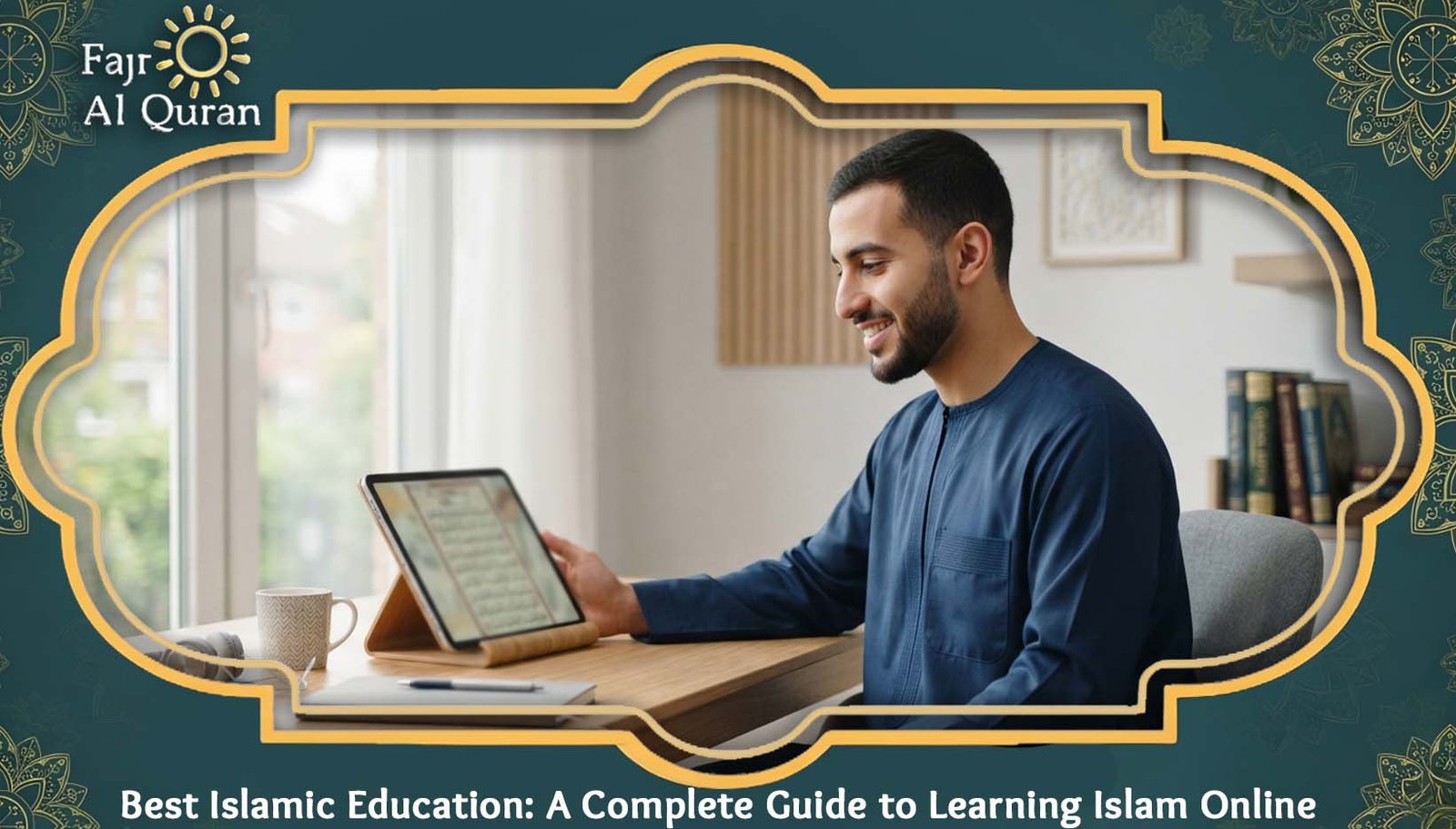
Best Islamic Education: A Complete Guide to Learning Islam Online

Best Islamic Education: A Complete Guide to Learning Islam Online

The best Islamic education is a holistic system that integrates intellectual, spiritual, and physical development, grounded in the Quran and the Sunnah. Its primary goal is to nurture well-rounded individuals who uphold moral character, deep faith, and civic responsibility. The curriculum spans religious sciences, rational sciences, and character building.

Islamic education is more than learning facts about religion. It is a lifelong journey that helps Muslims strengthen their relationship with Allah, understand the teachings of the Quran and Sunnah, and develop strong moral character. Many families are seeking flexible ways to provide quality Islamic education for themselves and their children. Online learning has made this easier than ever before.

Whether you are a beginner, a parent looking for the best Islamic education for your child, or an adult hoping to deepen your knowledge, online classes offer a practical solution. Students can learn from qualified teachers without leaving home. They can study at their own pace while receiving personal guidance. This modern approach combines traditional Islamic studies with interactive technology, making learning enjoyable for learners of all ages.

One of the leading platforms in this field is Fajr Al-Quran Academy. The academy provides comprehensive Islamic education through experienced teachers, structured lessons, and flexible schedules. Students can explore the Quran, Hadith, Islamic Fiqh, Seerah, and other essential subjects in a supportive environment.

In this complete guide, you will discover what Islamic education is, why it matters, its core principles, different learning options, and how to choose the best course or academy. By the end, you will understand how Islamic education can enrich both your spiritual and intellectual development, helping you live in accordance with authentic Islamic teachings in the modern world.

What Is Islamic Education?

Islamic education is a comprehensive system of learning that teaches Muslims how to worship Allah, develop good character, and live in accordance with the guidance of the Quran and the Sunnah of the Prophet Muhammad (peace be upon him). It combines religious understanding with practical life lessons so that every Muslim can apply Islamic teachings in daily life.

Unlike ordinary education, Islamic education focuses on both the heart and the mind. It encourages students to increase their knowledge, strengthen their faith, and develop excellent manners. The goal is not simply to memorize information but to understand it and practice it consistently.

Traditional Islamic studies usually include subjects such as:

  • Quran reading and memorization
  • Tajweed rules
  • Hadith studies
  • Seerah of the Prophet
  • Fiqh (Islamic jurisprudence)
  • Aqeedah (Islamic creed)
  • Daily duas and Islamic manners

Islamic education has expanded beyond traditional schools. Online academies allow students from around the world to access qualified teachers through live classes. This has made quality Islamic education available to children, adults, and new Muslims regardless of where they live.

A trusted academy like Fajr Al-Quran Academy combines authentic teaching methods with modern technology. Students receive structured lessons, regular assessments, and one-on-one support from experienced instructors.
Best Islamic Education: A Complete Guide to Learning Islam Online

Importance of Islamic Education for Muslims

The importance of Islamic education cannot be overstated. It shapes a Muslim’s beliefs, actions, and character while guiding every stage of life. Without authentic Islamic education, it becomes difficult to distinguish correct teachings from misinformation.

One of the greatest benefits of Islamic education is that it strengthens faith. When Muslims understand the Quran and the Sunnah, they worship with greater sincerity and confidence. Every lesson increases their connection with Allah and encourages them to follow the example of the Prophet.

Islamic education also plays an essential role in building strong families. Parents who possess sound knowledge can teach Islamic manners, honesty, kindness, and respect to their children. This creates a positive home environment where Islamic values are practiced every day.

Another benefit is intellectual development. Islam encourages Muslims to think, reflect, ask questions, and seek beneficial knowledge. Throughout history, Muslim scholars contributed to many sciences, including medicine, mathematics, astronomy, and philosophy. Their achievements demonstrate how Islam values education and encourages excellence in both religious and worldly fields.

The benefits of Islamic education include:

  • Building stronger faith and trust in Allah
  • Understanding the Quran correctly
  • Following the authentic Sunnah
  • Developing excellent character
  • Making ethical decisions
  • Strengthening family relationships
  • Encouraging lifelong learning
  • Preparing children for positive leadership

Institutions such as Fajr Al-Quran Academy make these benefits accessible through flexible online programs. Students receive structured Islamic studies, interactive lessons, and personal support from qualified teachers.

Ultimately, Islamic education is not only about gaining information. It transforms lives by nurturing the mind, heart, and soul. It equips Muslims with the knowledge, values, and confidence they need to worship Allah correctly and contribute positively to society.

What Are the Basic Principles of Islamic Education?

The foundation of Islamic Education is built upon timeless principles that guide every Muslim toward a balanced and meaningful life. These principles are taken directly from the Quran, the Sunnah, and the teachings of respected scholars. They help students gain authentic knowledge, strengthen their faith, and develop strong moral character.

The first principle is Tawheed, the belief in the oneness of Allah. Every aspect of Islamic Education begins with understanding who Allah is and why He alone deserves worship. This belief shapes a Muslim’s thoughts, actions, and purpose in life.

The second principle is seeking authentic knowledge. Islam encourages every Muslim to learn throughout life. The first revelation to the Prophet Muhammad (peace be upon him) began with the command to read, highlighting how deeply Islam values education. Seeking beneficial knowledge is considered an act of worship and a means of drawing closer to Allah.

A balanced curriculum is another important feature. High-quality Islamic studies combine belief, worship, ethics, history, and daily life skills. Students do not only study religious texts. They also understand how Islamic teachings can guide them in family life, work, business, and community service.

The core principles of Islamic Education include:

  • Belief in the oneness of Allah (Tawheed)
  • Following the Quran and authentic Sunnah
  • Seeking authentic knowledge
  • Building strong Islamic values
  • Developing good manners and character
  • Continuous spiritual and intellectual development
  • Practicing what is learned every day
  • Respecting teachers, parents, and fellow learners

Leading institutions such as Fajr Al-Quran Academy build their courses around these principles. Students receive a structured educational experience that helps them grow academically, morally, and spiritually. Every lesson encourages learners to explore Islam with understanding rather than simple memorization.

Types of Islamic Education

One of the strengths of Islamic Education is its flexibility. Every learner has different goals, ages, and learning styles. As a result, there are many types of programs available today. Whether someone wants to memorize the Quran, improve their understanding of Islam, or simply learn daily duas, there is a suitable course for every stage of life.

The most common form is Quran education. Students learn to read the Quran correctly, improve their pronunciation through Tajweed, and understand the meanings of selected verses. Many learners also continue toward Quran memorization.

Also, an important area is Islamic studies. Islamic courses cover Aqeedah, Fiqh, Hadith, Seerah, Islamic manners, and the lives of the companions. Together, these subjects provide a complete understanding of Islam.

Some students prefer specialized programs that focus on a single subject. Others choose comprehensive courses that combine several branches of Islamic Education into one structured curriculum.

Common types of Islamic Education include:

  • Quran reading with Tajweed
  • Quran memorization (Hifz)
  • Tafsir (Quran explanation)
  • Hadith studies
  • Seerah of the Prophet
  • Fiqh and daily worship
  • Aqeedah (Islamic beliefs)
  • Arabic language learning
  • Islamic manners and values education
  • Family and parenting education based on Islamic teachings

Fajr Al-Quran Academy offers a wide series of online courses designed for learners worldwide. Every program follows authentic Islamic sources while using modern teaching methods that make learning simple and engaging. Students receive clear lesson plans, regular progress reports, and continuous teacher support.

The availability of different programs makes Islamic Education accessible for busy professionals, university students, children, and entire families. Regardless of age or experience, everyone can find a course that helps them grow in both knowledge and faith.
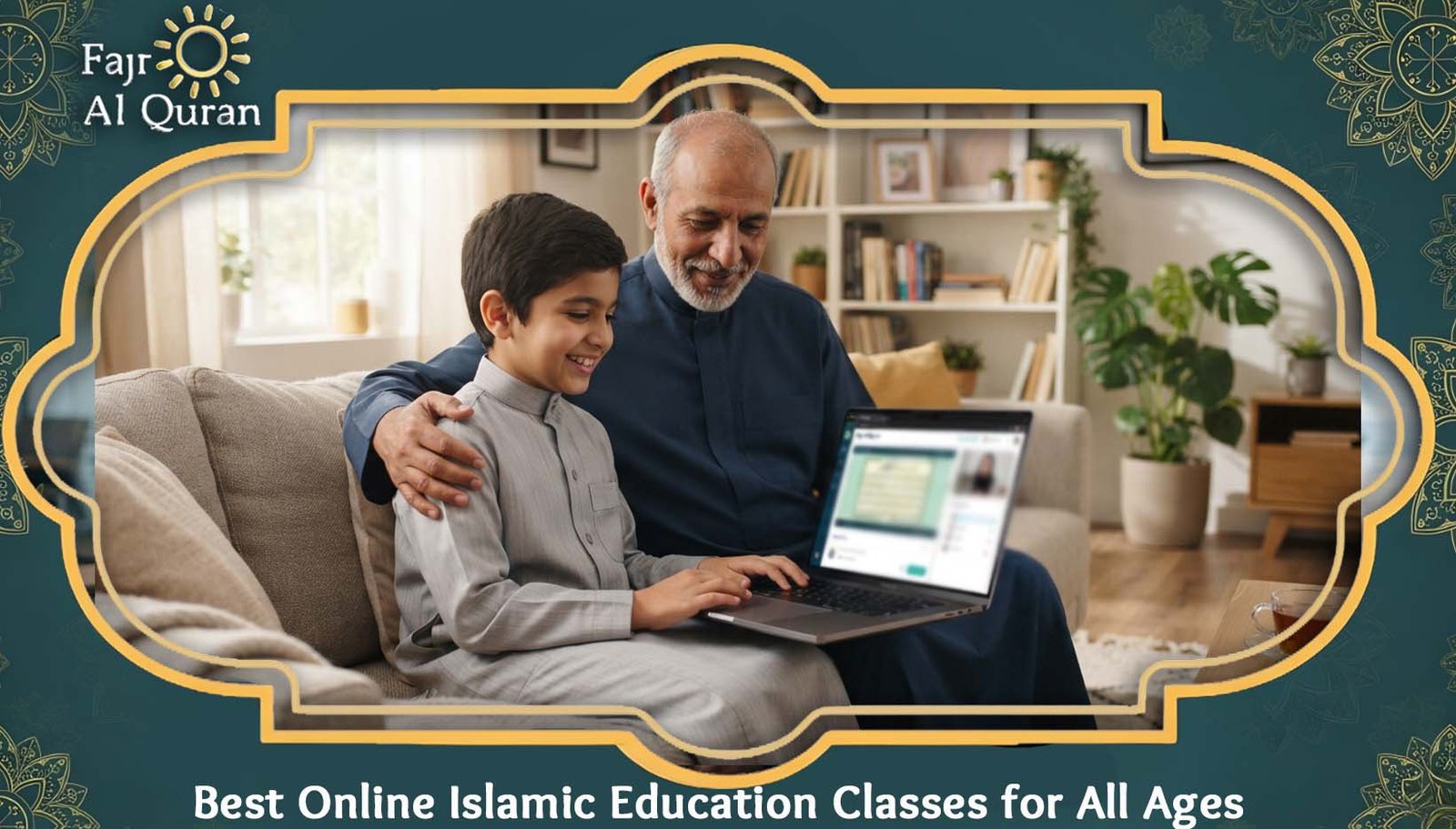
Best Online Islamic Education Classes for All Ages

Best Online Islamic Education Classes for All Ages

Online Islamic Education has transformed the way Muslims learn. Students no longer need to travel long distances to attend lessons. Instead, they can join live classes from home while learning directly from qualified teachers. This convenience has made Islamic Education more accessible than ever before.

A high-quality online course combines authentic Islamic studies with interactive teaching methods. Lessons should be engaging, easy to understand, and suitable for the learner’s age and experience. Flexible scheduling also allows students to continue their studies without interrupting work or school commitments.

The best online classes usually include:

  • Live one-to-one sessions
  • Experienced male and female teachers
  • Personalized lesson plans
  • Regular assessments
  • Flexible class timings
  • Progress tracking
  • Interactive activities for children
  • Certificates upon course completion

Children benefit from colorful presentations, games, and storytelling that make learning enjoyable. Teenagers receive lessons that connect Islamic teachings to real-life challenges. Adults appreciate practical discussions that help them strengthen their faith while balancing family and career responsibilities.

Among today’s leading online academies, Fajr Al-Quran Academy stands out for its commitment to quality Islamic Education. The academy offers courses in Quran reading, Tajweed, memorization, Arabic, and comprehensive Islamic studies. Its qualified instructors create a welcoming environment where every student feels supported.

As online Islamic education continues to improve, it will play an even greater role in helping Muslims around the world access authentic knowledge. It combines the wisdom of traditional scholarship with the convenience of modern education, allowing students to deepen their understanding of Islam wherever they live.

How to Choose the Right Islamic Education Course

Choosing the right Islamic Education course is one of the most important decisions you can make for your religious growth. A well-designed course will help you gain authentic knowledge, strengthen your faith, and build a lifelong habit of learning. With so many online options available today, it is essential to know what makes one program stand out from another.

Start by identifying your goals. Do you want to learn Quran recitation, improve your Tajweed, study the Seerah of the Prophet, or complete comprehensive Islamic studies? Your objective will help you select a course that matches your current level and future aspirations.

Next, review the curriculum carefully. A high-quality Islamic Education program should be based on the Quran and authentic Sunnah. It should cover essential topics in a logical order so that students build their understanding step by step instead of feeling overwhelmed.

Consider these factors before enrolling:

  • A curriculum based on the Quran and Sunnah
  • Qualified and experienced teachers
  • Live interactive classes
  • Flexible scheduling for busy learners
  • Individual attention and feedback
  • Regular assessments and progress reports
  • Age-appropriate teaching methods
  • Positive student reviews and testimonials

Fajr Al-Quran Academy is an excellent example of a trusted provider of Islamic Education. The academy offers structured courses for beginners and advanced learners alike. Each program is designed to make learning simple while maintaining the highest standards of authenticity. Students benefit from personalized lesson plans, experienced instructors, and flexible class schedules that fit modern lifestyles.

The Role of Qualified Islamic Teachers in Online Learning

Teachers have always held a special place in Islamic Education. Throughout every century, scholars preserved authentic Islamic knowledge by teaching the Quran, explaining the Sunnah, and mentoring their students with wisdom and sincerity. Today, online learning continues this noble tradition through qualified instructors who guide students across the world.

A knowledgeable teacher does much more than explain lessons. They correct mistakes, answer questions, encourage good manners, and help students understand how to apply Islamic teachings in daily life. Their guidance prevents misunderstandings and ensures that learners receive authentic information based on reliable sources.

Qualified teachers also inspire confidence. Beginners often feel nervous when starting Islamic Education, especially if they have little background in Islamic studies. An experienced teacher creates a welcoming environment where students can ask questions freely without fear of making mistakes.

Excellent online teachers possess several important qualities:

  • Strong knowledge of the Quran and Sunnah
  • Formal qualifications in Islamic studies
  • Clear communication skills
  • Patience and kindness
  • Experience teaching different age groups
  • Commitment to authentic Islamic teachings
  • Ability to make lessons interactive and engaging

One of the advantages of studying with Fajr Al-Quran Academy is access to experienced instructors who understand the needs of children, teenagers, adults, and new Muslims. Every teacher follows a structured teaching approach while adapting lessons to each student’s pace and ability.
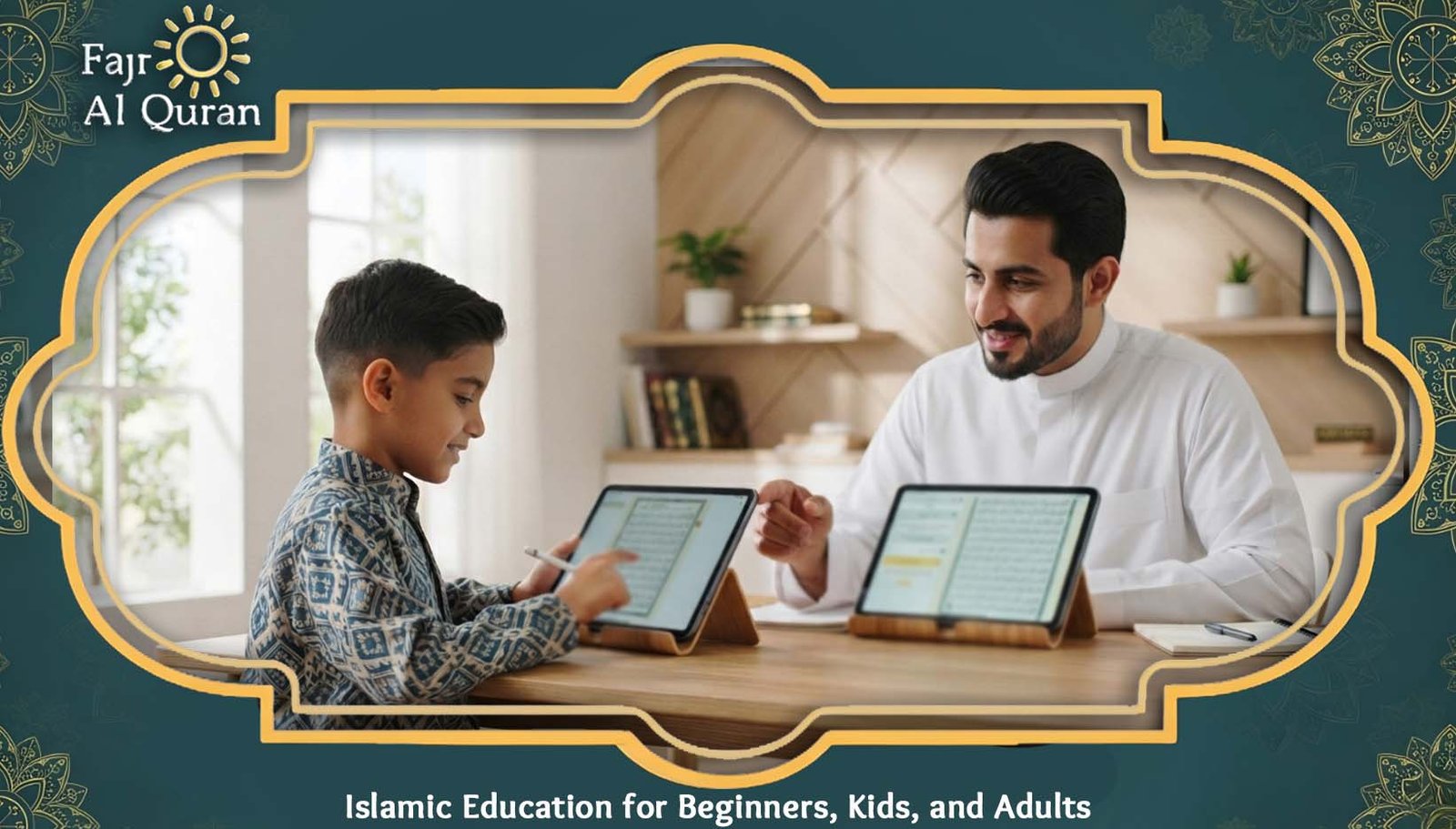
Islamic Education for Beginners, Kids, and Adults

Islamic Education for Beginners, Kids, and Adults

One of the greatest strengths of Islamic Education is that it is suitable for everyone. Regardless of age or previous experience, every Muslim can continue to learn and strengthen their relationship with Allah. The methods may differ, but the goal remains the same: increasing knowledge, improving character, and living according to the teachings of Islam.

For beginners, Islamic Education should start with the essentials. Students learn how to read the Quran, understand basic beliefs, perform daily prayers correctly, and become familiar with the life of the Prophet Muhammad (peace be upon him). Simple lessons and patient guidance build confidence from the very beginning.

Children benefit from interactive teaching methods that make learning enjoyable. Stories from the Quran, educational games, visual presentations, and age-appropriate activities help young learners understand Islamic values while developing a love for their religion. Parents also play an important role by reinforcing lessons at home and creating a positive learning environment.

Teenagers often face unique challenges in today’s modern world. They need Islamic Education that answers real-life questions while helping them strengthen their identity and make wise decisions. Lessons that connect Islamic teachings to everyday situations prepare them for adulthood with confidence and wisdom.

Adults often return to study Islam after many years. Some wish to improve their Quran recitation, while others want deeper Islamic studies or a better understanding of family life, worship, and ethics. Flexible online classes make it easier for busy professionals and parents to continue learning without disrupting their daily responsibilities.

How to Choose the Best Islamic Education Center

Finding the right Islamic Education center is one of the most important steps in your learning journey. The quality of the academy you choose will influence your understanding of Islam, your connection with the Quran, and your overall spiritual and intellectual development. A trusted center should provide authentic knowledge, experienced teachers, and a welcoming environment where students of all ages can grow with confidence.

Start by looking at the academy’s curriculum. The best Islamic Education centers offer comprehensive Islamic studies based on the Quran and authentic Sunnah. Lessons should be organized in a logical sequence so students can build their understanding step by step. Whether you want to improve Quran recitation, memorize the Quran, study Hadith, or learn Islamic manners, the curriculum should be balanced and practical.

Teacher qualifications are equally important. Experienced instructors not only explain Islamic concepts clearly but also inspire students to continue learning. Their patience, professionalism, and commitment to authentic teachings make a lasting difference in every student’s educational experience.

When comparing different academies, consider the following points:

  • A curriculum based on the Quran and authentic Sunnah
  • Certified and experienced Islamic teachers
  • Flexible online class schedules
  • One-to-one and small-group learning options
  • Courses for beginners, children, teenagers, and adults
  • Regular progress reports and assessments
  • Affordable tuition with excellent student support
  • Positive reviews from students and families

Among today’s leading online academies, Fajr Al-Quran Academy has earned an excellent reputation for delivering high-quality Islamic Education to students around the world. The academy combines traditional scholarship with modern teaching methods to create an engaging and effective learning experience.

Conclusion

Islamic Education is a lifelong journey that enriches every aspect of a Muslim’s life. It teaches us how to worship Allah correctly, understand the Quran and the Sunnah, develop excellent character, and live according to authentic Islamic principles.

As you continue your journey, remember that seeking beneficial knowledge is a lifelong act of worship. Every lesson you complete, every verse you memorize, and every Islamic value you practice brings you closer to Allah while strengthening your ability to benefit your family and community.

If you are looking for a trusted place to begin or continue your studies, Fajr Al-Quran Academy offers one of the most comprehensive online Islamic Education programs available today.

Invest in your future by choosing authentic Islamic Education.
Memorizing the Quran as an Adult: Why It’s Different (and Still Possible)

memorize quran online

Most advice about Quran memorization is written with children in mind, which can make adults feel like they’ve missed their window. That’s not accurate. Adult memorization works differently, not worse, and it’s worth understanding those differences rather than applying a child’s approach to an adult’s situation.

Why It Genuinely Feels Harder

Adult brains are less naturally geared toward rote memorization than a child’s, and adults also carry far more competing responsibilities, work, family, and less flexible time. This isn’t a character flaw or a sign of inability, it’s just a different starting condition that calls for a different strategy.

The Advantage Adults Actually Have

What adults lack in raw memorization speed, they often make up for in understanding and discipline. An adult can grasp meaning, context, and the logic connecting verses in a way that makes memorization more anchored and less purely mechanical. Adults are also generally better at sticking to a self-imposed schedule once it’s set.

Smaller, Realistic Portions

Rather than comparing pace to what a child memorizes, adults generally do better with smaller daily portions held to a consistently high standard, rather than pushing volume and letting accuracy slip. A slower, more solid pace beats a faster, shakier one.

Fitting It Into a Full Schedule

The realistic answer for most working adults is early morning or late evening sessions, kept short and non-negotiable, treated the same way you’d treat any other fixed daily commitment. Waiting for a bigger block of free time to appear rarely works, since it usually doesn’t.

Understanding Meaning Helps More Than People Expect

Because adults can engage with tafsir and the meaning behind verses, connecting memorization to understanding, rather than treating it as pure repetition, often makes retention noticeably stronger. This is one of the genuine advantages of starting later rather than earlier.

It’s Genuinely Not Too Late

Plenty of adults successfully memorize significant portions of the Quran starting well into adulthood. A memorization program designed around an adult schedule, rather than a children’s pace and structure, makes this a realistic goal rather than a nostalgic idea about a missed opportunity.

In Short

Adult memorization looks different from a child’s, smaller portions, more reliance on understanding, and a schedule built around real adult constraints, but different doesn’t mean worse. It’s a genuinely achievable goal with the right approach.

Wudu Meaning: Spiritual Purity in Islamic Worship

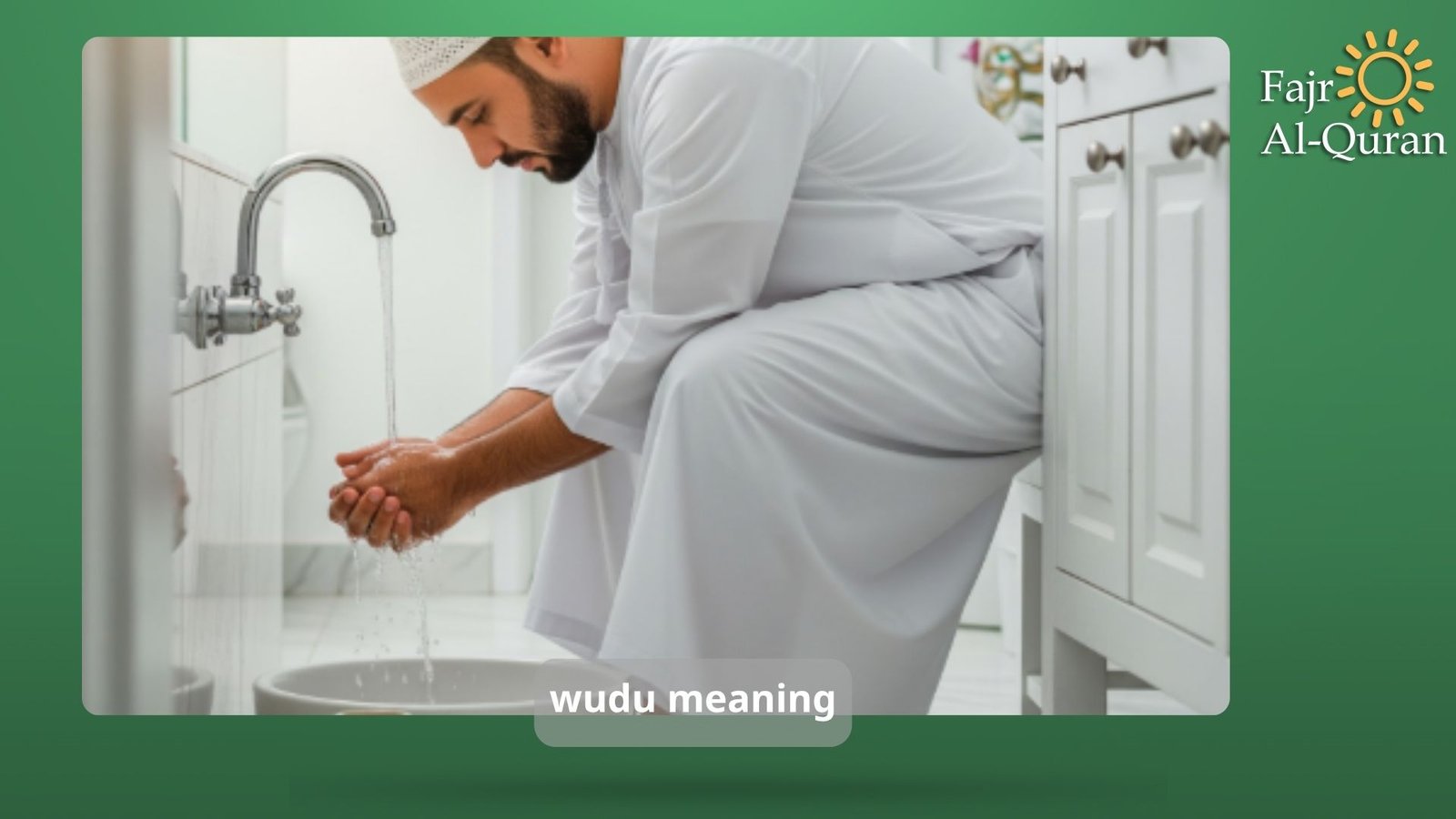
wudu meaning

Islam places a strong emphasis on cleanliness and purification — not just of the body, but also of the soul. One of the most significant practices that reflect this concept is wudu, the Islamic ritual of ablution performed before prayer and other acts of worship.

For those unfamiliar with this term, understanding the wudu meaning opens the door to appreciating one of the most spiritually enriching rituals in the Islamic tradition. In this article, we will explore what wudu is, why it matters, how it is performed, and what it symbolizes in the life of a practicing Muslim.

What is the Wudu Meaning?

The wudu meaning can be understood as both a physical and spiritual purification process. Literally, the Arabic word “wudu” (الوضوء) translates to “cleanliness” or “purity.” In Islamic practice, it refers to the washing of specific body parts before performing acts of worship such as prayer (salah), touching the Qur’an, or performing tawaf (circumambulation) around the Kaaba in Makkah.

However, wudu meaning goes far beyond hygiene. It represents a spiritual state of readiness, a cleansing not just of dust and dirt, but of the minor sins and distractions that distance a person from God. When a Muslim performs wudu, they are symbolically washing away their mistakes and entering a state of mindfulness and humility before standing in front of their Creator.

The Importance of Wudu in Islam

Wudu holds a central place in the daily life of a Muslim. It is not optional but a mandatory prerequisite for prayer. The Prophet Muhammad ﷺ said:

“No prayer is accepted without purification.”
(Sahih Muslim)

This hadith makes it clear that performing wudu is a fundamental requirement for establishing a valid connection with Allah through prayer. Without it, the prayer — which is the second pillar of Islam — is incomplete.

Moreover, performing wudu regularly encourages Muslims to stay physically clean throughout the day. In fact, many Muslims perform wudu several times a day before each of the five daily prayers, making cleanliness a regular part of their routine. This habit is especially emphasized in settings like Virtual Quran Classes, where students are encouraged to maintain both physical and spiritual purity before engaging with the Qur’an online.

How Wudu is Performed

The process of performing wudu is both simple and structured, with each step designed to cleanse a specific part of the body:

  1. Intention (Niyyah): Start with a sincere intention in the heart to perform wudu.
  2. Washing the hands: Begin by washing both hands up to the wrists three times.
  3. Mouth and nose: Rinse the mouth and then the nostrils with water three times.
  4. Face: Wash the entire face from forehead to chin, and from ear to ear, three times.
  5. Arms: Wash both arms from the fingertips up to the elbows, three times.
  6. Wiping the head: Wet the hands and wipe over the head once.
  7. Ears: Clean the inside and outside of both ears with wet fingers.
  8. Feet: Wash both feet up to the ankles, three times.

This entire process usually takes just a few minutes, but it transforms the mindset of a believer, setting the tone for sincere and focused worship—an essential practice connected to the Pillars of Islam.

Spiritual Dimensions of Wudu

While many may view wudu as a simple routine, those who understand the wudu meaning recognize its deep spiritual significance. Every act of washing is an act of letting go—of ego, of sin, of worldly distractions.

The Prophet Muhammad ﷺ once said:

“When a Muslim or a believer washes his face (in wudu), every sin which he committed with his eyes will be washed away… when he washes his hands, every sin committed with them will be washed away… until he comes out pure from all sins.”
(Sahih Muslim)

This narration reveals how wudu is much more than outward cleanliness. It’s a sacred preparation, a way to stand before God with a cleansed heart and pure intentions.

Wudu and Modern Science

Interestingly, many aspects of wudu align with modern hygiene practices. Regular handwashing, facial cleansing, and nasal rinsing are all recommended by health professionals to prevent the spread of bacteria and viruses. The act of performing wudu several times a day naturally promotes personal hygiene, which contributes to both individual and public health.

Moreover, some studies suggest that the cool water used in wudu can have a calming effect on the nervous system, reducing stress and promoting mental clarity — a beautiful harmony between faith and science that can greatly support practices like Quran Memorization.

wudu meaning
wudu meaning

When Wudu is Required

Understanding the wudu meaning also involves knowing when it is required. Wudu becomes necessary before:

  • The five daily prayers (salah)
  • Touching or reading the Qur’an
  • Tawaf around the Kaaba

Wudu is broken by certain actions such as:

  • Using the bathroom
  • Deep sleep
  • Passing gas
  • Loss of consciousness

If wudu is invalidated, it must be renewed before engaging in any acts of worship that require it.

Wudu is far more than a ritualistic obligation; it is a gateway to mindfulness, humility, and spiritual clarity. The wudu meaning reflects a divine balance between body and soul, hygiene and holiness, preparation and presence. For Muslims, performing wudu is not just about being physically clean—it is about entering into a sacred state of readiness, cleansing not only their bodies but also their hearts.

At FajrAlQuran, we believe that understanding such practices is essential to grasping the beauty and depth of Islam. Whether you’re a lifelong Muslim or someone exploring the faith, reflecting on the wudu meaning can offer a window into the spiritual elegance that defines Islamic worship.

Frequently Asked Questions (FAQ) about Wudu Meaning

1. What is the meaning of wudu?

Wudu refers to the ritual ablution in Islam—washing specified body parts in a sequence to achieve both physical and spiritual purification before acts of worship like prayer (Salah) or touching the Qur’an.

2. What are the essential steps (pillars) of wudu?

According to Islamic jurisprudence, the pillars of wudu are:

  1. Washing the face
  2. Washing the arms up to the elbows
  3. Wiping over the head
  4. Washing the feet up to the ankles
  5. Performing these acts in the specific order

3. How is wudu properly performed (step-by-step)?

The standard procedure includes:

  • Begin with intention (niyyah) and saying “Bismillah”
  • Wash hands three times, rinse mouth and nose, wash face three times
  • Wash forearms up to elbows, wipe head and ears, then wash feet three times.

The Power of Fajr Prayer: Transform Your Mornings with Faith and Discipline

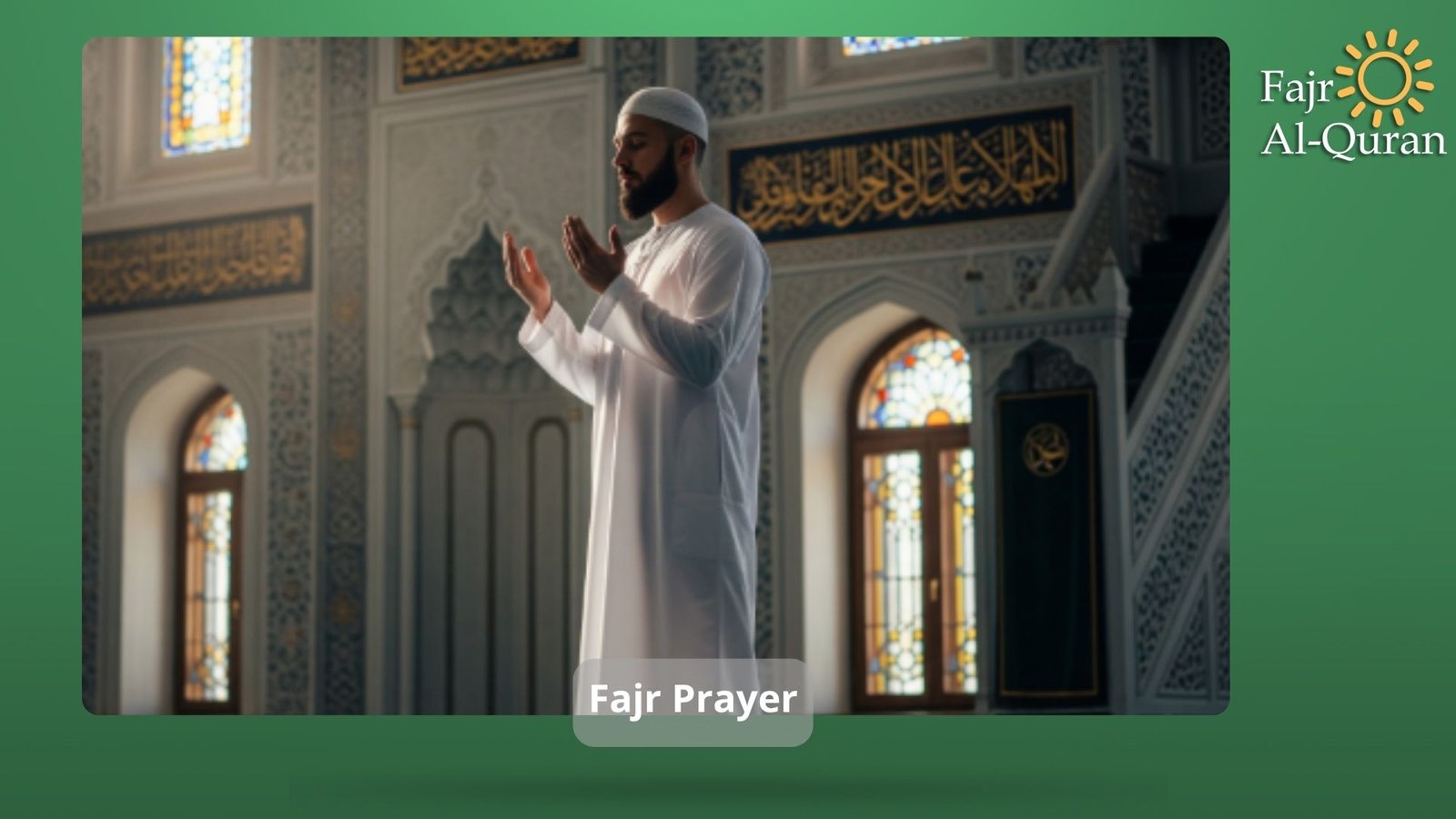
Fajr Prayer

Among the five daily prayers in Islam, the Fajr prayer holds a special status. It marks the beginning of the day, before the sun rises, and serves as a powerful spiritual reminder of submission, discipline, and the importance of beginning each day with remembrance of Allah. In a world full of distractions, committing to Fajr prayer is a sign of true devotion and inner strength.

 The Virtue of Fajr Prayer in the Qur’an and Sunnah

The Qur’an highlights the significance of Fajr prayer in Surah Al-Isra (17:78):

“…Indeed, the recitation of the Qur’an at dawn is ever witnessed.”

The Prophet Muhammad ﷺ also emphasized its importance:

“Whoever prays the two cool prayers (Fajr and Asr) will enter Paradise.” (Bukhari & Muslim)

This shows that the First Islamic Prayer of the day is not just a ritual—it is a pathway to Jannah (Paradise) and a shield against evil.

 Spiritual Benefits of Fajr Prayer

Praying at dawn provides a sense of inner peace. The world is quiet, the heart is calm, and one’s soul is most open to divine connection. The stillness of early morning allows for deep reflection and sincere dua (supplication).

The discipline of waking up for the First Islamic Prayer of the day also helps believers align their priorities. It places Allah before anything else—before work, school, or even sleep. This same mindset of putting faith first can also be nurtured through consistent habits like attending Virtual Quran Classes, which further reinforce a structured and spiritually centered lifestyle.

Physical and Psychological Benefits

Modern science and Islamic wisdom align beautifully when it comes to the benefits of early rising and structured spiritual practices like the Fajr prayer. Establishing such habits early in life—alongside teaching values like discipline, reflection, and even the basics of memorizing the Quran for children—creates a strong spiritual foundation that supports lifelong emotional and mental well-being.

1. Improved Mental Clarity and Focus

Waking up early and starting the day with a calm, focused act of worship sharpens the mind. The quiet of dawn minimizes distractions, helping the brain process information more effectively. Fajr sets a clear tone of purpose for the rest of the day.

2. Lower Stress and Anxiety Levels

Studies show that people who maintain structured routines—especially involving early mornings—tend to have lower cortisol (stress hormone) levels. The Fajr prayer promotes mindfulness, gratitude, and trust in Allah, which naturally reduces anxiety.

3. Better Sleep Quality

Establishing a consistent sleep-wake cycle, with early bedtime and early rising for Fajr, supports deeper and more restful sleep. It aligns with the body’s natural circadian rhythm, improving both the quantity and quality of sleep over time.

4. Enhanced Emotional Balance

Spiritual practices like Fajr help regulate mood by encouraging positive emotions such as peace, hope, and contentment. The act of prayer and dhikr (remembrance of Allah) activates areas of the brain linked to emotional resilience and calmness.

5. Boosted Immune System

Rising early and moving the body—even for ablution and standing in prayer—stimulates circulation, metabolism, and alertness. When combined with reduced stress and better sleep, the immune system becomes more balanced and effective.

6. Increased Discipline and Self-Control

Consistently waking up for the First Islamic Prayer of the day trains the nafs (self) to submit to a higher purpose rather than comfort. This habit builds willpower, time management skills, and a mindset of responsibility—all of which carry into daily tasks and life goals.


 Fajr as a Time of Divine Blessing!

The early hours of the morning are a time when angels witness the worship of the believers. According to hadith, Allah descends to the lowest heaven during the last third of the night and listens to those who call upon Him.

“Our Lord descends to the lowest heaven every night… and says: ‘Who is calling upon Me that I may answer him?’” (Bukhari)

 Building the Habit of Fajr Prayer

Sticking to Fajr prayer can be challenging, especially in winter or after long nights. However, with some practical steps, it becomes a natural part of your lifestyle:

1. Sleep with Purpose, Not Just Tiredness

Don’t just crash into bed—go to sleep with intention. Say a short dua like:

“O Allah, help me wake up for Fajr and make me among those who value Your worship.”

This mindset shift makes your rest an act of worship, and it prepares your heart spiritually before the alarm even rings.

2. Create a Fajr-Focused Evening Routine

The key to waking up early starts the night before. Turn off screens at least 30–60 minutes before sleep, dim the lights, and avoid heavy meals late at night. Doing so improves your sleep quality and makes it easier to wake up for Fajr prayer with energy.

3. Use Strategic Alarms (with Purposeful Placement)

Place your alarm—or phone—far from your bed, so you have to physically get up to turn it off. Use alarms with peaceful tones that remind you why you’re waking up. Some apps even play Quranic verses or adhkar at Fajr time to inspire you.

4. Build Accountability (Find a Fajr Buddy)

Connect with a friend or family member who also wants to pray Fajr consistently. A quick “Fajr check-in” via message or call can add motivation and a sense of responsibility. Knowing someone else is also striving keeps you going.

5. Start Small, Then Grow

If you’re struggling to wake up at the exact Fajr time, start by waking a bit after sunrise and praying Qada’, then gradually shift backward. Progress with sincerity is better than guilt-driven perfection. Allah sees your efforts.

The more you prioritize it, the easier it becomes. It may start with struggle, but it ends with serenity.


Fajr Prayer
Fajr Prayer


 Fajr Prayer in Community

Attending the First Islamic Prayer of the day in the masjid carries additional rewards. The Prophet ﷺ said: those who attend Fajr in congregation receive immense blessings. This atmosphere of early spiritual commitment not only strengthens one’s connection with Allah but also encourages other acts of worship, such as Quran Memorization, especially when the mind is fresh and the heart is most receptive.

“If people knew what is in the First Islamic Prayer of the day and ‘Isha in congregation, they would go to them even if they had to crawl.” (Bukhari)

Praying with others at this blessed time creates a sense of unity and brotherhood. It reminds us that we are part of a spiritual family striving for the same goal.

Scientific Insight: Fajr Prayer and Mental Health

Waking up early for the First Islamic Prayer of the day not only fulfills a spiritual duty, but also supports mental and emotional well-being. Studies in modern psychology suggest that early rising is associated with higher levels of positivity, better emotional regulation, and lower rates of depression.

According to a study published by the journal Nature Communications, people with a natural inclination toward waking up early—”morning types”—were found to have a lower risk of mental health disorders compared to night owls.

“Being a morning person is causally associated with better mental health,” the study concludes.
Nature Communications, 2021

This aligns beautifully with the wisdom of Islam, which encourages waking up before sunrise for First Islamic Prayer of the Day—a daily practice that nourishes the soul and stabilizes the mind.

In a world that glorifies hustle, noise, and constant activity, the stillness of Fajr prayer is revolutionary. It’s a silent protest against forgetfulness. A reminder that success doesn’t begin with emails, caffeine, or social media—it begins with sajdah (prostration).

Make Fajr prayer your anchor. Let it shape your mornings, and soon, it will shape your life.


Pillars of Islam: The Foundation of a Muslim’s Life

pillars of islam

The 5 Pillars of Islam are the foundation of a Muslim’s life, guiding them in their relationship with Allah and with each other. These five essential practices are not just rituals, but a way of life that helps Muslims cultivate a deeper sense of purpose, compassion, and community.

Pillars of islam
Iftar

The Power of Shahada: Declaring Faith

The Shahada, or declaration of faith, is the first pillar of the Pillars of Islam. It’s a simple yet profound statement that sets the tone for a Muslim’s life: “There is no god but Allah, and Muhammad is the Messenger of Allah.” When a person recites the Shahada with conviction, they’re essentially saying that they’re willing to surrender their will to Allah and follow the guidance of the Prophet Muhammad peace be upon him. This declaration is a commitment to the oneness of God and the prophethood of Muhammad, and it’s a promise to live one’s life according to the teachings of Islam.

The Shahada is more than just a phrase; it’s a mindset. It’s a reminder that there’s a higher power at work in the universe, and that we’re accountable to Allah for our actions. When Muslims recite the Shahada regularly, they’re reinforcing their faith and reminding themselves of their purpose in life. For example, a Muslim may recite the Shahada before prayer or during times of stress, as a way of seeking guidance and comfort. The Shahada is also a call to action, encouraging Muslims to live their lives in a way that reflects their commitment to Allah. Whether it’s through prayer, charity, or simply being kind to others, the Shahada inspires Muslims to be the best version of themselves.

The Discipline of Salat: Finding Peace in Prayer

The second pillar of the Pillars of Islam is Salat, or prayer. Muslims are required to perform five daily prayers, each at a specific time and with specific movements and recitations. When Muslims pray, they’re not just communicating with Allah; they’re also cultivating a sense of humility, gratitude, and mindfulness. Prayer is a powerful way to connect with Allah and seek guidance, comfort, and forgiveness. For many Muslims, prayer is a source of peace and tranquility, a way to calm the mind and soothe the soul.

The physical movements of prayer, such as standing, bowing, and prostrating, help to cultivate a sense of discipline and focus. The recitations from the Quran and the phrases of praise and glorification of Allah help to purify the heart and soul. When Muslims pray, they’re reminded of their purpose in life and their responsibilities towards themselves, their families, and their communities. For example, a Muslim may pray for guidance on how to navigate a difficult situation, or for forgiveness for past mistakes. By making prayer a regular part of their daily routine, Muslims can cultivate a sense of inner peace and calm, even in the midst of chaos.

Prayer is one of the most important Pillars of Islam as it is the first thing a man will be asked if he did it in dunya (his life) or not in jugment day

pillars of islam
a man gives zakat

The Joy of Giving: Zakat and the Spirit of Charity

The third pillar of Pillars of Islam is Zakat, or charity. Zakat is a percentage of a Muslim’s wealth that’s given to those in need, usually calculated as 2.5% of excess wealth. When Muslims give Zakat, they’re not just helping others; they’re also purifying their own wealth and souls. Zakat is a reminder that wealth is a trust from Allah, and that Muslims are responsible for using it in a way that benefits everyone, not just themselves. Giving Zakat can take many forms, from donating to food banks and charities to sponsoring orphans and supporting community development projects.

When Muslims give Zakat, they’re participating in a larger network of compassion and solidarity. Zakat helps to build a sense of community and social responsibility, reminding Muslims that they’re part of a larger whole. For example, a Muslim may give Zakat to a local food bank, helping to provide for families in need. By giving Zakat, Muslims can cultivate a sense of generosity and compassion, and help to build a more just and equitable society.

The Spiritual Rewards of Fasting: Cultivating Self-Discipline and Empathy

The fourth pillar of Pillars of Islam is Sawm, or fasting. During the month of Ramadan, Muslims fast from dawn to sunset, abstaining from food, drink, and other physical needs. Fasting is a way to cultivate self-control, empathy, and gratitude, and to remind Muslims of the struggles of those who are less fortunate. When Muslims fast, they’re not just denying themselves physical comforts; they’re also opening themselves up to spiritual growth and renewal.

Fasting can be challenging, especially in hot climates or for those with physical demands. But the rewards of fasting go far beyond the physical benefits. Fasting helps Muslims develop self-discipline, empathy, and compassion, and it reminds them of the importance of gratitude and contentment. For example, a Muslim may fast during Ramadan, and then break their fast with a meal shared with family and friends. By fasting, Muslims can cultivate a sense of inner strength and resilience, and develop a deeper appreciation for the blessings in their lives.

Ramadan is a good chance for Quran memorization and learn Quranic Arabic to know more about Quranic meanings

The Journey of a Lifetime: Hajj and the Spirit of Pilgrimage

The fifth and final Pillars of Islam is Hajj, or pilgrimage. The Hajj is a journey to the holy city of Mecca, where Muslims gather from all over the world to perform rituals and ceremonies that commemorate the life of the Prophet Abraham and his family. The Hajj is a once-in-a-lifetime obligation for Muslims who are physically and financially able, and it’s a journey that can be deeply transformative.

During the Hajj, Muslims perform a series of rituals, including circling the Kaaba, running between the hills of Safa and Marwa, and standing on the plain of Arafah. These rituals are rich in symbolism and history, and they serve as a powerful reminder of the shared heritage and identity of Muslims around the world. The Hajj is also a celebration of unity and diversity, as Muslims from different cultures and backgrounds come together to worship and celebrate their faith. For many Muslims, the Hajj is a once-in-a-lifetime experience that can bring about profound spiritual growth and renewal.

In addition to these individual experiences, the Hajj also has a profound impact on the Muslim community as a whole. It brings Muslims together from all over the world, reminding them of their shared values and goals. The Hajj also serves as a powerful symbol of unity and solidarity, demonstrating the diversity and richness of Muslim cultures and traditions.

The Impact of the 5 Pillars on Muslim Life

The 5 Pillars of Islam have a profound impact on Muslim life, shaping every aspect of a Muslim’s daily routine and spiritual practice. By declaring their faith through the Shahada, Muslims are reminded of their purpose in life and their responsibilities towards themselves and others. Through prayer, Muslims cultivate a sense of humility and gratitude, and seek guidance and comfort from Allah. By giving Zakat, Muslims participate in a larger network of compassion and solidarity, and help to build a more just and equitable society.

Fasting during Ramadan helps Muslims develop self-discipline and empathy, and reminds them of the importance of gratitude and contentment. And by performing the Hajj, Muslims celebrate their shared heritage and identity, and demonstrate their commitment to their faith. The 5 Pillars are not just individual practices; they’re a way of life that guides Muslims in their relationship with Allah and with each other.

In conclusion, the 5 Pillars of Islam are the foundation of a Muslim’s life, guiding them in their relationship with Allah and with each other. These five essential practices are not just rituals, but a way of life that helps Muslims cultivate a deeper sense of purpose, compassion, and community. By embracing the 5 Pillars of Islam, Muslims can live a life that’s rich in meaning and fulfillment, and cultivate a sense of inner peace and calm.

Need Help?