Best Online Ten Qira’at Course – Learn 10 Quran Recitations with Certified Scholars.

Learn Ten Quran Recitations with Certified Scholars

An online Ten Qira’at course offers advanced study of all ten authentic, mutawatir methods of Quranic recitation, taught by Ijazah-certified instructors. These courses focus on mastering each riwayah, such as Hafs, Warsh, Qalun, and Ibn Kathir, through personalized, one-on-one sessions.

Students gain deep insight into the nuances of pronunciation, tajweed, and textual variations, achieving a profound understanding of the Quran’s linguistic richness. Ideal for scholars and dedicated learners, these programs provide rigorous training with certification, emphasizing preservation of the Quran’s original form across generations.

An online Ten Qira’at course teaches the ten authenticated methods of Quranic recitation (such as Nafi’, Asim, and Ibn Kathir) via live one-on-one sessions with certified Egyptian and Al-Azhar-qualified scholars. Ten Qira’at courses typically offer traditional Ijazah chains, flexible scheduling, and customized progression from foundational rules to full recitation mastery.

A high-quality online Ten Qira’at course teaches the ten accepted methods of Quran recitation while strengthening your tajweed skills. It also helps you understand the unique pronunciation, rules, and styles of each qiraat. Whether you are a beginner who has mastered basic Quran reading or an advanced learner seeking an Ijazah, the right course provides a clear and structured learning path.

Among the leading institutions, Fajr Al-Quran Academy has earned the trust of learners worldwide. The academy offers a professional online Ten Qira’at course taught by experienced qaris, expert instructors, and certified teachers. Every lesson combines theory with regular practice. The curriculum is carefully designed to help learners master every authentic mode of Quran recitation step by step.

This guide explains everything you need to know before you enroll in an online Ten Qira’at course. You will discover what the Ten Qira’at are, who can study them, what you will learn, and how to choose the best program for your goals.

What Is an Online Ten Qira’at Course?

An online Ten Qira’at course is a specialized Quran program that teaches the ten authentic methods of Quran recitation. These methods have been transmitted through reliable chains of narration from the Prophet Muhammad (peace be upon him). Every online Ten Qira’at course follows recognized Islamic scholarship and focuses on preserving the exact pronunciation of the Quran. Our online Quran classes can be a good complement for anyone following this path.

Unlike a basic Tajweed class, an online Ten Qira’at course introduces learners to the differences between the accepted readings while keeping the meaning of the Quran unchanged. Students learn the unique pronunciation, articulation, and recitation patterns found in each authentic reading. Those who found this helpful often continue with our Hifz Quran online.

The greatest advantage of an online Ten Qira’at course is flexibility. You can study from any country without traveling to a traditional institute. Live classes allow direct interaction with scholars who answer questions and correct mistakes immediately.

A professional online Ten Qira’at course usually includes:

  • Live one-on-one or small group lessons.
  • Certified and qualified Quran teachers.
  • Step-by-step structured curriculum.
  • Regular recitation assessment.
  • Continuous Tajweed correction.
  • Recorded lessons for revision.
  • Flexible schedules for kids and adults.

At Fajr Al-Quran Academy, every online Ten Qira’at course is designed to meet the needs of beginners, intermediate learners, and advanced students. Teachers focus on building confidence through daily practice. Learners progress gradually without feeling overwhelmed. This supportive environment helps students improve their Quranic recitation while understanding the authentic foundations of every accepted qirat.

Online Ten Qira'at Course

What Are the Ten Qira’at of the Quran?

The Ten Qira’at are the ten authentic methods of Quran recitation that have been preserved through continuous chains of transmission. Every authentic online Ten Qira’at course teaches these readings according to established Islamic scholarship.

Each recitation was narrated by a famous Imam whose reading was accepted by Muslim scholars throughout history. Although there are slight differences in pronunciation, elongation, and certain words, the message of the Quran remains the same.

The ten accepted Qira’at are:

  • Nafi’
  • Ibn Kathir
  • Abu Amr
  • Ibn Amir
  • Asim
  • Hamzah
  • Al-Kisa’i
  • Abu Ja’far
  • Ya’qub
  • Khalaf Al-Ashir

A comprehensive online Ten Qira’at course explains the unique features of every reading. Students learn when differences appear and how each recitation follows authentic transmission.

At Fajr Al-Quran Academy, certified qaris explain these differences clearly. Lessons move from easier topics to more advanced concepts. Students never memorize differences without understanding their origin. Instead, they study every authentic narration with confidence and precision.

An excellent online Ten Qira’at course also strengthens Tajweed. Students improve pronunciation while comparing different recitation methods. Frequent revision helps learners remember each reading accurately.

By studying the Ten Qira’at, Muslims gain a deeper appreciation of the Quran’s preservation. They also connect with a rich scholarly tradition that has continued for more than fourteen centuries. This knowledge increases confidence and improves overall Quran recitation.

Prerequisites for Studying the Ten Qira’at

Before joining an online Ten Qira’at course, learners should build a strong Quran foundation. The Ten Qira’at are an advanced subject. Students who already read the Quran fluently usually make faster progress.

Most institutes recommend completing a Tajweed course before beginning an online Ten Qira’at course. Good pronunciation allows students to focus on the differences between the authentic recitations instead of correcting basic reading mistakes.

Common prerequisites include:

  • Fluency in reading the Quran.
  • Good understanding of Tajweed rules.
  • Ability to pronounce Arabic letters correctly.
  • Commitment to regular practice.
  • Willingness to attend live lessons consistently.

Some advanced online Ten Qira’at course programs also recommend memorizing part or all of the Quran. However, complete memorization is not always required. Requirements vary depending on the institution and learning objectives.

Fajr Al-Quran Academy evaluates every student before enrollment. This placement process ensures learners begin at the correct level. Beginners receive guidance on strengthening Tajweed before moving into advanced Qira’at studies. More experienced students can begin learning multiple authentic recitation styles immediately.

Consistency is one of the biggest keys to success. Even short daily practice sessions produce excellent long-term results. Students who review lessons regularly retain more information and improve faster. With the support of experienced teachers and a carefully structured online Ten Qira’at course, learners steadily develop the confidence needed to master the authentic Quranic recitations.

What You Will Learn in an Online Ten Qira’at Course

A professional online Ten Qira’at course offers much more than just learning different ways of reciting the Quran. It provides students with a comprehensive understanding of the authentic methods of reciting the Quran. Every lesson builds on the previous one. This makes learning easier and more effective.

The curriculum of a quality online Ten Qira’at course is carefully designed for steady progress. Students begin by reviewing Tajweed. They then study the principles of each authentic recitation before moving to advanced applications. Regular practice helps learners gain confidence with every lesson.

Most courses include:

  • Advanced tajweed rules for all accepted recitations.
  • The history of the Ten Qira’at.
  • The chains of transmission for each reading.
  • Differences in pronunciation and styles.
  • Correct application of every qirat.
  • Daily and weekly recitation assignments.
  • Live correction from qualified teachers.
  • Revision sessions to strengthen accuracy.

A good online Ten Qira’at course also teaches students how to recognize the differences between the accepted modes of recitation without confusion. Every variation is explained using authentic sources.

At Fajr Al-Quran Academy, every online Ten Qira’at course follows a clear and structured learning plan. Students receive continuous feedback from expert instructors throughout the program. Lessons combine explanation with practical recitation. This method strengthens memory and improves fluency. By the end of the online Ten Qira’at course, learners have a deeper understanding of Quranic recitation and greater confidence in applying every authentic reading correctly.

Learn Ten Quran Recitations with Certified Scholars

Learn Ten Quran Recitations with Certified Scholars

Choosing experienced instructors is one of the most important steps when joining an online Ten Qira’at course. Learning the Ten Qira’at requires knowledge, precision, and years of study. Certified scholars ensure that every lesson follows authentic Islamic scholarship.

The best online Ten Qira’at course is taught by qualified teachers who hold recognized certifications in Quran recitation. Many have studied directly with senior qaris and possess an authentic chain of transmission. Their experience allows them to explain complex topics simply and practically.

At Fajr Al-Quran Academy, every online Ten Qira’at course is delivered through interactive live classes. Students recite directly to their instructors and receive immediate corrections. This personal guidance helps learners improve faster than studying alone.

The academy’s teaching approach focuses on:

  • Individual attention during every lesson.
  • Continuous recitation assessment.
  • Practical Tajweed correction.
  • Flexible schedules for children and adults.
  • Clear learning objectives.
  • Regular revision and progress reports.

Each online Ten Qira’at course is suitable for motivated students who want to master authentic Quran recitation step by step. Whether your goal is personal improvement or preparing for an Ijazah, experienced scholars guide you through every stage.

Another advantage is the academy’s trial classes. New learners can attend a lesson before deciding to enroll. This allows students to experience the teaching style and meet their instructors. Many families appreciate this opportunity because it helps them choose the right program with confidence.

With dedicated teachers, personalized instruction, and regular practice, students steadily improve their recitation. Over time, they gain the skills needed to recite the Quran according to the authentic Ten Qira’at while preserving every detail with accuracy and confidence.

The Difference Between the Seven Qira’at and the Ten Qira’at

Many learners ask whether they should study the Seven Qira’at or the Ten Qira’at. A well-organized online Ten Qira’at course explains this topic clearly from the beginning. Understanding the difference helps students choose the learning path that best matches their goals.

The Seven Qira’at refer to the seven famous authentic recitations compiled and widely taught by early Muslim scholars. Later, three additional authentic recitations were recognized through reliable chains of transmission. Together, they form the Ten Qira’at that are accepted by scholars today.

An online Ten Qira’at course teaches all ten authentic recitations. This gives students a broader understanding of the Quranic tradition while preserving the same divine message. The differences are limited to pronunciation, elongation, articulation, and certain linguistic forms. They never change the meaning or authenticity of the Quran.

The main differences include:

  • Seven Qira’at include seven authentic recitations.
  • Ten Qira’at include all seven plus three additional authentic readings.
  • The Ten Qira’at provide a more comprehensive study of Quranic recitation.
  • Both are based on reliable chains of transmission and accepted scholarship.

At Fajr Al-Quran Academy, every online Ten Qira’at course explains these differences with practical examples. Students compare the authentic readings while applying proper tajweed rules. Live recitation sessions help learners distinguish between the accepted methods with ease.

Studying the complete Ten Qira’at gives learners a deeper appreciation of the Quran’s preservation. It also prepares advanced students for higher levels of Quranic study and future Ijazah programs. By following a structured online Ten Qira’at course, students build strong knowledge while maintaining confidence in every authentic recitation.

How Long Does It Take to Complete an Online Ten Qira’at Course?

The time needed to finish an online Ten Qira’at course depends on your current Quran level, study schedule, and learning goals. Every student progresses at a different pace. Some learners already have strong Tajweed and memorization skills, while others need more time to build a solid foundation.

For students with advanced Quran knowledge, an online Ten Qira’at course may take one to three years. Beginners who first need to strengthen their Tajweed and recitation may require additional time. The most important factor is consistent practice rather than speed.

Several factors affect your progress:

  • Your knowledge of Tajweed.
  • Your Quran memorization level.
  • The number of live lessons each week.
  • Daily revision and practice.
  • Guidance from qualified Quran teachers.
  • Your commitment to completing assignments.

At Fajr Al-Quran Academy, every online Ten Qira’at course follows a structured curriculum with clear milestones. Students receive regular evaluations that measure pronunciation, fluency, and understanding of each authentic recitation. This helps learners know exactly where they need to improve.

The academy also offers flexible schedules. Kids, adults, university students, and working professionals can choose lesson times that fit their daily routine. This flexibility allows learners to remain consistent throughout the program.

Patience is essential when studying the Ten Qira’at. Every lesson builds upon the previous one. Students who attend classes regularly and revise daily often make steady progress. By completing an online Ten Qira’at course, learners gain the confidence to recite the Quran according to the authentic methods while preserving every detail with accuracy and care.

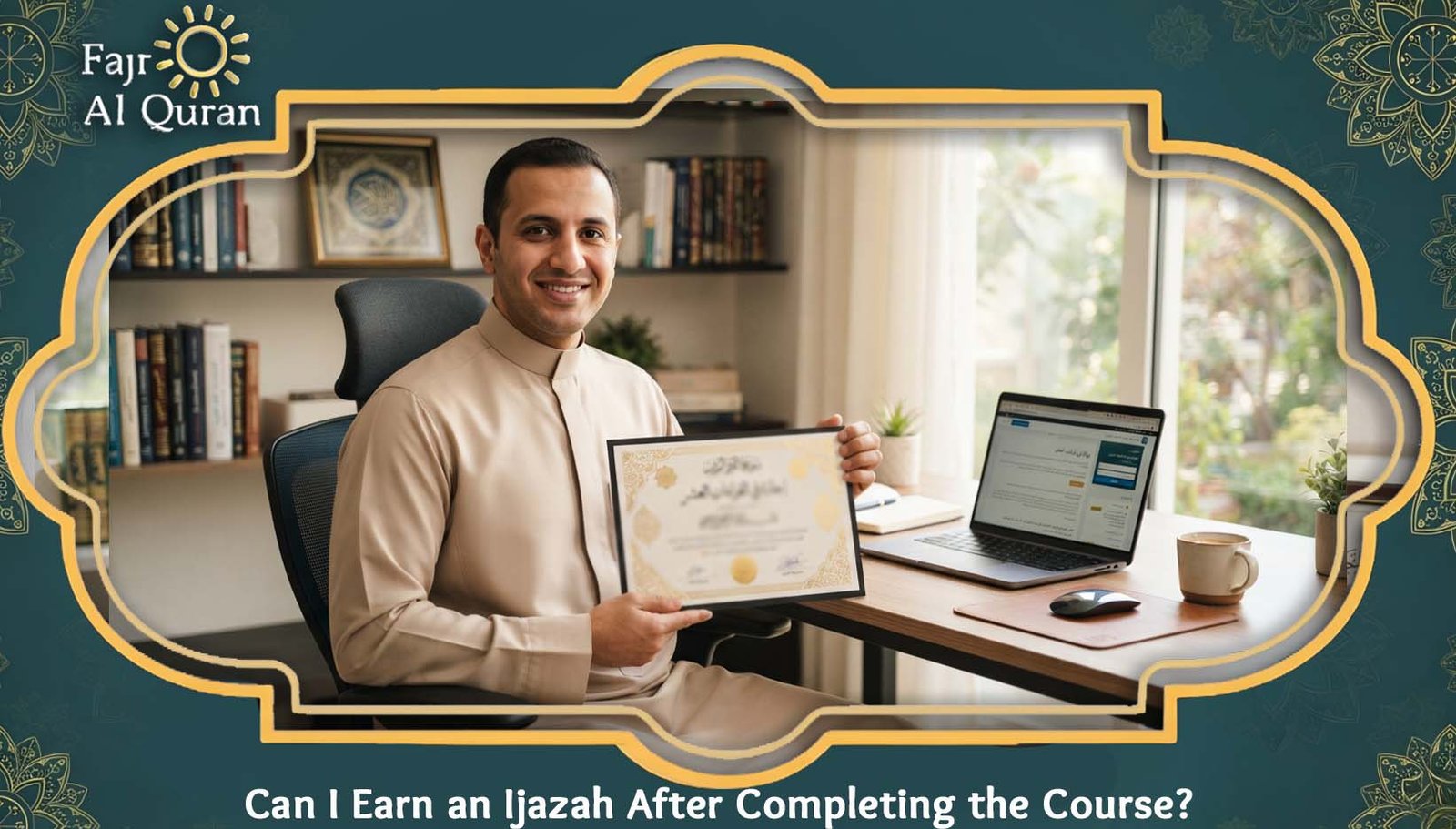
Can I Earn an Ijazah After Completing the Course?

Can I Earn an Ijazah After Completing the Course?

Yes. Many learners join an online Ten Qira’at course to earn an Ijazah in Quran. An Ijazah is a respected certification that confirms a student has mastered Quran recitation according to an authentic chain of transmission under a certified scholar.

However, completing an online Ten Qira’at course does not automatically guarantee an Ijazah. Students must demonstrate accurate recitation, strong Tajweed, and consistent application of the authentic qiraat. They are usually required to recite portions or the entire Quran to their teacher without significant mistakes.

At Fajr Al-Quran Academy, advanced students who complete the online Ten Qira’at course may continue toward Ijazah under the supervision of certified scholars. Every learner receives detailed guidance throughout the preparation process. Teachers provide regular evaluations, correction sessions, and personalized advice to help students reach the required standard.

Preparing for an Ijazah offers many benefits:

  • Stronger Quran recitation skills.
  • Greater confidence in applying authentic qira’at.
  • Recognition from qualified scholars.
  • A deeper connection with the Quran.
  • The opportunity to teach future generations after meeting all scholarly requirements.

Success requires dedication, sincerity, and regular practice. Students who remain committed often see remarkable improvement over time. With experienced teachers, authentic instruction, and a comprehensive online Ten Qira’at course, learners can achieve their goal while preserving the beautiful tradition of Quranic recitation.

How to Choose the Best Online Ten Qira’at Course

Choosing the right online Ten Qira’at course is an important decision. A high-quality program helps you learn correctly from the beginning. It also gives you confidence as you progress through the authentic Quranic recitations.

Before you enroll in an online Ten Qira’at course, look carefully at the qualifications of the instructors. The best programs are taught by certified scholars and experienced qaris who have mastered the authentic methods of Quran recitation. They should also have experience teaching students of different ages and skill levels.

When comparing courses, consider these features:

  • Certified and qualified Quran teachers.
  • A clear and structured curriculum.
  • Interactive live lessons.
  • Small class sizes or one-on-one learning.
  • Regular recitation assessments.
  • Strong focus on tajweed and authentic rules.
  • Flexible schedules for busy learners.
  • A free trial lesson before enrollment.
  • Preparation for future Ijazah studies.

Fajr Al-Quran Academy meets these standards through its carefully designed online Ten Qira’at course. The academy combines traditional Quranic scholarship with modern online learning tools. Students receive personal attention from expert instructors who monitor their progress throughout the course.

Another advantage is the supportive learning environment. Teachers encourage students to ask questions and review difficult topics until they feel confident. Continuous feedback helps learners correct mistakes early and develop accurate recitation habits.

The best online Ten Qira’at course is not simply the shortest or the least expensive. It is the one that provides authentic knowledge, experienced teachers, consistent guidance, and a learning plan that helps you master every accepted qira’at with confidence.

Conclusion

An online Ten Qira’at course is one of the best ways to deepen your connection with the Quran and learn the ten authentic methods of recitation. Whether you are an advanced learner, a motivated beginner, or someone preparing for an Ijazah, the right program provides a clear path to success.

Fajr Al-Quran Academy stands out as a trusted choice for anyone seeking a professional online Ten Qira’at course. With certified scholars, experienced teachers, interactive live classes, and a structured curriculum, the academy helps students master the authentic qira’at with confidence. Flexible schedules, personalized guidance, and regular practice make learning easier for kids, adults, and families around the world.

Master Islamic Fiqh – A Complete Guide to Understanding Islamic Jurisprudence

Master Islamic Fiqh – A Complete Guide to Understanding Islamic Jurisprudence

Islamic FiQh is jurisprudence. It is the human effort to understand and apply divine laws in daily life. Scholars interpret the Quran and Sunnah to create rules. These rules guide how Muslims should pray, do business, marry, and live ethically.

Fiqh in Islam covers worship, ethics, family matters, business transactions, and social justice. Unlike Sharia, which is divine law, Fiqh involves human reasoning and contextual interpretation, leading to different legal schools (madhabs). Islamic Fiqh ensures Islamic principles are practically implemented across diverse cultures and times.

Islamic fiqh is one of the most important branches of Islamic knowledge. It helps Muslims understand how to worship Allah correctly and how to apply the teachings of Islam in everyday life. Whether you are learning about prayer, fasting, family matters, business transactions, or personal conduct, Islamic fiqh provides practical guidance based on the Qur’an, the Sunnah, and the scholarly efforts of qualified jurists.

For beginners, Islamic fiqh may seem like a complex subject because it includes many rules, principles, and legal discussions. When Islamic Studies is studied step by step, Islamic fiqh becomes easier to understand. It teaches Muslims not only what to do but also why certain rulings exist.

This complete guide explains the definition of Islamic fiqh, its importance, sources, schools, and practical applications. It also shows how anyone can begin learning Islamic fiqh with confidence and build a strong foundation in Islamic jurisprudence.

What is the Islamic Fiqh Definition?

The Islamic fiqh definition refers to the human understanding of Islamic law that is derived from the Qur’an, the Sunnah, scholarly consensus, and qualified legal reasoning. The word fiqh comes from the Arabic language and literally means “deep understanding” or “comprehension.” In Islamic terminology, fiqh refers to the science of understanding the practical rulings of Islam based on authentic evidence.

Unlike divine revelation, Islamic fiqh represents the scholarly interpretation of revealed texts. The Qur’an and the Sunnah are perfect and immutable because they come from Allah and the teachings of the Islamic Prophet Muhammad. Islamic fiqh, however, is the result of careful human effort to understand these sources and apply them to different situations. This scholarly effort is known as ijtihad, which allows qualified scholars to address new issues while remaining faithful to Islamic principles.

The field of Islamic jurisprudence covers every aspect of a Muslim’s life. It includes acts of worship, financial dealings, marriage, family matters, inheritance, business transactions, ethics, and social responsibilities.

Some key characteristics of Islamic fiqh include:

  • It is based on the Qur’an and authentic Hadith.
  • It explains the practical application of Shariah.
  • It relies on scholarly interpretation and legal methodology.
  • It helps Muslims make informed religious decisions.
  • It provides guidance for both personal and social life.

Understanding the Islamic fiqh definition is the first step toward appreciating the richness of Islamic jurisprudence and the wisdom behind the rules of Islamic fiqh.

Master Islamic Fiqh – A Complete Guide to Understanding Islamic Jurisprudence

The Meaning of Fiqh in Islam

The meaning of fiqh in Islam goes beyond simply knowing religious rules. It refers to developing a deep understanding of Allah’s guidance and learning how to implement it correctly in daily life. The Arabic word fiqh emphasizes knowledge that leads to wisdom, practical action, and sincere worship rather than memorizing information alone.

During the lifetime of the Islamic Prophet Muhammad (peace be upon him), Muslims learned directly from his teachings, actions, and sayings. After his passing, the Companions carefully preserved this knowledge and taught future generations. As Islam spread across different regions and cultures, scholars organized this knowledge into the discipline known today as Islamic fiqh. Their work became the foundation of Islamic jurisprudence, helping Muslims understand how Islamic laws apply to changing circumstances while remaining faithful to divine revelation.

Today, Islamic fiqh continues to guide Muslims in every stage of life. It governs acts of worship such as prayer, fasting, zakat, and Hajj, while also dealing with family relationships, business ethics, inheritance, contracts, and social responsibilities. Because new situations continue to arise, qualified scholars use the principles of Usul al-Fiqh and ijtihad to derive rulings that remain consistent with the Qur’an and Sunnah.

Learning the meaning of fiqh in Islam helps Muslims:

  • Understand the wisdom behind Islamic rulings.
  • Practice worship correctly and confidently.
  • Make ethical decisions in daily life.
  • Strengthen their relationship with Allah.
  • Appreciate the rich heritage of Islamic scholarship.

Through trusted institutions like Fajr Al-Quran Academy, students of all ages can learn Islamic fiqh in an easy, structured, and engaging way. Expert Quran teachers explain the principles of Islamic jurisprudence using authentic sources, making it easier for beginners to build lasting knowledge and apply it with confidence.

Why Is Islamic Fiqh Important for Muslims?

Islamic fiqh plays a vital role in helping Muslims live according to the teachings of Islam. It transforms the guidance found in the Qur’an and the Sunnah into practical rulings that people can follow in their daily lives. Without Islamic fiqh, many Muslims would struggle to understand how to perform acts of worship correctly or how to deal with modern situations while remaining faithful to Islamic law. This is why Islamic jurisprudence has always been regarded as one of the most respected branches of Islamic knowledge.

The importance of Islamic fiqh extends far beyond the mosque. It governs prayer, fasting, charity, pilgrimage, family relationships, financial transactions, business ethics, inheritance, and social responsibilities. Every ruling is based on divine guidance and supported by scholarly interpretation.

Some of the key benefits of learning Islamic fiqh include:

  • Understanding the correct way to perform acts of worship.
  • Learning the rules of Islamic fiqh for everyday situations.
  • Building confidence in making ethical and religious decisions.
  • Preserving the teachings of the Qur’an and Sunnah.
  • Promoting justice, honesty, and compassion in society.
  • Strengthening family relationships and community life.

Today, reliable educational institutions such as Fajr Al-Quran Academy make it easier than ever to learn about the rules of Islamic fiqh. Their qualified teachers present Islamic jurisprudence in simple language, allowing beginners, children, and adults to study with confidence.

The Main Sources of Islamic Fiqh

Every ruling in Islamic fiqh must be based on authentic evidence. Scholars of Islamic jurisprudence do not create religious laws from personal opinions. Instead, they derive rulings from recognized sources that have guided Muslims for more than fourteen centuries. These sources ensure that Islamic law remains firmly connected to divine revelation while also addressing new issues through careful scholarly effort.

The first and most important source of Islamic fiqh is the Qur’an. It is the direct word of Allah and contains the fundamental principles of faith, worship, morality, and legal guidance. Whenever a clear ruling exists in the Qur’an, it forms the foundation of fiqh in Islam.

The second primary source is the Sunnah, which includes the sayings, actions, and approvals of the Islamic Prophet Muhammad (peace be upon him). The practices of the Islamic Prophet Muhammad explain how the teachings of the Qur’an should be implemented.

When scholars encounter issues that are not directly addressed in these primary sources, they turn to additional principles of Islamic jurisprudence, including:

  • Ijma’ (Consensus): The agreement of qualified Muslim scholars on a particular issue.
  • Qiyas (Analogical Reasoning): Applying existing rulings to new situations based on shared causes.
  • Ijtihad: Independent scholarly effort to derive rulings while remaining faithful to the principles of the Qur’an and Sunnah.

These sources work together to ensure that Islamic fiqh remains both authentic and practical. They allow scholars to address contemporary matters without compromising the foundations of Islam.

The Major Schools of Islamic Fiqh

As Islamic civilization expanded across different regions, qualified scholars developed systematic approaches to understanding and applying Islamic law. These approaches became known as the major schools of Islamic fiqh, or Madhhabs. Although each school has its own methodology, all are firmly rooted in the Qur’an, the Sunnah, and the teachings of the Islamic Prophet Muhammad (peace be upon him). Their differences are based on scholarly interpretation, not differences in the core beliefs of Islam.

The four major Sunni schools of Islamic fiqh are:

  • Hanafi School: Founded by Imam Abu Hanifah, it is known for its careful use of reasoning and is widely followed in South Asia, Turkey, and parts of the Middle East.
  • Maliki School: Established by Imam Malik ibn Anas, it places great importance on the practices of the people of Madinah alongside the Qur’an and Sunnah.
  • Shafi’i School: Founded by Imam Al-Shafi’i, it introduced a structured methodology for Islamic jurisprudence and greatly influenced the science of Usul al-Fiqh.
  • Hanbali School: Developed by Imam Ahmad ibn Hanbal, it emphasizes strict adherence to authentic Hadith and textual evidence.

Although these schools sometimes differ on secondary legal matters, they all seek the same goal: understanding and implementing Allah’s guidance correctly. Their variations reflect the flexibility and richness of Islamic fiqh, allowing Muslims in different circumstances to benefit from qualified scholarly opinions while remaining united in their faith.

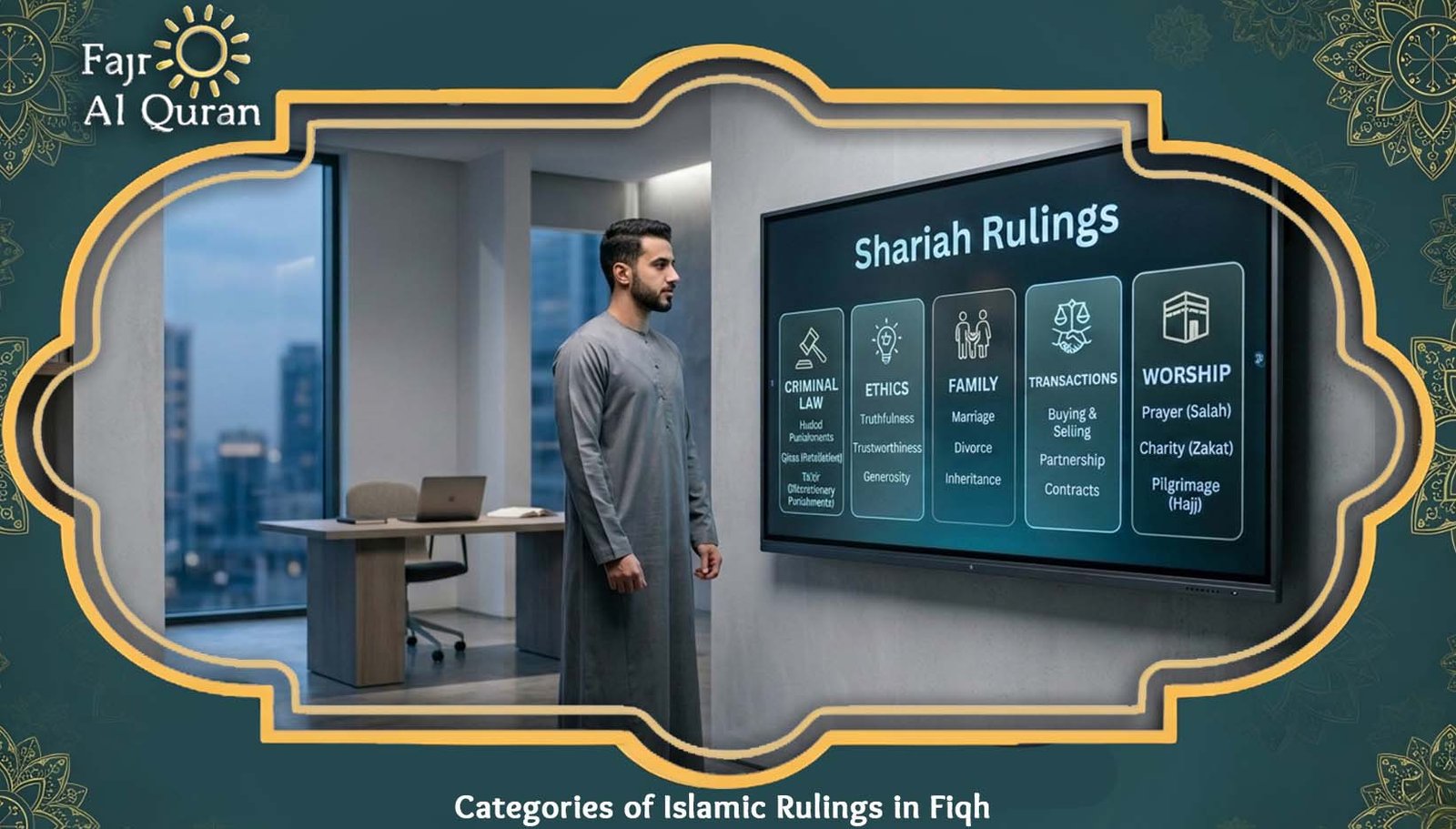
Categories of Islamic Rulings in Fiqh

Categories of Islamic Rulings in Fiqh

One of the most valuable aspects of Islamic fiqh is that it classifies human actions into clear legal categories. These categories help Muslims understand what Allah has commanded, encouraged, discouraged, or prohibited. Instead of leaving people uncertain about their religious responsibilities, Islamic jurisprudence provides practical guidance for everyday decisions. Every ruling is carefully derived from the Qur’an, the Sunnah, and the established principles of Islamic law.

The classical scholars of fiqh in Islam divided actions into five main categories. These rulings apply to acts of worship as well as social and financial dealings, making Islamic fiqh relevant to every stage of life.

The Five Categories of Islamic Rulings

  • Fard (Obligatory): Actions that every Muslim must perform, such as the five daily prayers and fasting during Ramadan. Neglecting them without a valid reason is sinful.
  • Mustahabb (Recommended): Good deeds that earn reward but are not compulsory, such as voluntary prayers and extra charity.
  • Mubah (Permissible): Actions that are neither rewarded nor punished, including many everyday choices like clothing styles or food preferences that comply with Islamic laws.
  • Makruh (Disliked): Actions that are better to avoid because they may lead to undesirable outcomes, although they are not strictly forbidden.
  • Haram (Forbidden): Actions clearly prohibited by Allah and His Messenger, such as theft, dishonesty, and consuming unlawful wealth.

These categories show that Islamic fiqh is not merely a collection of restrictions. Instead, it is a balanced system that guides Muslims toward beneficial choices while protecting individuals and society from harm. The rules of Islamic fiqh govern worship, business, family life, ethics, and public dealings with wisdom and justice.

Students who study at Fajr Al-Quran Academy learn these categories through practical examples from daily life. This educational approach helps beginners understand how Islamic jurisprudence applies to modern situations, making it easier to practice Islam with confidence and sincerity.

Essential Topics Covered in Islamic Fiqh

Islamic fiqh is a broad field of study that covers almost every aspect of a Muslim’s life. It does not focus only on acts of worship but also explains how Muslims should conduct themselves in personal, family, financial, and social matters. By studying Islamic fiqh, learners gain a comprehensive understanding of how Islamic law guides every stage of life while remaining rooted in the teachings of the Qur’an and the Sunnah.

One of the primary areas of fiqh in Islam is worship (Ibadah). This includes learning the correct rulings for purification, prayer, fasting, zakat, and Hajj. These acts form the foundation of a Muslim’s relationship with Allah and must be performed according to authentic guidance.

Another major area is Mu’amalat, which deals with human interactions and transactions. Scholars explain the Islamic principles governing buying and selling, partnerships, contracts, debts, investments, and business ethics.

Islamic fiqh also covers important family matters, including:

  • Marriage and marital rights.
  • Divorce and reconciliation.
  • Children’s rights and responsibilities.
  • Inheritance and estate distribution.
  • Financial support for family members.

In addition, Islamic jurisprudence discusses personal conduct, dietary rules, criminal justice, community responsibilities, and moral behavior.

Modern scholars continue to study emerging issues such as digital finance, medical ethics, environmental responsibility, and technological developments. Through ijtihad, they apply timeless Islamic principles to contemporary challenges while remaining faithful to authentic sources.

At Fajr Al-Quran Academy, students explore these essential topics through structured courses designed for beginners and advanced learners alike.

Difference Between Fiqh and Shariah

Many people use the terms Fiqh and Shariah interchangeably, but they have different meanings. Understanding this distinction is essential for anyone studying Islamic fiqh or Islamic jurisprudence. While both are closely connected, they are not identical. Recognizing their differences helps Muslims appreciate the role of divine revelation and scholarly interpretation in Islamic law.

Shariah refers to the complete divine guidance revealed by Allah through the Qur’an and the teachings of the Islamic Prophet Muhammad (peace be upon him). It includes beliefs, worship, morals, ethics, and legal principles. Since Shariah comes directly from Allah, it is perfect, complete, and immutable.

Islamic fiqh, on the other hand, is the human understanding and interpretation of Shariah. Qualified scholars study the Qur’an, Hadith, and other recognized sources to derive practical rulings for different situations. Because Islamic fiqh involves scholarly interpretation, differences of opinion may occur on issues where the evidence allows more than one valid understanding.

The main differences can be summarized as follows:

Shariah Fiqh
Divine revelation from Allah Human understanding of Shariah
Perfect and unchangeable Based on scholarly interpretation
Found in the Qur’an and Sunnah Derived through Islamic jurisprudence
Covers all aspects of Islam Focuses mainly on practical legal rulings
Universal for all Muslims May include different scholarly opinions

Although they differ, Shariah and Islamic fiqh complement one another. Shariah provides the divine foundation, while Islamic fiqh explains how to implement its guidance in real-life situations. This relationship allows Muslims to follow authentic teachings while addressing new issues through qualified scholarly effort and ijtihad.

Learn Islamic Fiqh for Beginners

Learn Islamic Fiqh for Beginners

Learning Islamic fiqh may seem challenging at first, but every student starts with the basics. With the right guidance and a structured learning plan, beginners can gradually build a strong foundation in Islamic jurisprudence. The goal is not to memorize countless legal rulings overnight. Instead, it is to understand the principles of Islam and learn how to practice them correctly in daily life. Whether you are a child, an adult, or a new Muslim, studying Islamic fiqh helps you worship Allah with confidence and make informed decisions based on authentic Islamic teachings.

A beginner should first focus on the rulings related to everyday worship. This includes purification (Taharah), prayer (Salah), fasting (Sawm), charity (Zakat), and the basic etiquette taught by the Islamic Prophet Muhammad (peace be upon him). Once these foundations are understood, students can move on to family matters, financial transactions, Islamic ethics, and other practical areas of fiqh in Islam. Learning gradually allows knowledge to become meaningful and easier to apply.

For the best results, beginners should:

  • Study from authentic Qur’an and Hadith sources.
  • Learn from qualified scholars and trusted teachers.
  • Begin with simple books before exploring advanced topics.
  • Practice what they learn in their daily lives.
  • Ask questions whenever something is unclear.
  • Review lessons regularly to strengthen understanding.

Fajr Al-Quran Academy offers beginner-friendly courses that explain Islamic law in clear, easy language. Students learn through live classes, practical examples, and interactive discussions with experienced teachers. The academy also provides flexible schedules, allowing children, adults, and busy professionals to study at their own pace.

If you want to learn about the rules of Islamic fiqh, the most important step is to begin. Consistent study, sincere intention, and guidance from knowledgeable teachers will help you build lasting knowledge and develop a deeper connection with your faith.

How to Learn Islamic Fiqh Effectively

Learning Islamic fiqh effectively requires patience, consistency, and a reliable source of knowledge. Since Islamic jurisprudence covers many aspects of worship and daily life, students should follow a structured approach rather than jumping between advanced topics. A gradual learning process helps learners understand the principles behind Islamic rulings instead of simply memorizing them. This creates a stronger foundation that lasts for life.

The first step is to study the Qur’an and the authentic Sunnah, because these are the primary sources of Islamic fiqh. Beginners should also become familiar with basic Islamic terminology, including Shariah, Usul al-Fiqh, ijtihad, and Hadith. Understanding these concepts makes it easier to appreciate how scholars derive legal rulings from the revealed scriptures.

To learn Islamic fiqh successfully, follow these practical steps:

  • Set clear learning goals and study regularly.
  • Choose authentic books written by respected scholars.
  • Enroll in a structured course taught by qualified instructors.
  • Practice the rulings you learn in your daily life.
  • Revise previous lessons to strengthen your knowledge.
  • Respect scholarly differences among the recognized schools of Islamic jurisprudence.
  • Continue learning with sincerity and humility.

Fajr Al-Quran Academy offers live online Quran classes for females, experienced teachers, and step-by-step courses suitable for beginners, children, and adults.

Conclusion

Islamic fiqh helps Muslims understand and apply the teachings of Islam in their daily lives. Based on the Qur’an, the Sunnah, and scholarly interpretation, it provides practical guidance for worship, family life, business, and personal conduct. By learning Islamic fiqh, Muslims gain a deeper understanding of their faith and practice it with confidence. If you are ready to begin your journey, Fajr Al-Quran Academy offers expert-led courses that make learning Islamic jurisprudence simple, engaging, and accessible for beginners, kids, and adults.

Is Tajweed Hard to Learn? What Beginners Should Realistically Expect

Tajweed has a reputation for being difficult, and that reputation puts a lot of beginners off before they even start. The honest answer is that it’s not hard in the way people usually imagine, but it does take a specific kind of patience that’s worth understanding upfront.

Why Tajweed Feels Intimidating at First

Most of the intimidation comes from seeing a long list of rule names, madd, qalqalah, idgham, ikhfa, all at once, as if they need to be memorized like a textbook. In practice, nobody learns Tajweed this way. A good teacher introduces one rule, lets you practice it until it’s automatic, then moves to the next. Seen this way, it’s closer to learning a new skill in stages than cramming for an exam.

What Actually Takes Time

The part that genuinely takes time isn’t memorizing definitions, it’s training your mouth and ear to catch small differences in sound. Holding a madd for the correct count, or telling apart two letters that sound similar to an untrained ear, takes repetition. This is normal and every learner goes through it. It’s a skill built through practice, not a test you either pass or fail.

A Realistic Timeline

Most beginners start noticing real improvement within four to eight weeks of consistent short sessions, though this varies by how much Arabic reading experience they already have. Reading fluency in Arabic script first makes the Tajweed rules click faster, since you’re not fighting two challenges at once. Someone starting from scratch with the alphabet will naturally need more time than someone who already reads Arabic comfortably.

What Makes the Difference Between Slow and Steady Progress

The biggest factor isn’t natural talent, it’s consistency and getting corrected early. Small mistakes that go uncorrected for months become habits that are much harder to fix later than if they’d been caught in week two. This is really the main argument for starting with a teacher rather than trying to self-teach from videos alone, not because self-study can’t work, but because early correction saves a lot of time down the line.

Getting Started Without Overthinking It

The learners who make the fastest progress tend to be the ones who stop worrying about how hard Tajweed is supposed to be and just start with the first rule. Online Quran classes that pace lessons around your current level make this a lot less overwhelming than trying to figure out where to begin on your own.

In Short

Tajweed isn’t hard in the way its reputation suggests. It’s a skill learned in small, repeatable steps, and the learners who do best are the ones who focus on one rule at a time instead of the size of the whole list.

What to Expect in Your First Arabic Class as a Complete Beginner

Best Arabic Classes for Beginners Online

Starting Arabic from zero, here’s a realistic picture of a first class rather than vague reassurance.

An Assessment, Not a Lesson

Most first sessions focus on understanding what you already know, if anything, rather than teaching new material right away.

Alphabet and Sounds Come First

Expect early focus on letter shapes and sounds, since Arabic script differs enough from Latin script that this foundation can’t be skipped.

Simple, Achievable Goals

A good first class sets small, clear goals, recognizing a handful of letters, rather than overwhelming you with the full alphabet at once.

Getting Started Properly

Online Arabic classes that begin with this kind of honest assessment tend to build confidence faster than programs assuming prior knowledge.

In Short

Expect assessment and alphabet basics, not fluency, in your first class. That’s a normal, solid start.

The Most Common Recitation Mistakes Beginners Make (and How to Fix Them)

Best Quran Recitation for Beginners

Certain mistakes show up repeatedly among beginners, and knowing them helps you self-correct faster.

Rushing Through Elongations

Cutting madd letters short instead of holding them properly is one of the most frequent early mistakes.

Merging Distinct Letters

Similar-sounding letters often get blended instead of pronounced with their distinct exit points.

Ignoring Stopping Signs

Waqf signs get overlooked early on, leading to awkward pauses or run-ons that change meaning.

Reading Too Fast Too Soon

Prioritizing speed before accuracy is solid tends to reinforce the mistakes above rather than fix them.

Getting Real Correction

Guided recitation lessons catch these patterns early, before they become harder habits to unlearn.

In Short

Rushed elongations, blended letters, and ignored stopping signs are the most common fixable mistakes beginners make.

What You’ll Study in a Quranic Arabic Course: Grammar, Vocabulary, and Meaning

A Quranic Arabic course covers specific ground distinct from general Arabic study, focused directly on understanding the text itself.

Core Vocabulary First

Courses typically start with the most frequently repeated words across the Quran, since a relatively small set of root words covers a large portion of the text.

Grammar Structures That Matter Most

Sentence structure, verb forms, and how meaning shifts with small grammatical changes are prioritized over broader classical grammar rarely used in the text.

Connecting Words to Meaning

Later stages link vocabulary and grammar directly to specific verses, so recitation starts carrying understood meaning rather than sound alone.

A Practical Starting Point

Quranic Arabic courses structured this way help build understanding gradually rather than requiring full classical Arabic fluency first.

In Short

Expect focused vocabulary, targeted grammar, and direct application to verses, a practical path to understanding rather than a full language degree.

How Online Hifz Classes Actually Work: Structure and Weekly Rhythm

Best Online Hifz Course

Before starting a memorization program, it helps to know what the actual weekly rhythm looks like, not just the promise of “memorize the Quran online.” Here’s how a typical structure is organized.

The Daily Portion (Sabaq)

Most programs assign a small new portion each session, often just a handful of lines depending on the student’s pace, which the student is expected to have memorized by the next class. This is usually the shortest part of a session but the part that requires the most independent practice between classes.

Recent Revision (Sabqi)

Right after the new portion, a good program reviews what was memorized in the recent past, typically the last week or two, to catch any slipping before it becomes a bigger gap. This step is often skipped by weaker programs, which is a warning sign worth asking about directly.

Older Revision (Manzil)

Separately, older memorized material gets cycled back through on a rotating schedule so nothing memorized months ago is left untouched. Without this, it’s common for earlier portions to fade even as new material keeps getting added.

How a Typical Week Is Paced

Most structured programs run three to five sessions a week, each 30 to 45 minutes, with independent practice expected on the days in between. The specific pace is usually adjusted to the student’s age and available time rather than fixed for everyone.

How Progress Gets Tracked

A properly run program keeps a running record of what’s been memorized, when it was last reviewed, and where any weak spots are, rather than just moving forward regardless of how solid earlier material actually is. Ask specifically how progress is tracked before enrolling.

What This Means for You Day to Day

In practice, expect short daily commitments rather than occasional long sessions, and expect revision to take up real time alongside new memorization, not just be an afterthought. Structured memorization courses built around this sabaq, sabqi, manzil rhythm tend to produce steadier long-term retention than programs focused purely on new material.

In Short

A proper hifz program balances three things every week: new memorization, recent revision, and older revision. Understanding this rhythm before you start helps you judge whether a program is actually built for long-term retention or just short-term progress.

Best Hifz Classes for Adults – Learn Quran Memorization Easily

Best Hifz Classes for Adults

Hifz classes for adults offer structured, personalized online learning with experienced tutors, often from Egypt, focusing on effective memorization techniques tailored to adult learners. These courses support memorizing the Quran at one’s own pace, using safe, one-on-one sessions that accommodate busy schedules. Designed for both full and partial Hifz goals, they provide flexibility and spiritual growth through consistent, guided practice.

Quran Hifz classes for adults are specialized Quranic memorization programs tailored to mature learners. Rather than the intense, full-time schedules typically used for kids, Online Hifz courses provide flexible, part-time, and one-on-one pacing designed to accommodate work and family responsibilities. Ideal for busy adults, they offer flexibility, one-on-one instruction, and a supportive environment to build consistency and confidence in memorization at a personal pace.

Many adults are turning to Hifz classes for adults to fulfill their dream of becoming Hafiz while balancing work, family, and personal commitments. With the rise of online learning, students can now join flexible and structured Quran memorization programs from anywhere in the world. Whether you are a beginner or someone restarting your memorization journey, modern Hifz classes for adults make Quran learning easier, more organized, and highly effective.

Many institutes, such as Fajr Al-Quran Academy, now provide professional online Quran classes tailored for adults worldwide. These classes combine tajweed, memorization methods, revision schedules, and live sessions with qualified teachers. With a flexible, personalized approach, adults can memorize the Quran at their own pace without disrupting their daily routines. The availability of online Hifz classes has made Quran memorization accessible to busy professionals, parents, students, and families seeking reliable Islamic education.

Discover the best Hifz classes for adults with certified Quran teachers, flexible online schedules, and personalized memorization plans. Learn Quran memorization easily from home. It’s worth pairing this with our Quran memorization course for a fuller picture.

Importance of Hifz Classes for Adults in Strengthening Faith

Joining Hifz classes for adults is not only about memorizing verses but also about building a stronger relationship with the Quran and deepening faith. Adults who enroll in structured Quran classes often discover a renewed sense of spirituality and discipline in their lives. Reciting and memorizing the Quran daily helps believers maintain focus on Islamic values and brings peace to the heart during stressful times. Through consistent practice in Hifz classes for adults, students develop patience, sincerity, and a stronger understanding of Allah’s message. For a deeper dive, take a look at our online Quran memorization course.

For many adults, online hifz programs create an opportunity to reconnect with the Quran after years of busy schedules and worldly responsibilities. The process of memorization strengthens concentration and encourages daily worship habits such as regular prayer and Quran recitation. Professional teachers in these classes guide learners with patience and support, helping them remain motivated throughout the memorization journey. Adults worldwide are increasingly realizing that joining a Hifz program for adults is one of the best ways to improve both spiritual and personal growth.

Parents who participate in Hifz classes for adults also become role models for their children and families. When adults dedicate time to Quran memorization, they inspire kids and younger learners to value Islamic studies and develop a love for the Quran. Many academies like Fajr Al-Quran Academy even provide the best Quran Hifz Classes for Kids alongside adult programs, allowing entire families to learn together. This shared learning environment strengthens family bonds and creates a spiritually uplifting home atmosphere centered around Quranic teachings.

Best Hifz Classes for Adults

Essential Features of the Best Hifz Classes for Adults

The best Hifz classes for adults are designed with flexibility, structure, and personalized support to suit adult learners. Unlike traditional programs that may follow rigid schedules, modern online hifz classes allow students to select lesson timings that fit their commitments. Busy professionals, parents, and university students benefit greatly from flexible schedules that make memorization manageable and stress-free. This convenience has made online Quran classes increasingly popular in the USA, Australia, London, and many other regions worldwide.

Another important feature of high-quality Hifz classes for adults is the presence of certified and qualified Quran teachers. Expert tutors understand the challenges adults face when memorizing the Quran later in life. They use effective teaching methods, tajweed guidance, and daily revision plans to help students memorize accurately and confidently. Patient teachers also create a supportive learning environment where adults feel comfortable asking questions and progressing at their own pace.

A structured hifz program is another essential element of successful Quran memorization. The best academies divide memorization into achievable goals with organized revision schedules and regular assessments. Students receive live sessions, progress tracking, and personalized feedback to ensure steady improvement. Many online hifz classes for women and adults include one-on-one sessions that allow learners to focus fully on their recitation and memorization without distractions.

Core Components of Quran Hifz Classes for Adults

Successful Hifz classes for adults usually include several core components that make Quran memorization easier and more effective. One of the most important elements is the Tajweed instruction. Tajweed hifz programs teach students the correct pronunciation and recitation rules so they can memorize the Quran properly. Learning tajweed alongside memorization helps adults improve fluency and confidence in recitation while preserving the beauty of Quranic pronunciation.

Daily revision is another major component of professional Hifz classes for adults. Memorization without revision can quickly fade, which is why expert teachers emphasize consistent review sessions. Students are often encouraged to revise previously memorized verses before learning new portions. This structured approach strengthens long-term retention and ensures steady progress throughout the memorization journey.

Live interaction with teachers is also essential in online hifz programs for adults. Through live online classes, learners receive instant corrections and guidance from qualified instructors. These sessions allow teachers to identify mistakes in pronunciation, memorization, or tajweed and provide immediate support. Adults worldwide appreciate this interactive learning experience because it creates accountability and motivation.

Many academies also include Islamic studies, Arabic basics, and motivational support as part of their Hifz classes for adults. These additional lessons help learners understand the meanings of verses and connect emotionally with the Quran. Understanding Quranic teachings often makes memorization easier and more meaningful for adult students.

Personalized Learning Plans in Hifz Classes for Adults

One of the greatest advantages of modern Hifz classes for adults is the availability of personalized learning plans. Every adult learner has different goals, schedules, and memorization abilities, so customized programs are extremely valuable. Some adults may want to memorize the entire Quran, while others focus on selected surahs or juz’. Personalized online hifz classes make it possible for each student to progress according to their pace and lifestyle.

Professional academies such as Fajr Al-Quran Academy create tailored schedules that match the needs of busy adults. Students who work full-time jobs or manage family responsibilities can select flexible lesson timings that fit their daily routines. Personalized support also allows teachers to adjust memorization techniques based on the learner’s strengths and challenges. This customized guidance makes Hifz classes for adults more effective and less overwhelming.

Many adults appreciate one-on-one online Quran classes because they provide focused attention and faster improvement. Teachers can monitor memorization closely, offer encouragement, and adapt lessons to suit each student’s learning style. Personalized plans are especially beneficial for beginners who may need additional support with Arabic pronunciation, tajweed rules, or revision strategies.

Learn Quran Memorization with Certified Hifz Teachers

Learn Quran Memorization with Certified Hifz Teachers

Certified teachers play a major role in the success of Hifz classes for adults. Experienced Quran tutors understand the importance of patience, encouragement, and proper teaching methods when working with adult learners. They guide students step by step through memorization while ensuring accurate recitation and tajweed application. Qualified instructors also help learners stay consistent and motivated during difficult stages of the hifz journey.

Online hifz programs now connect adults worldwide with highly skilled Quran teachers from reputable academies and institutes. These professional tutors often hold ijazah certifications and extensive teaching experience. Their expertise allows them to identify the best memorization methods for each student and provide meaningful feedback. Through live online sessions, adults can learn directly from expert teachers regardless of their location.

Many Hifz classes for adults also offer trial lessons that allow students to evaluate the teaching style before enrolling fully. This gives learners confidence in choosing the right academy and instructor for their goals. A patient and supportive teacher can make the memorization process easier, more enjoyable, and spiritually rewarding.

How to Become a Hafiz as an Adult?

Becoming a Hafiz as an adult may seem challenging, but with determination and proper guidance, it is absolutely achievable. Many adults complete Hifz classes for adults while balancing work, family, and other commitments. The first step is setting sincere intentions for the sake of Allah and committing to regular Quran memorization practice.

Adults should begin by joining a structured hifz program with qualified teachers and flexible schedules. Consistency is more important than memorizing large portions quickly. Even memorizing a few verses daily can lead to remarkable progress over time. Online hifz classes help adults maintain discipline by providing scheduled lessons, revision plans, and accountability.

Time management is another important factor in completing Hifz classes for adults successfully. Many learners prefer memorizing after Fajr prayer because the mind is calm and focused during early morning hours. Others choose evening sessions after work or family responsibilities. Finding the right study schedule helps adults remain consistent and avoid burnout.

Revision is equally important for anyone aiming to become a Hafiz. Adults should dedicate daily time to reviewing previously memorized Quran portions to strengthen retention. Patient teachers and supportive families also play a key role in helping learners stay motivated throughout the journey. With sincere effort, guidance, and consistency, adults can successfully memorize the Quran regardless of age.

Flexible Online Hifz Classes for Busy Adults

Modern Hifz classes for adults are specifically designed to accommodate busy lifestyles. Online learning platforms allow students to attend Quran classes from home, office, or while traveling. This flexibility makes memorization easier for professionals, parents, and university students who cannot attend traditional classes regularly.

Flexible schedules are one of the most appreciated features of online hifz programs. Students can choose morning, afternoon, or evening sessions according to their availability. Many academies also offer weekend classes and personalized study plans to help adults balance memorization with daily responsibilities. These convenient options make Hifz classes for adults accessible to learners worldwide.

Online Quran classes also save time and transportation costs, making Islamic education more practical and affordable. Adults can connect with expert tutors through live video sessions and receive the same quality education as traditional classrooms. Online Hifz classes for women are especially beneficial because they provide a comfortable and safe learning environment from home.

The rise of classes online has transformed Quran education globally. Whether students are in London, the USA, Australia, or other countries, they can now join reliable hifz programs with certified teachers and flexible schedules. This accessibility has encouraged many adults to finally begin their Quran memorization journey.

Learn Quran Memorisation at the Best Quran Hifz Academy

Learn Quran Memorisation at the Best Quran Hifz Academy

Choosing the right Quran Hifz academy online is an important step for anyone seeking quality Hifz classes for adults. Reputable institutes such as Fajr Al-Quran Academy focus on structured memorization programs, expert teaching, and personalized support for learners of all ages. These academies provide live online Quran classes, tajweed instruction, and flexible schedules designed specifically for adults.

The best online hifz program combines modern teaching methods with authentic Islamic education. Students receive professional guidance from certified Quran teachers who help them memorize efficiently and accurately. Many academies also offer classes for kids, sisters, families, and beginners, creating inclusive learning opportunities for everyone.

Reliable Fajr Al-Quran Academy prioritizes student progress and comfort. Adults receive tailored learning plans, regular assessments, and continuous encouragement throughout their memorization journey. Trial sessions are available to help learners experience the institute’s teaching style before enrolling. These features make professional Hifz classes for adults more effective and engaging.

Online Quran institutes also create opportunities for adults worldwide to learn together in a supportive Islamic environment. Through live sessions and structured programs, students stay motivated and connected to their memorization goals. Choosing a trusted academy can make a significant difference in achieving successful Quran memorization.

Choosing the Right Hifz Classes for Adults to Achieve Your Goals

Finding the best Hifz classes for adults requires careful consideration of several important factors. Adults should first evaluate the academy’s teaching quality, flexibility, and memorization methods. A well-structured program with certified teachers and personalized learning plans usually provides the best results.

Students should also consider their personal goals before enrolling in online hifz classes. Some learners may want to memorize the entire Quran, while others focus on improving tajweed or memorizing selected surahs. Choosing a program that aligns with individual goals helps maintain motivation and consistency throughout the journey.

Another important factor is the availability of flexible schedules and live support. Busy adults often need classes that fit around work, family, and travel commitments. Online Hifz programs for adults that offer one-on-one sessions, revision plans, and patient teachers are especially beneficial for maintaining steady progress.

Finally, adults should select academies that create a positive and encouraging learning environment. Supportive teachers, structured lessons, and regular feedback can greatly improve memorization success. With the right guidance, dedication, and sincere intention, anyone can begin their Quran memorization journey and experience the spiritual rewards of becoming closer to Allah through Hifz classes for adults.

READ ALSO

Conclusion

Joining Hifz classes for adults is a life-changing step toward strengthening faith, improving Quran recitation, and building a deeper connection with Allah. With flexible online schedules, certified teachers, and personalized learning plans, adults worldwide can now memorize the Quran more easily than ever before. Whether you are starting your journey or continuing your memorization goals, the right Hifz program can help you achieve success with confidence, consistency, and spiritual growth.

……………….FAQ…………………

What are Hifz classes for adults?

Hifz classes for adults are specialized Quran memorization programs designed to help adult learners memorize the Quran with proper tajweed, structured lessons, and flexible schedules.

Can adults memorize the Quran successfully?

Yes, adults can successfully memorize the Quran with dedication, daily revision, and guidance from qualified teachers in professional Hifz classes for adults.

Are online Hifz classes effective for busy adults?

Online Hifz classes are highly effective because they offer flexible schedules, live sessions, personalized learning plans, and easy access from anywhere in the world.

Do Hifz classes for adults include tajweed lessons?

Yes, most Hifz classes for adults include tajweed training to ensure students memorize and recite the Quran correctly according to proper pronunciation rules.

Can beginners join online Hifz classes for adults?

Absolutely. Many online Hifz programs are designed for beginners and provide step-by-step guidance in Quran reading, tajweed, and memorization.

What should I look for in the best Hifz classes for adults?

You should look for certified teachers, flexible schedules, personalized learning plans, live sessions, structured revision methods, and a supportive learning environment.

Are there online Hifz classes for women?

Yes, many Quran academies offer online Hifz classes for women with female teachers and flexible learning options in a comfortable environment.

Can you become a Hafiz as an adult?

Yes, adults can become Hafiz with dedication, consistency, and enrollment in structured Hifz classes for adults. Many adults worldwide successfully memorize the Quran through flexible online Hifz programs and qualified teacher guidance.

Which is the best Quran Hifz school in Egypt?

Many students choose reputable academies such as Fajr Al-Quran Academy for professional online Quran and Hifz education. The best Quran Hifz school depends on factors like certified teachers, flexible schedules, tajweed instruction, and personalized learning support.

Can I do Hifz by myself?

It is possible to memorize the Quran independently, but joining Hifz classes for adults with qualified teachers is highly recommended. Professional guidance helps improve tajweed, correction, revision, and consistency throughout the memorization journey.

What to Expect in an Online Tajweed Lesson: Format, Schedule, and Tools

Successfully Learn Tajweed Online Easily with Certified Tajweed Teachers

Before starting anything new, it helps to know what the sessions themselves actually look like day to day, not just what the course promises. This covers the practical side of online Tajweed lessons: how they’re structured, how long they run, what tools are involved, and what a first session typically feels like.

How a Typical Session Is Structured

Most one-on-one Tajweed sessions run somewhere between 30 and 45 minutes. A session usually opens with a short review of what was covered last time, moves into new material or correction on a current rule, then ends with a bit of guided recitation so the tutor can hear the rule applied in real time. This structure repeats week to week, with the specific rule or focus area shifting as you progress.

One-on-One vs Small Group Sessions

One-on-one sessions give the tutor full attention to focus on your specific pronunciation, which tends to speed up correction of individual habits. Small group sessions, usually with two to four students, cost less and can work well once the basics are solid, since hearing other learners get corrected also teaches you something. Complete beginners generally get more out of one-on-one time at the start.

What Tools Are Actually Used

Lessons typically run over a video call platform with screen sharing, so the tutor can point to specific words or letters on a shared Mushaf while you recite. Some tutors also use a simple tracking sheet to note which rules have been covered and which need more work, so progress isn’t just anecdotal. None of this requires anything more than a stable internet connection and a quiet space to recite in.

What the First Session Usually Looks Like

The first session is mostly an assessment rather than teaching new material. The tutor listens to your current recitation, notes where pronunciation or rule application needs work, and uses that to shape a rough plan for the coming weeks. It’s normal for the first session to feel more like a conversation and evaluation than a lesson.

How Progress Is Usually Tracked

Good tutors don’t just move on to the next rule regardless of how the last one went. Progress is usually tracked by how consistently a rule is applied correctly across different passages, not just in the specific verse it was first taught in. If a rule keeps slipping in new material, a tutor will typically loop back to it before introducing something new.

Finding a Format That Fits Your Schedule

The main advantage of learning this way is flexibility. Sessions can usually be scheduled around work, school, or family routines rather than the other way around. Online Quran classes that offer flexible timing make it realistic to stay consistent even with an unpredictable schedule, which matters more for long-term progress than the specific time of day a session happens to fall on.

In Short

Knowing what to expect, session length, format, tools, and how the first session is likely to go, makes it much easier to commit to starting, since there are no surprises about what the next few weeks actually involve.

How to Read Quran with Tajweed at Home: A Step-by-Step Method

Read Quran with Tajweed Easily – Complete Online Learning Guide

If you already know the general idea of Tajweed but keep looking for a clear, practical way to actually apply it, this guide walks through the process itself rather than just the theory. It is written as a method you can follow on your own, then build on with a tutor once you have the basics down.

Start With the Letters and Their Correct Exit Points

Every Tajweed rule assumes you can already pronounce the Arabic letters correctly, so this is where most beginners should actually start, even if it feels slow. Each letter has a specific makhraj, or point of articulation, whether that is from the throat, the tongue against the teeth, or the lips. Spend the first week or two only on this. Say each letter out loud, compare it to a native reciter, and notice where in your mouth or throat the sound is supposed to come from. Skipping this step is the single biggest reason people plateau later on.

Learn the Rules in a Logical Order, Not All at Once

Tajweed has a lot of rules, and trying to absorb them together usually backfires. A more workable order is: the different types of madd (elongation), then the rules for noon sakinah and tanween, then meem sakinah, then qalqalah, then the waqf (stopping) signs. Each of these builds on the last, and taking them one at a time makes it much easier to actually hear the difference in your own recitation rather than just memorizing definitions.

Practice on Short Surahs Before Long Ones

Choose two or three short surahs you already know reasonably well and use them as your practice ground for every new rule. Reciting Al-Fatiha or one of the shorter surahs slowly, focusing only on the rule you just learned, teaches you far more than trying to apply everything at once across a long passage. Once a rule feels natural in a short surah, carry it over to longer ones.

Common Mistakes Beginners Make

A few patterns come up again and again. Rushing through madd letters instead of holding them for their correct count is one. Softening the qalqalah letters instead of giving them a clear, controlled bounce is another. Many learners also merge noon sakinah rules together instead of distinguishing between idgham, ikhfa, and izhar cases. None of these are unusual, and they are exactly the kind of thing a listener can catch quickly even if you cannot hear it yourself yet.

Build a Simple Daily Routine

Consistency matters more than long sessions. Fifteen to twenty focused minutes a day, repeated daily, will get you further than an hour once a week. A workable routine looks like this: warm up with letters and makharij for a few minutes, recite a short passage applying the rule you are currently working on, then record yourself and listen back. That last step is often skipped, but hearing your own recitation played back is one of the fastest ways to notice mistakes.

How to Check If You’re Getting It Right

Self-study only goes so far, since Tajweed is ultimately about sound, and it is hard to judge your own pronunciation objectively. Recording yourself and comparing it to a qualified reciter is a good starting point. Reading with a partner who already knows Tajweed, even informally, also helps. At some point though, most learners reach a stage where they need real-time correction, since certain mistakes are genuinely hard to notice without someone listening live.

When to Move From Self-Practice to Guided Lessons

If you have worked through the steps above and still feel unsure whether your pronunciation is accurate, that is usually the sign to bring in a tutor rather than keep guessing. Structured online Quran classes with a qualified teacher give you the live correction that self-study cannot, and they help catch habits that would otherwise take months to notice on your own. For learners who want to eventually receive a formal certification once their recitation is solid, an Ijazah course is the natural next step after this stage.

In Short

Reading Quran with Tajweed is less about memorizing a long list of rules and more about training your ear and your mouth together, one step at a time. Start with the letters, take the rules in order, practice on short surahs, and record yourself often. Do that consistently for a few weeks and the improvement becomes obvious, both to you and to anyone listening.

Need Help?