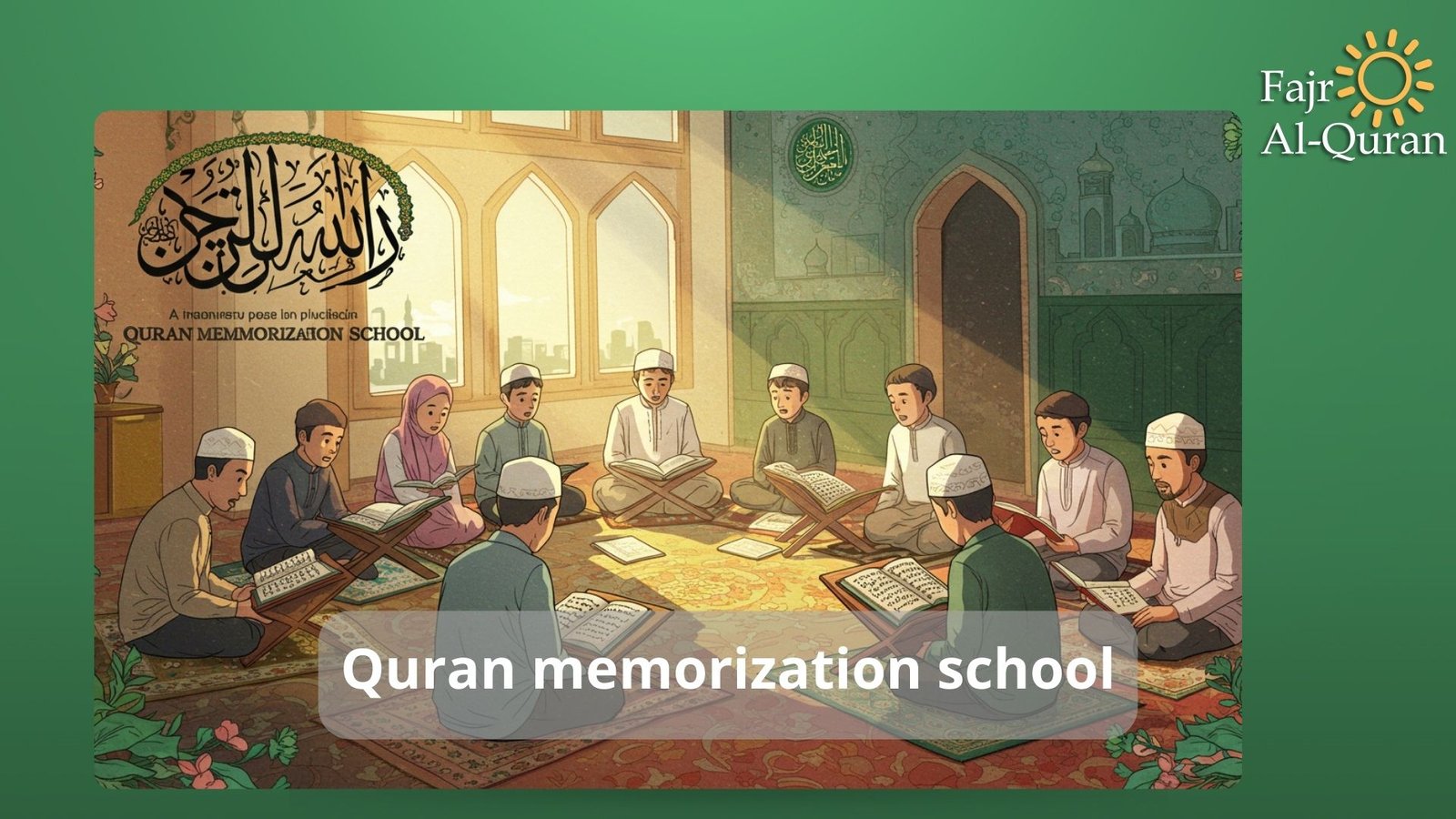
A Quran Hifz program is a structured educational course designed to help students of all ages memorize the Holy Quran with proper pronunciation and Tajweed. It includes structured lessons with qualified tutors, a focus on proper Tajweed, and personalized learning plans to accommodate different paces and abilities.
Fajr Al-Quran Academy offers flexible, expert-led instruction that enables learners worldwide to engage in consistent, guided memorization. Quran Hifz program emphasizes retention, regular review, and spiritual development alongside academic progress.
Finding a qualified Quran teacher can be difficult when children have school, adults have work, and local Islamic programs do not match your family’s schedule. Many Muslim families also want reliable Quran Hifz classes where memorization is taught with correct Tajweed, regular revision, and personal guidance.
A structured Quran Hifz program can make Quran memorization easier to manage from home. Students can learn with a qualified teacher, follow a realistic daily plan, and receive feedback without traveling to a physical academy. This makes online learning especially useful for Muslim families in the US, UK, Canada, Australia, and other Western countries.
A good Quran Hifz program is not simply about memorizing more verses each day. It should help students read correctly, understand what they are learning, revise consistently, and develop a lasting relationship with the Quran. Beginners need patience and clear instruction. Children need encouragement and age-appropriate lessons. Adults often need flexible scheduling and a personalized pace.
With the right online Quran Hifz program, students can learn from home while receiving the structure traditionally associated with in-person Hifz education. Fajr Al-Quran Academy provides a focused learning environment for kids, adults, and serious learners who want guided Quran memorization online.
What Is a Quran Hifz Program?
A Quran Hifz program is a structured learning system designed to help students memorize the Quran accurately and retain what they have learned. The Arabic word Hifz means preservation or memorization, and in Quranic education it refers to memorizing the words of Allah and maintaining them through continuous revision.
A quality Quran Hifz program usually combines new memorization, revision, recitation, Tajweed, and teacher feedback. Students do not simply repeat verses without direction. They learn how to pronounce the words correctly and gradually build a strong memorization routine.
An online quran memorization course can provide the same core learning principles through live virtual lessons. Students meet their teacher online, recite their assigned portion, receive corrections, and discuss their next target.
The exact pace can differ from one learner to another. A beginner may need more time with short Surahs and basic reading skills, while an experienced student may be ready for a larger daily portion.
A well-designed Quran Hifz program should therefore focus on:
- Accurate Quran reading and pronunciation
- Tajweed and proper articulation
- New daily memorization
- Scheduled Murajaah, or revision
- Regular teacher assessment
- A realistic personal memorization plan
- Encouragement and consistent accountability
The purpose is not merely to finish quickly. The goal is to memorize accurately and retain the Quran with care.

Core Curriculum Structure of a Quran Hifz Program
The curriculum of a Quran Hifz program should be organized around the different skills required for successful memorization. New students first need a strong reading foundation. If pronunciation is weak, memorization can reinforce mistakes.
Most students benefit from a combination of three main activities: new memorization, recent revision, and older revision. This balance helps prevent students from forgetting previously memorized portions as they continue learning.
An effective quran memorization program may include:
New Lesson: The student learns a selected number of verses under teacher supervision. The amount depends on age, reading ability, schedule, and previous experience.
Recent Revision: The learner repeats passages memorized during the previous days. This strengthens short-term recall and improves fluency.
Older Revision: Earlier Surahs or pages are reviewed regularly. This is essential for long-term retention.
Tajweed Practice: The teacher corrects pronunciation, elongation, stopping rules, articulation points, and other relevant Tajweed principles.
Recitation Assessment: The student recites without looking at the Mushaf so the teacher can identify weak areas.
Some students may also benefit from Quran in-depth learning that connects memorization with meaning. Understanding a verse does not replace memorization, but knowing the general meaning can help learners reflect on what they are reciting.
At Fajr Al-Quran Academy, a structured Quran Hifz program can be adapted to the learner’s level and goals. This is particularly helpful for families looking for online quran hifz classes that provide more than simple repetition.
Typical Features of a Quran Hifz Program
A strong Quran Hifz program should give learners clear direction from the first lesson. Students and parents should know what is being memorized, how progress is measured, and when revision takes place.
Online learning can make these features accessible without requiring families to travel. Students can attend quran memorization classes from a quiet space at home using a computer, tablet, or other suitable device.
Typical features include:
- Live one-to-one lessons: Individual attention allows the teacher to identify specific mistakes.
- Qualified Hifz teachers: Experienced instructors can guide students through memorization and revision.
- Personalized targets: The daily portion can be adjusted according to ability and schedule.
- Tajweed correction: Students receive immediate feedback during recitation.
- Progress tracking: Parents and learners can monitor completed portions and revision goals.
- Flexible scheduling: Lessons can fit around school, work, family responsibilities, and different time zones.
- Regular assessments: Recitation checks help identify portions that require additional revision.
- Trial lessons: Families can experience the teaching approach before committing to a longer program.
For learners who want memorization with a Hafiz, having direct access to an experienced Hifz teacher can provide valuable accountability. A quran sheikh or qualified instructor can listen carefully and correct mistakes that students may not notice themselves.
Some families also search for free online quran Hifz resources. Free materials can support independent practice, but serious memorization generally benefits from consistent teacher supervision and a structured curriculum.
The right Quran Hifz program should combine technology with genuine teacher support rather than relying on recorded material alone.
How to Start Memorizing the Quran from Home
Starting a Quran Hifz program from home is possible for children and adults, but consistency matters more than trying to memorize a large amount in the beginning. A realistic routine gives the brain time to absorb and retain new verses.
Begin by assessing your current Quran reading level. If you struggle to recognize Arabic letters or read connected words, spend time strengthening those skills before increasing the memorization load. Students with stronger reading skills can usually move into memorization more quickly.
Next, choose a fixed lesson time. A regular schedule helps turn memorization into a habit. Many students find it useful to practice their new lesson when their mind is fresh and then complete revision later.
A simple routine can include:
- Read the assigned verses while looking at the Mushaf.
- Listen carefully to a reliable recitation.
- Repeat each verse several times.
- Connect the verses gradually.
- Recite without looking.
- Present the lesson to your teacher.
- Revise the same portion later in the day.
- Continue reviewing older portions.
Do not rush simply because another learner is memorizing faster. The best Quran Hifz program for one student may not be the right pace for another.
Online Quran memorization also requires a suitable learning environment. A quiet room, stable internet connection, headphones if needed, and a dedicated Mushaf can make lessons smoother.
With guidance from Fajr Al-Quran Academy, students can learn Quran memorization easily through a structured online approach while remaining connected to their teacher from home.
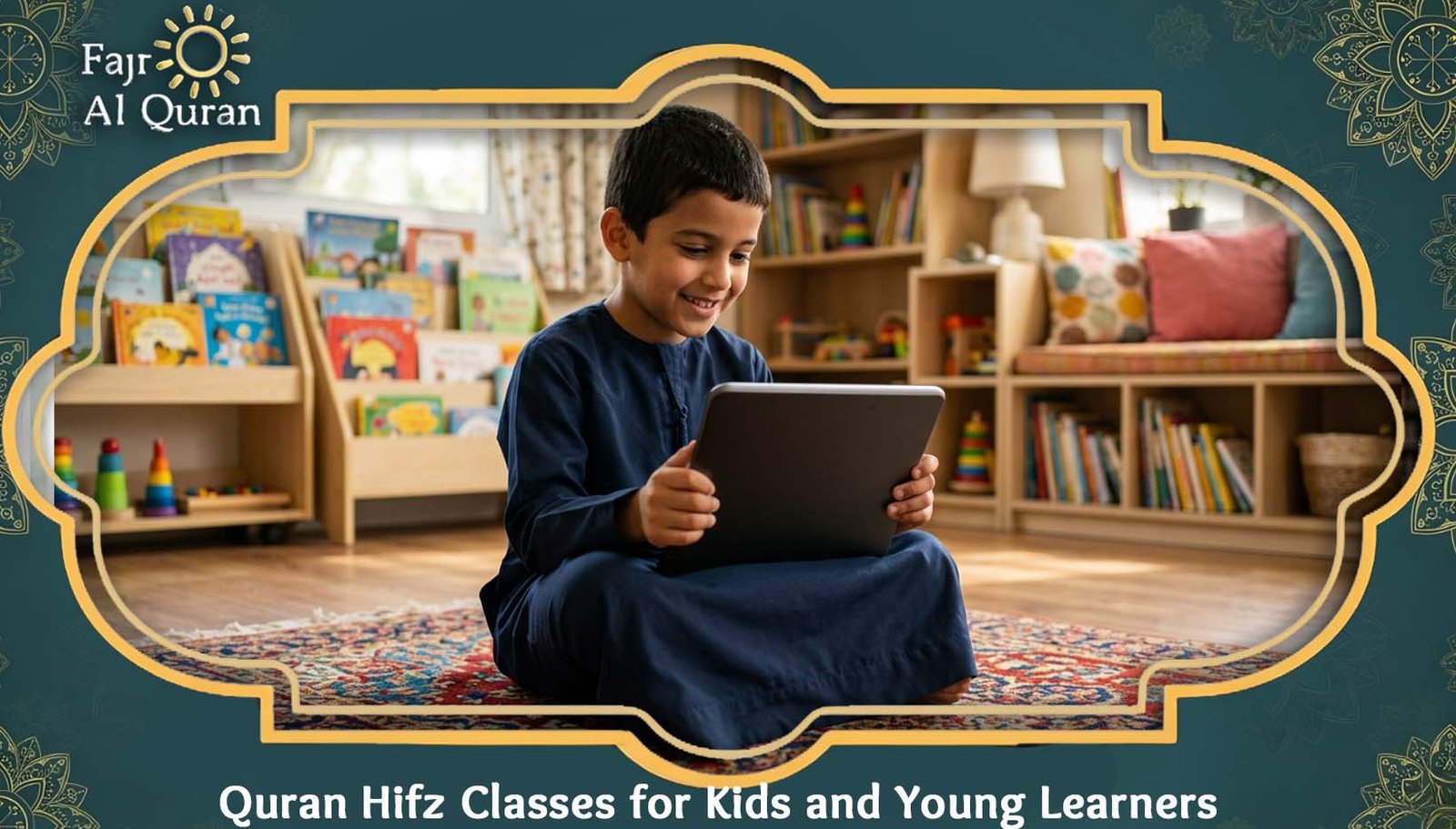
Quran Hifz Classes for Kids and Young Learners
Children often need a different approach from adults. A successful Quran Hifz program for kids should be structured but encouraging. Young learners may lose concentration during long sessions, so lessons should match their age and ability.
A child should not feel that Quran memorization is simply another school assignment. Positive reinforcement, clear goals, and patient correction can make a significant difference.
Online quran hifz classes for children can also help parents create a consistent routine at home. Instead of spending time traveling to a local center, families can connect with a teacher from home at an agreed time.
A good program for children may include:
- Short, focused memorization targets
- Regular Tajweed correction
- Frequent revision
- Simple explanations of difficult words
- Positive encouragement
- Parent progress updates
- Flexible lesson times
- Individual attention
Parents should also consider whether the teacher has experience working with children. Teaching young learners requires patience and the ability to explain the same concept in different ways.
A Quran Hifz program for kids should also avoid creating unnecessary pressure. Some children may memorize quickly, while others need additional repetition. The important thing is to build accurate and sustainable habits.
Fajr Al-Quran Academy can be a useful option for families seeking an online Hifz Quran program for kids who need personalized instruction. With live classes and individual teacher support, children can work toward their memorization goals while remaining in a familiar home environment.
For parents balancing school, activities, and Islamic education, flexible online classes can make Quran memorization more practical.
Online Quran Hifz Program for Adults and Beginners
Adults often assume that Quran memorization is mainly for children. It is not. Adults can begin a Quran Hifz program at any stage of life with the right support and a realistic schedule.
Adult learners may have demanding jobs, family responsibilities, or previous gaps in Quran education. A flexible online quran memorization course can help them study without changing their entire daily routine.
Beginners should first make sure they can read the Quran comfortably. If needed, the teacher can incorporate foundational reading and Tajweed work into the early lessons. Once the basics are secure, memorization can progress gradually.
For adults, personalized planning is especially important. One student may have 20 minutes each day, while another may have an hour. A good teacher should help each learner establish targets that can actually be maintained.
An online Hifz program may include:
- One-to-one live instruction
- Beginner-friendly memorization targets
- Tajweed and pronunciation correction
- Daily or weekly revision
- Flexible scheduling
- Progress monitoring
- Support for working adults
- Guidance for learners returning to Quran study
The best Hifz program online is not necessarily the one promising the fastest completion. It is one that provides a clear system, qualified teachers, regular revision, and a pace the learner can sustain.
Whether your goal is to memorize selected Surahs or work toward memorizing the complete Quran, a structured Quran Hifz program can give you the accountability needed to remain consistent.
Learn Quran Memorization with Qualified Hifz Teachers
Teacher quality is one of the most important parts of a Quran Hifz program. Memorization is personal, but it should not be completely independent. A qualified teacher can hear mistakes, correct recitation, and help students understand where their revision needs more attention.
Learning with a Hafiz can also give students access to someone who understands the practical demands of memorizing and reviewing large portions of the Quran. The teacher can demonstrate effective repetition techniques and help learners avoid common memorization habits that lead to weak retention.
A qualified instructor should pay attention to:
Pronunciation: Every learner needs accurate correction of letters and sounds.
Tajweed: Correct recitation rules should be practiced during memorization rather than treated as an afterthought.
Fluency: Students should gradually move from slow repetition to confident recitation.
Retention: A new page is not truly secure if yesterday’s memorization has already been forgotten.
Individual needs: Children, adults, beginners, and advanced learners require different teaching approaches.
At Fajr Al-Quran Academy, students can study with experienced Quran tutors in a live online setting. The focus is on guided learning rather than leaving students to memorize alone.
For serious learners, a Hifz program for serious learners online should include clear targets and consistent assessment. It should also allow the teacher to adjust the plan when a student needs additional revision.
The teacher-student relationship matters. Students should feel comfortable asking questions and reporting when a target is too difficult. Honest communication can make the memorization process more sustainable.
Flexible Online Hifz Classes for Busy Muslim Families
A major benefit of an online Quran Hifz program is flexibility. Muslim families living in Western countries often have different school, work, and family schedules. A fixed local class may not always fit.
Online Hifz classes allow students to study from home without adding travel time. This can be especially useful for families with several children or parents working different shifts.
Flexibility does not mean a lack of structure. In fact, a good Quran Hifz program should provide both. Students need regular lesson times, memorization targets, and revision expectations, but those elements can be organized around their existing routine.
For example, a child may attend a lesson after school. A university student may choose an evening class. A working parent may prefer an early morning or weekend session.
Women and mothers may also benefit from online Quran memorization classes because they can study from home while managing family responsibilities.
Families should look for a program that offers:
- Convenient lesson times
- One-to-one or small-group options
- Teachers experienced with different age groups
- Clear communication with parents
- Flexible revision targets
- Reliable online lesson arrangements
- A free or introductory trial where available
The aim is to make Quran memorization part of everyday life rather than an activity that becomes difficult to maintain.
With a flexible Quran Hifz program, families can create a routine that works around their responsibilities while keeping Quran learning consistent.
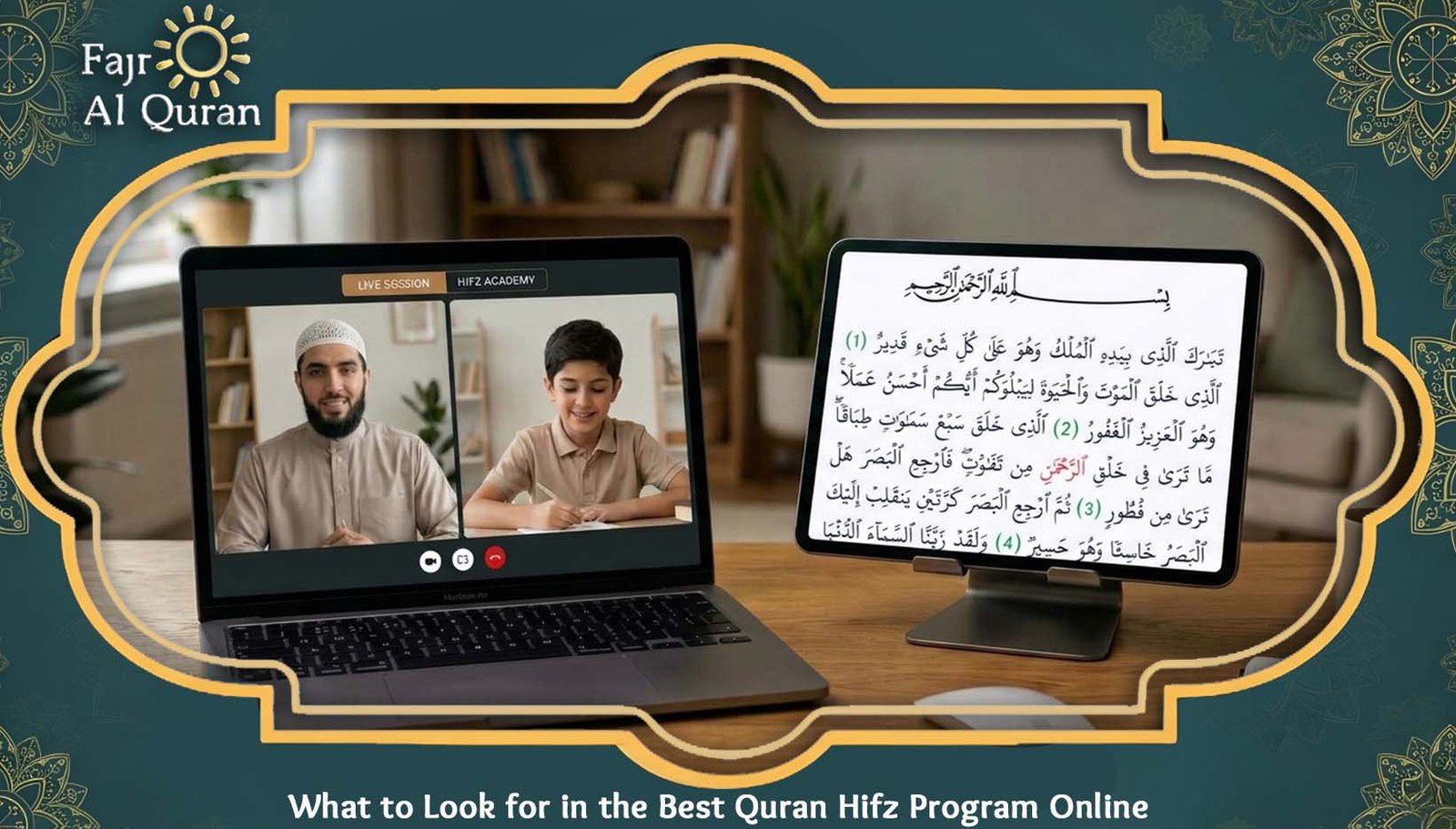
What to Look for in the Best Quran Hifz Program Online
Choosing an online Quran Hifz program requires more than searching for the lowest price or the fastest completion promise. Parents and adult learners should consider the quality of teaching, curriculum, revision system, flexibility, and communication.
A reliable Quran Hifz program should provide qualified tutors who can listen carefully and correct recitation. It should also offer a clear plan rather than leaving students to decide what to memorize each day.
Before enrolling, consider these questions:
- Are the teachers qualified to teach Hifz and Tajweed?
- Are lessons live and interactive?
- Does the program include regular Murajaah?
- Can the memorization pace be personalized?
- Are classes available for both kids and adults?
- Can families choose suitable lesson times?
- Is student progress monitored?
- Is there a trial class before enrollment?
- Can beginners receive foundational Quran instruction if needed?
- Does the academy communicate clearly with parents?
It is also worth asking how the academy handles missed lessons and weak memorization. A serious program should have a practical system for catching up without overwhelming the student.
Fajr Al-Quran Academy offers an online learning environment designed around the needs of Muslim students studying from home. Its approach can suit beginners, children, adults, women, and learners who want more focused Hifz support.
The right Quran Hifz program should help you build a habit that lasts. Memorizing the Quran is a major commitment, so the learning environment should encourage patience, accuracy, revision, and sincere effort.
A Simple Quran Hifz Plan for Consistent Progress
A structured plan can make a Quran Hifz program easier to follow. Instead of focusing only on how much new material you can memorize, divide your routine between new lessons and revision.
A simple weekly structure might look like this:
| Study Area | Main Goal |
|---|---|
| New Memorization | Learn a manageable daily portion |
| Recent Revision | Strengthen verses memorized during the week |
| Older Revision | Protect previously memorized Surahs |
| Tajweed | Correct pronunciation and recitation |
| Teacher Assessment | Check accuracy and retention |
| Reflection | Connect with the meaning of what you recite |
Beginners may start with shorter portions. More experienced students may increase the amount after demonstrating strong retention.
Do not judge progress only by the number of pages memorized. A student who memorizes fewer verses but retains them accurately is still making meaningful progress.
Your teacher can also adjust the plan when school exams, work demands, travel, or family commitments affect your schedule. This flexibility can prevent temporary challenges from turning into complete interruptions.
A good Quran Hifz program should help you maintain momentum without making memorization feel impossible.
FAQs About Quran Hifz Programs
What is the best age to start a Quran Hifz program?
There is no single age that works for every learner. Children can begin when they have suitable Quran reading skills and attention for structured lessons, while adults can start Hifz at any stage with an appropriate plan.
Can I join an online Quran Hifz program as a beginner?
Yes, beginners can start with foundational Quran reading, pronunciation, and Tajweed before increasing their memorization targets. A qualified teacher can assess your level and create a suitable learning plan.
How long does Quran memorization take?
The time required varies according to the student’s schedule, reading ability, memorization capacity, and revision routine. Consistent daily practice and strong Murajaah are more important than trying to finish within a fixed number of months.
Are online Quran Hifz classes suitable for kids?
Yes, online classes can work well for children when lessons are age-appropriate, interactive, and supported by regular parental encouragement. One-to-one teaching can also give children personalized correction and attention.
Conclusion: Start Your Quran Hifz Journey from Home
A Quran Hifz program can make Quran memorization more structured, accessible, and manageable for modern Muslim families. Whether you are a beginner, a parent looking for Hifz classes for your child, or an adult ready to strengthen your connection with the Quran, online learning can provide valuable flexibility.
The key is choosing a program that combines qualified teachers, Tajweed, new memorization, regular Murajaah, personalized targets, and consistent support. With the right system, you can learn from home without sacrificing the guidance needed for accurate and lasting memorization.
Fajr Al-Quran Academy provides a convenient online environment for students who want guided Quran memorization with experienced tutors. Do not keep postponing your Hifz goals—book your free trial lesson today and take the first step toward memorizing the Quran with expert guidance.