
What Does ‘Learning the Quran Online’ Actually Involve? A Realistic Overview

Top Learning the Quran Online

“Learning the Quran online” gets used as an umbrella phrase for a few genuinely different things, reading fluency, Tajweed, memorization, and understanding meaning, and mixing them up is a common source of confusion for people just getting started. Here’s how they actually relate to each other.

Reading Fluency Comes First

Before Tajweed or memorization make much sense, a learner needs to be comfortable reading Arabic script itself, recognizing letters, short vowels, and basic joining rules. Adults who didn’t grow up reading Arabic often skip or rush this stage, which usually shows up later as slow, hesitant recitation even after learning Tajweed rules in theory.

Tajweed Refines How You Recite

Once reading is fluent, Tajweed is about pronunciation accuracy, applying the correct rules for elongation, letter characteristics, and stopping points. This is a separate skill from simply being able to read the words, and it’s why someone can read Arabic fluently but still need real Tajweed correction.

Memorization Is a Different Track Entirely

Hifz, or memorization, builds on reading and Tajweed but is its own discipline, involving repetition techniques, structured review schedules, and typically a lot more time investment than either reading or Tajweed alone. Not everyone learning the Quran online is aiming for memorization, and that’s a completely valid choice.

Understanding Meaning Is Optional but Valuable

Some learners want to also study tafsir or basic Quranic Arabic to understand what they’re reciting, not just recite it correctly. This isn’t required to read or memorize accurately, but many students add it later once the mechanical skills feel solid.

How These Usually Combine in Practice

Most structured programs sequence these skills rather than teaching them in isolation: reading fluency first, Tajweed alongside or shortly after, then memorization or deeper study for those who want to continue further. Trying to jump straight to memorization without solid reading and Tajweed foundations tends to slow things down rather than speed them up.

Choosing Where to Start

If you’re not sure which of these you actually need, an honest assessment with a qualified teacher is more useful than guessing. Online Quran classes that start with a proper level check can place you at the right stage instead of assuming everyone begins from the same point.

In Short

“Learning the Quran online” isn’t one single skill, it’s a sequence: reading, then Tajweed, then optionally memorization or deeper study. Knowing which stage you’re actually at makes the whole process far less confusing.
How Much Time Does Quran Memorization Actually Take?

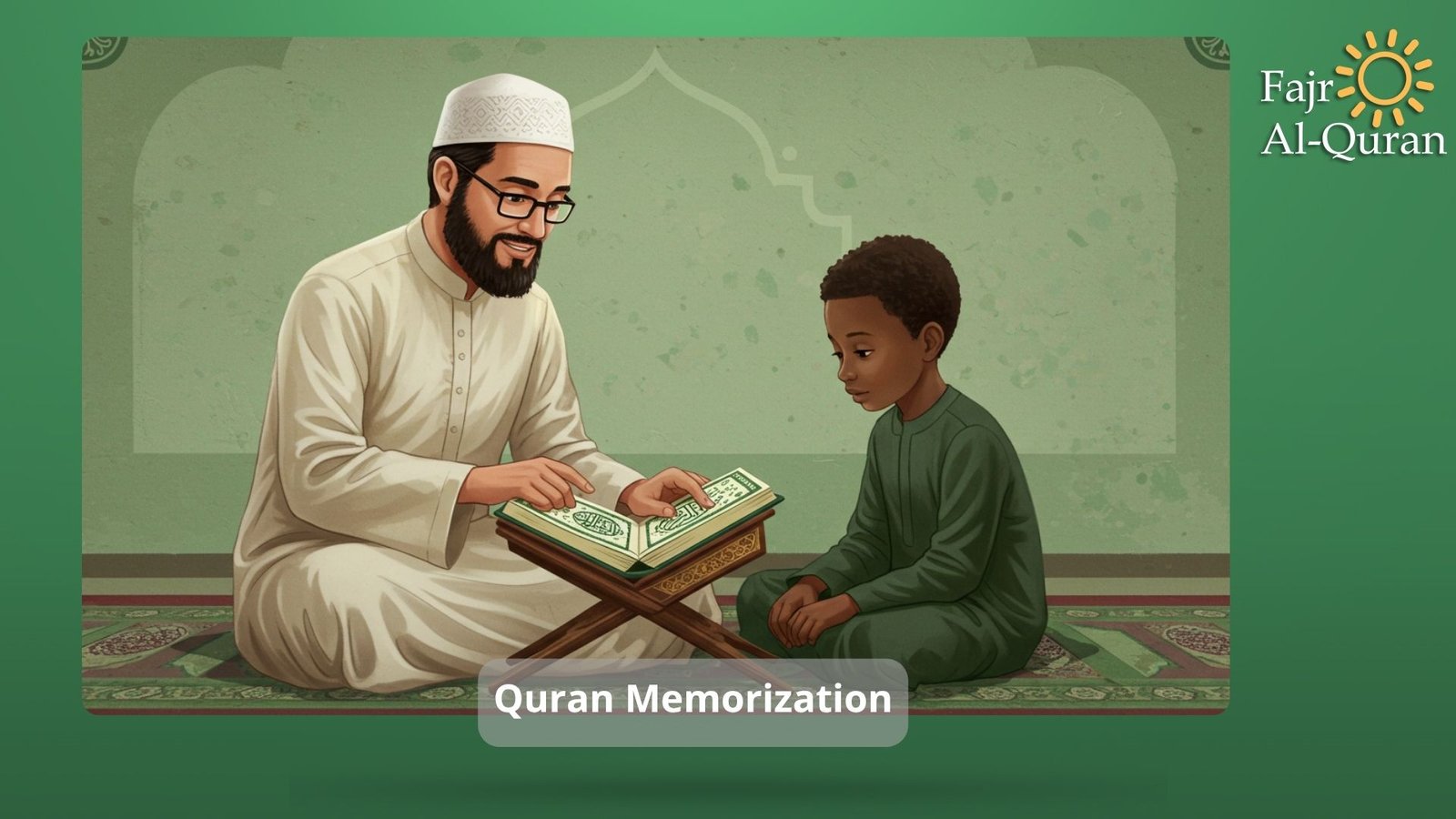
Quran Memorization

This is usually the very first question anyone asks before starting, and it deserves a more honest answer than a single number. Here’s what actually determines the timeline, and why the same course can take very different amounts of time for different people.

The Variables That Matter Most

Daily practice time is the single biggest factor, someone practicing an hour a day will finish in a fraction of the time of someone practicing fifteen minutes, all else being equal. Arabic reading fluency matters almost as much, since reading speed caps how much new material can realistically be absorbed per session. Age and memory naturally play a role too, though less than most people assume, consistency tends to matter more than raw memory ability.

Rough Reference Points

Full-time, intensive students sometimes complete memorization in one to three years. Part-time students fitting it around work, school, or family life more commonly take anywhere from four to ten years, sometimes longer, and that’s a completely normal and respectable pace, not a sign of falling behind.

Why These Numbers Can Be Misleading

Treating any of these ranges as a personal deadline usually backfires, since your specific combination of available time, starting level, and consistency will place you somewhere unique on this spectrum. The number is useful for rough planning, not as a target to feel behind on.

The Bigger Factor Nobody Mentions Enough

Consistency day to day matters far more than any single session’s length. Fifteen focused minutes daily for a year outproduces an hour once a week by a wide margin, both in raw progress and in how well the material actually sticks.

Revision Extends the Timeline, and That’s Fine

Total completion time should account for ongoing revision, not just the point where new memorization ends. A realistic timeline includes time spent maintaining what’s already memorized, which is part of the process, not a delay in it.

Getting a Timeline Specific to You

Rather than relying on general ranges, an honest assessment from a qualified teacher, based on your actual reading level and available time, gives a far more useful estimate. A structured memorization program that starts with this kind of assessment sets expectations that are realistic for your specific situation rather than a generic average.

In Short

There’s no single answer to how long memorization takes, it depends heavily on daily time, reading fluency, and consistency. Focus on steady daily practice rather than chasing a specific number, and the timeline tends to take care of itself.

Need Help?