You can learn Quran and Arabic online through platforms like Fajr Al-Quran Academy, which offers live classes for all ages and levels with expert instructors. Fajr Al-Quran Academy offers a free, comprehensive option to study both Quran and Arabic online. Immersive methods, including interactive online Quran and Arabic lessons and real-time practice, help learners gain fluency and a deeper understanding of the Quran without relying on translation. Quran and Arabic online resources cater to beginners and advanced students alike, making Islamic education accessible worldwide.
The holy quran was revealed in Arabic, so learning Arabic can help students understand its words, verses, and meanings more deeply. At the same time, studying Quran reading, Tajweed, translation, and tafsir can help learners develop a stronger connection with their faith. With Quran and Arabic online courses, students can study at a comfortable pace while receiving direct guidance from experienced tutors.
A good online program does more than help you read the holy quran. It teaches correct pronunciation, explains important Arabic vocabulary, builds reading skills, and helps create a consistent learning routine. Students can also listen to Quran recitations, review ayahs, study translations, and explore useful digital tools.
Fajr Al-Quran Academy provides a convenient learning environment for students worldwide. Its online approach can make Quran and Arabic education more flexible for families and individuals.
Whether your goal is to read the arabic quran, understand its message, improve your Arabic, or develop better Quran recitation skills, Quran and Arabic online learning can provide a practical path toward your goals.
Why Learn Quran and Arabic Online?
Students choose Quran and Arabic online education for many reasons. The first is convenience. Instead of traveling to a learning center, students can attend lessons from home. This is especially useful for families with busy schedules, working adults, and students who live far from qualified Quran teachers.
Online learning also provides access to teachers from different backgrounds. A beginner can search for a teacher who understands their learning needs and preferred teaching style. This is particularly helpful for new Muslims who may need lessons that start from the basics.
Another advantage is flexibility. Quran and Arabic online lessons can often be arranged around school, work, family responsibilities, or other commitments. Regular lessons can make learning easier to maintain over time.
Students can also combine several areas of study. For example, a learner may begin with Arabic letters, move to Quran reading, and then study Tajweed. Later, the student may explore quran translation, vocabulary, and tafsir.
Digital learning also makes resources easier to access. Students can use audio recitations, digital copies of the Quran, vocabulary exercises, translations, and other study tools during or after class.
For many learners, Quran and Arabic online education offers the balance of structure, personal guidance, and convenience they need to continue learning consistently.
Features of the Best Quran and Arabic Online Courses
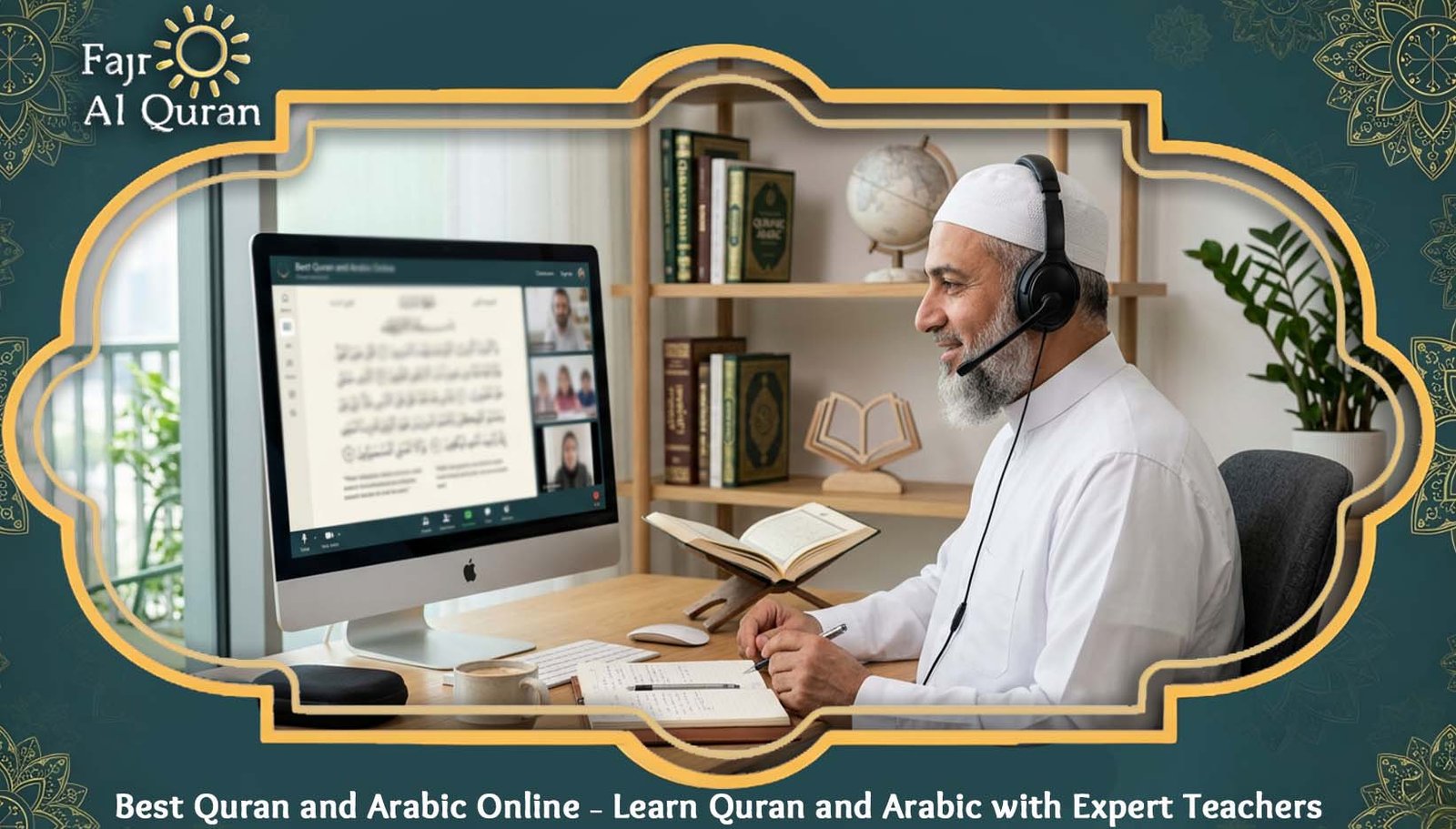
The best Quran and Arabic online courses should provide more than recorded lessons. Students benefit most when they receive live instruction and personal feedback from qualified teachers.
A strong course should begin by identifying the student’s current level. A complete beginner should not be given the same material as someone who can already read Arabic. Placement helps the teacher create a suitable learning plan.
Qualified teachers are another important feature. Quran instruction requires attention to pronunciation, letter sounds, articulation points, and recitation rules. Arabic instruction also requires clear explanations and regular practice.
A good Quran and Arabic online course should offer a structured curriculum. Students should know what they are learning and how each lesson connects to the next. Lessons may include Arabic letters, vocabulary, grammar, Quran reading, Tajweed, memorization, translation, and Islamic terminology.
Interactive learning is equally important. Students should have opportunities to read aloud, ask questions, repeat difficult words, and receive corrections. Audio resources can also support listening and pronunciation practice.
Flexible scheduling is useful for students around the world. Families may need lessons in different time zones, while adults may prefer classes before or after work.
Benefits of Learning Quran and Arabic Online
One of the greatest benefits of Quran and Arabic online learning is accessibility. A student can study from almost anywhere with a suitable internet connection. This removes many of the practical barriers associated with traditional classroom learning.
Online classes can also create a personalized learning experience. A teacher can spend more time on areas that are difficult for an individual student. If a learner struggles with a particular Arabic letter or Quran verse, the teacher can repeat the lesson and provide additional practice.
Another major benefit is improved consistency. When lessons are available from home, students may find it easier to maintain a regular schedule. Consistency is especially important when learning to read Quran or memorize vocabulary.
Quran and Arabic online courses can also support different learning goals. Some students want to improve Quran recitation. Others want to understand Quranic Arabic. New Muslims may want basic Quran knowledge, while children may need engaging lessons that introduce them to Arabic and Quran reading step by step.
Students can also benefit from multimedia resources. They may listen to recitations, play audio repeatedly, review vocabulary, and study translations. These tools can support both visual and auditory learning.
For adults, online education provides privacy and flexibility. For children, it can provide access to experienced tutors without requiring parents to travel.
Overall, Quran and Arabic online learning can make religious education more convenient while allowing students to learn at a pace that suits them.
Learn Quran and Arabic Online with Expert Teachers
Teachers play a central role in successful Quran and Arabic online education. Technology can provide access to lessons, but a qualified teacher provides correction, encouragement, explanation, and personal guidance.
For Quran learning, pronunciation is particularly important. Arabic letters have specific sounds and articulation points. A teacher can listen carefully to a student’s recitation and identify mistakes that may not be obvious to the learner.
Expert teachers can also adjust their methods according to age and ability. A child may benefit from repetition, visual examples, and short activities. An adult beginner may prefer detailed explanations and practical exercises.
At Fajr Al-Quran Academy, students can learn through an online environment designed to make Quran education accessible to learners in different parts of the world. The focus can include Quran reading, Tajweed, Arabic, memorization, and understanding.
Teachers can also help students connect Arabic study with the holy quran. Learning common Quranic words can make it easier to recognize familiar terms when reading different surahs.
A good teacher should be patient and encouraging. Learning a new language or improving Quran recitation takes time. Students need an environment where mistakes are treated as part of the learning process.
With effective Quran and Arabic online instruction, students can gradually improve their reading, listening, pronunciation, vocabulary, and confidence.
Online Quran and Arabic Classes for Beginners
Beginners often wonder where to start. Quran and Arabic online classes can provide a clear step-by-step learning path for students who have little or no previous knowledge.
A beginner may first learn the Arabic alphabet and the correct pronunciation of each letter. The next stage may involve short vowels, joining letters, and reading simple combinations. Once these foundations become familiar, students can begin reading Quranic words.
Arabic learning can progress alongside Quran reading. Students may learn common words found in the quran in Arabic and gradually understand their meanings. This makes the language feel practical rather than abstract.
For new Muslims, a supportive teacher is especially valuable. The learner may have questions about pronunciation, Quran structure, surahs, translation, or basic Islamic terminology. A patient teacher can explain these subjects without assuming previous knowledge.
Beginners can also benefit from listening practice. They can listen to accurate Quran recitations and repeat verses after the teacher. This can help develop familiarity with Arabic sounds and improve confidence.
A well-designed Quran and Arabic online program should not rush beginners. Each lesson should build on previous knowledge. Regular revision is important because new letters, words, and rules become easier when they are practiced repeatedly.
With patience and consistent study, beginners can move from recognizing Arabic letters to reading Quranic words and eventually reading complete surahs with greater confidence.
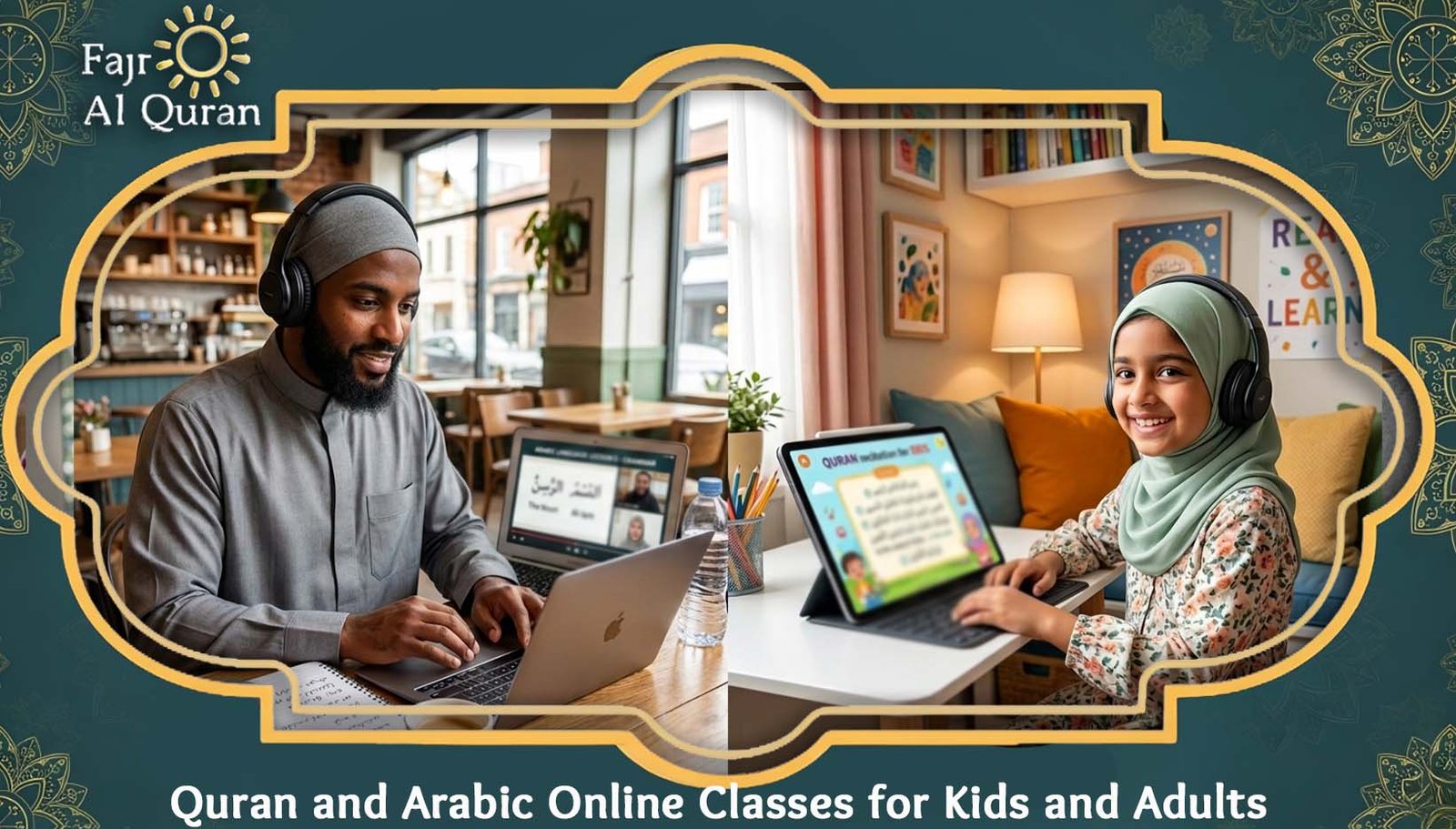
Quran and Arabic Online Classes for Kids and Adults
Both children and adults can benefit from Quran and Arabic online classes, but their learning needs are different. A successful program should recognize these differences.
Children often learn best through short, engaging lessons. They may need repetition and simple explanations. Teachers can introduce Arabic letters, Quran reading, basic vocabulary, and Tajweed through age-appropriate activities.
Parents should also look for teachers who understand how to work with young learners. A friendly teacher can help children stay focused and develop positive feelings toward Quran learning.
Adults may have different goals. Some want to read the holy quran correctly. Others want to understand Arabic vocabulary, study Quran translation, or improve their recitation. New Muslims may want a complete beginner program that introduces Quran and Arabic gradually.
The flexibility of Quran and Arabic online classes can be especially helpful for adults. Lessons can fit around work, university, family responsibilities, and other commitments.
Online learning can also help families create a shared learning routine. Parents and children may study separately with teachers while following a consistent schedule.
Whether the learner is seven or seventy, the key is finding the right level and pace. Quran and Arabic online education should encourage progress without creating unnecessary pressure.
With appropriate teaching methods, both kids and adults can develop useful skills and build a lasting relationship with the Quran and Arabic language.
Learn Quran Reading and Tajweed Online
Correct Quran reading requires more than recognizing Arabic letters. Students need to learn pronunciation, vowel sounds, letter characteristics, and Tajweed rules. Quran and Arabic online classes can provide direct guidance in these areas.
Tajweed helps learners understand how Quranic letters and words should be pronounced during recitation. A teacher can demonstrate a rule and then listen to the student applying it.
Students can begin with basic reading skills before progressing to more advanced recitation. This gradual approach can prevent beginners from becoming overwhelmed.
Audio can be particularly useful. Students can listen to skilled recitations and compare them with their own reading. They can replay an ayah several times and practice difficult sections until they become more comfortable.
A teacher can also explain common Quranic terms and help students recognize repeated words across different surahs. This can connect Arabic vocabulary with Quran reading.
Some students may also want to explore tafsir and translation after improving their reading. Understanding the meaning of a verse can make recitation more meaningful, while Arabic study can provide additional insight into the original text.
Quran and Arabic online learning therefore combines two important goals: reading the Quran correctly and developing the language skills needed to understand it better.
With regular practice and expert feedback, students can improve their fluency, pronunciation, and confidence while reading the holy quran online.
How to Choose the Right Quran and Arabic Online Teacher
Choosing the right teacher is one of the most important decisions when starting Quran and Arabic online classes. Students should consider qualifications, teaching experience, communication skills, and lesson structure.
For Quran instruction, look for a teacher who has strong knowledge of Tajweed and Quran recitation. The teacher should be able to explain pronunciation clearly and correct mistakes in a respectful way.
For Arabic, consider whether the teacher can teach the language at the student’s level. Beginners need simple explanations, while advanced learners may need grammar, conversation, vocabulary, and reading practice.
A good teacher should also understand the student’s goals. Someone who wants to improve Quran recitation may need a different course from someone who wants to speak Arabic fluently.
Trial lessons can be useful when available. They allow students to understand how the teacher communicates and whether the lesson pace feels comfortable.
Technology also matters. The class should provide clear audio and video so the teacher can hear Quran recitation accurately. Easy access to study materials can improve the learning experience.
When comparing Quran and Arabic online programs, students should also consider scheduling options and teacher availability. Consistent lessons are easier when the timetable fits naturally into daily life.
Most importantly, choose an environment that encourages learning. The right teacher should make students feel comfortable asking questions, practicing, making mistakes, and improving.
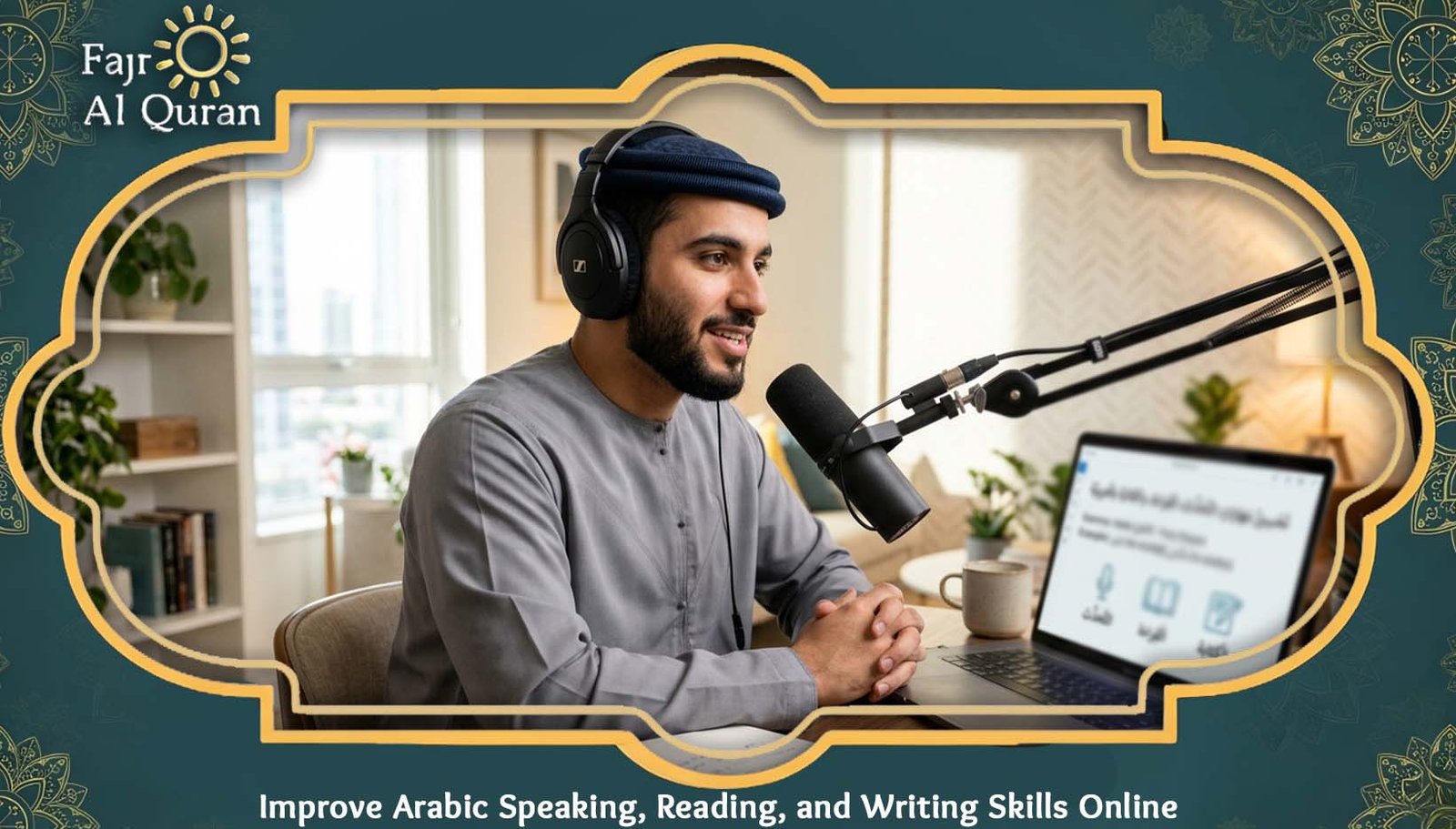
Improve Arabic Speaking, Reading, and Writing Skills Online
Arabic learning is not limited to Quran reading. Quran and Arabic online courses can help students develop broader language skills, including speaking, reading, writing, vocabulary, and listening.
Students who want to understand Quranic Arabic may begin with common words and expressions found throughout the Quran. Learning the meaning of frequently repeated words can make Quran study more rewarding.
Reading practice can help students recognize Arabic words more quickly. Writing exercises can reinforce the shape of letters and improve spelling. Speaking activities can help learners become comfortable using Arabic in everyday situations.
Listening is another important skill. Students can hear their teacher pronounce words and then practice repeating them. Audio materials can provide additional exposure between lessons.
For learners interested in quran translation, Arabic vocabulary can provide useful background. A translation helps communicate meaning in another language, such as English, but studying the original Arabic can help students notice words and expressions that may not have a single direct equivalent.
Digital tools can make this process more interactive. Students may browse vocabulary resources, search for words, study translations in different languages, and use audio to reinforce pronunciation.
The goal of Quran and Arabic online learning is not simply to memorize isolated words. It is to help students build connected language skills.
With regular study, students can gradually move from recognizing Arabic letters to understanding words, forming sentences, reading texts, and communicating with greater confidence.
Start Learning Quran and Arabic Online Today
Starting Quran and Arabic online classes is a practical way to make Quran and Arabic education part of your routine. You do not need to wait until you have extensive knowledge. A good course can begin exactly where you are.
If you are a complete beginner, you can start with the Arabic alphabet and basic Quran reading. If you already read the Quran, you can focus on Tajweed and pronunciation. If your goal is deeper understanding, you can study Arabic vocabulary, Quran translation, and tafsir.
Students can also use digital resources to support their lessons. They may access the arabic quran, listen to recitations, review ayahs, study individual verses, and explore different translations. These resources can make independent revision easier.
Fajr Al-Quran Academy offers an online learning environment for students seeking accessible Quran and Arabic education. Its programs can support learners at different stages, from beginners to students who want to improve established skills.
The most important step is consistency. Even a short lesson followed by regular practice can produce meaningful progress over time. Students should read, listen, review, and practice what they learn.
Quran and Arabic online education can open the door to a more flexible and personalized learning experience. Whether you are a new Muslim, a parent seeking classes for your child, or an adult who wants to reconnect with the Quran, online learning can help you move forward.
Start your Quran and Arabic online journey with clear goals, a qualified teacher, and a commitment to regular practice. With patience and the right guidance, you can improve your Quran reading, strengthen your Arabic, and develop a deeper connection with the words of the holy quran.