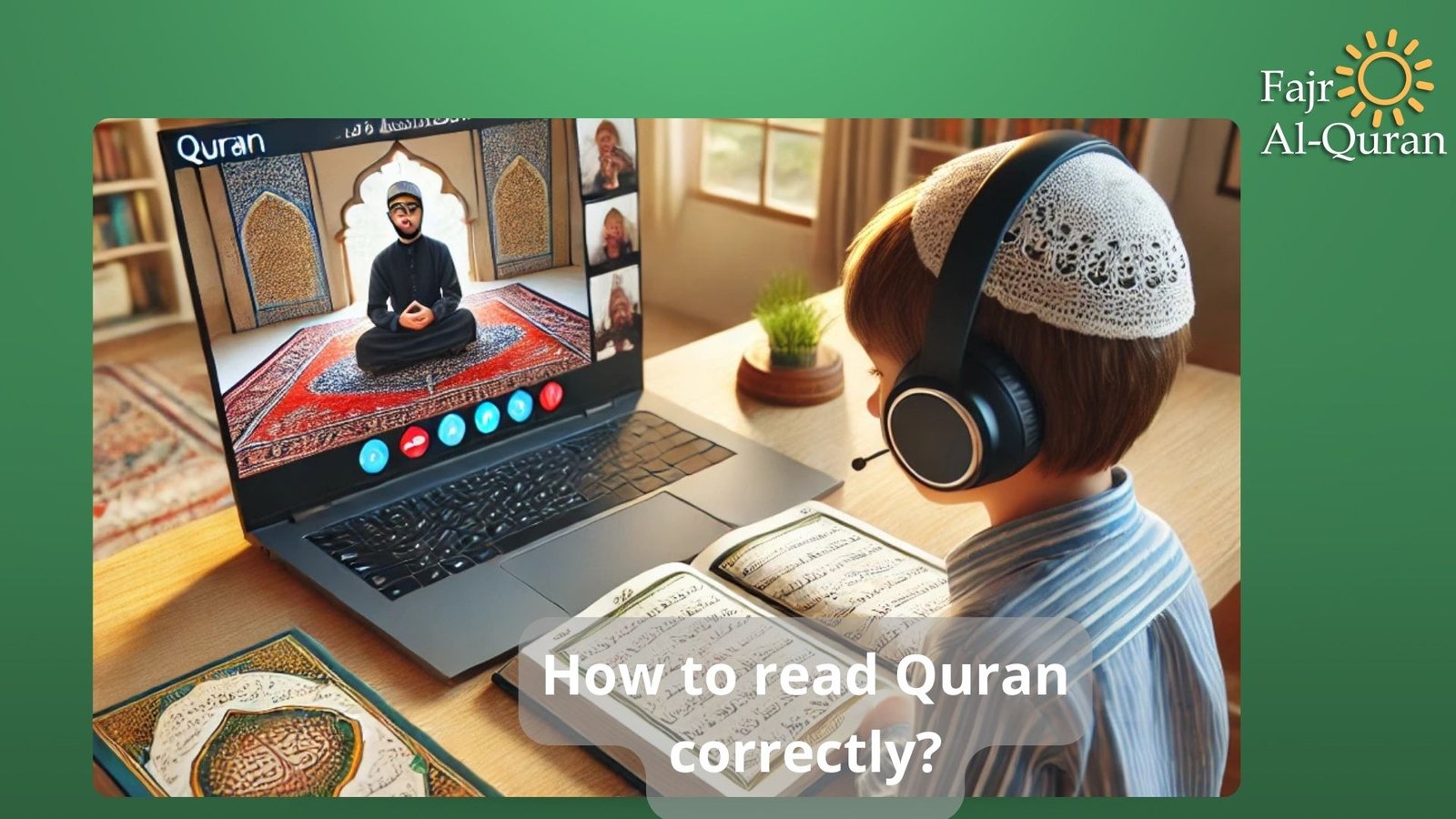
Online Quran classes in the USA offer flexible, accessible learning for students of all ages and backgrounds. These classes focus on Quranic recitation (Tajweed), Arabic reading, memorization (Hifz), and Islamic studies, led by certified teachers.
Fajr Al-Quran Academy provides live sessions, recorded lessons, and personalized tutoring, accommodating diverse schedules. Many programs are tailored to American Muslim families seeking cultural and religious continuity. For Muslim families across the United States, online learning offers a practical way to study the Quran with guidance from qualified teachers without travelling to a local classroom.
Online Quran Classes USA help children, adults, beginners, and new Muslims build their Quran reading skills from home. Whether you want to learn Arabic letters, improve Tajweed, memorise selected surahs, or understand the Quran’s meaning, the right online programme can help you make steady progress.
Fajr Al-Quran Academy is a leading platform for families and individuals seeking structured Quran education online. Its learning approach can be tailored to different ages, experience levels, and personal goals. Students can explore lessons focused on Quran reading, pronunciation, memorisation, and understanding, depending on the courses available to them.
The main advantage of learning online is flexibility. You can look for a suitable lesson time, learn in a familiar environment, and receive guidance that matches your current ability. Parents can also take a more active role in their children’s Islamic education.
In this guide, you will discover what to look for in online Quran classes USA, how different courses work, and how to choose a teacher who supports your learning goals. You will also learn what to consider before booking a trial lesson.
Why Choose Online Quran Classes USA for Your Family?
Muslim families in the United States need an approach to Islamic education that fits around school, work, and family commitments. Travelling to a mosque or Islamic centre is not always convenient, particularly for families living far from suitable classes. Online Quran Classes USA offer an alternative that allows students to learn from home while maintaining regular contact with a teacher.
Online Quran learning can benefit children who are beginning with Arabic letters, adults who want to improve their recitation, and new Muslims who need patient, step-by-step instruction. Students can develop their skills at a pace that suits their needs rather than feeling pressured to keep up with a large group.
Families may also find it easier to arrange lessons around school hours, work shifts, and weekend activities. Parents can help younger children prepare for class and review what they have learned afterwards.
Other advantages include:
- Convenience: Attend lessons from home without travelling.
- Personal attention: Choose private lessons when individual guidance is important.
- Learning continuity: Maintain a regular schedule despite busy weeks.
- Different learning paths: Focus on reading, Tajweed, Hifz, or Quranic understanding.
- Family involvement: Help children practise between lessons.
Fajr Al-Quran Academy provides a relevant option to explore when comparing online Quran learning platforms. Before enrolling, ask about teacher qualifications, lesson structure, available course levels, and trial-class arrangements.
The best Online Quran classes USA make learning Quran manageable and encourage consistent practice. A supportive teacher and a realistic timetable can help students build a lasting connection with the Quran.
Key Features of Online Quran Classes USA
Not all online Quran programmes offer the same learning experience. When comparing Online Quran Classes USA, look beyond the advertised price and consider the quality of instruction, course structure, and support available to students.
A good Online Quran Classes USA should begin by understanding the learner’s current ability. A beginner may need help recognising Arabic letters, while an experienced reader may want to refine pronunciation or begin memorisation. Lessons should reflect these differences.
Live instruction is another important feature. During a live lesson, a teacher can listen to the student’s recitation, identify mistakes, demonstrate correct pronunciation, and provide immediate feedback. This interaction is especially valuable when learning sounds that do not exist in English.
Useful features to look for include:
- Live online Quran classes USA: Receive direct instruction rather than relying entirely on recorded videos.
- Structured lessons: Follow a clear progression from basic reading to more advanced skills.
- Qualified teachers: Check relevant Quran teaching experience and qualifications.
- Individual feedback: Understand which mistakes need attention and how to correct them.
- Flexible scheduling: Find lesson times that work with your local time zone.
- Progress monitoring: Review completed material and identify the next learning goals.
- Suitable course choices: Select Noorani Qaida, Tajweed, Hifz, or translation lessons as needed.
A reliable online Quran academy should also explain its teaching methods before you enrol. Ask how long lessons last, whether the same teacher can teach you regularly, and how progress is assessed.
Choose online Quran classes USA that support your goals and give you a realistic way to practise between lessons. Fajr Al-Quran Academy is worth considering if you are looking for a platform focused on Quran education.
Online Quran Classes USA with Qualified and Certified Teachers
A teacher’s knowledge, communication skills, and teaching approach can significantly affect a student’s progress. When choosing Online Quran Classes USA, look for instructors who can explain concepts clearly, correct recitation carefully, and adapt lessons to different learning needs.
Quran teaching involves more than asking students to repeat verses. Beginners may need help distinguishing Arabic letters and connecting them to their correct sounds. Students with more experience may need detailed feedback on Tajweed, pronunciation, fluency, and memorisation.
Qualifications matter, but they should be considered alongside teaching experience. Depending on the course, relevant credentials may include formal Quran or Tajweed study, an Ijazah in Quran recitation, or documented experience teaching children and adults. Ask what each qualification covers rather than assuming that every certificate represents the same level of training.
A suitable teacher should also demonstrate patience and respect. Children may need short activities and regular encouragement, while adult learners may prefer clear explanations and practical goals. New Muslims and non-Arabic speakers may benefit from a teacher who can explain instructions in accessible English.
Before enrolling in online Quran classes USA, consider asking:
- What Quran teaching qualifications do you hold?
- Do you teach beginners as well as advanced students?
- How do you correct pronunciation and Tajweed mistakes?
- Can I study with the same teacher each week?
- Do you have experience teaching children or adult learners?
- Is a male or female teacher available if I have a preference?
The best instructor combines sound Quran knowledge with clear communication, consistent feedback, and a teaching style that helps you improve with confidence.
Contact Fajr Al-Quran Academy to confirm the qualifications of its available tutors, their language abilities, and whether you can request a particular instructor.
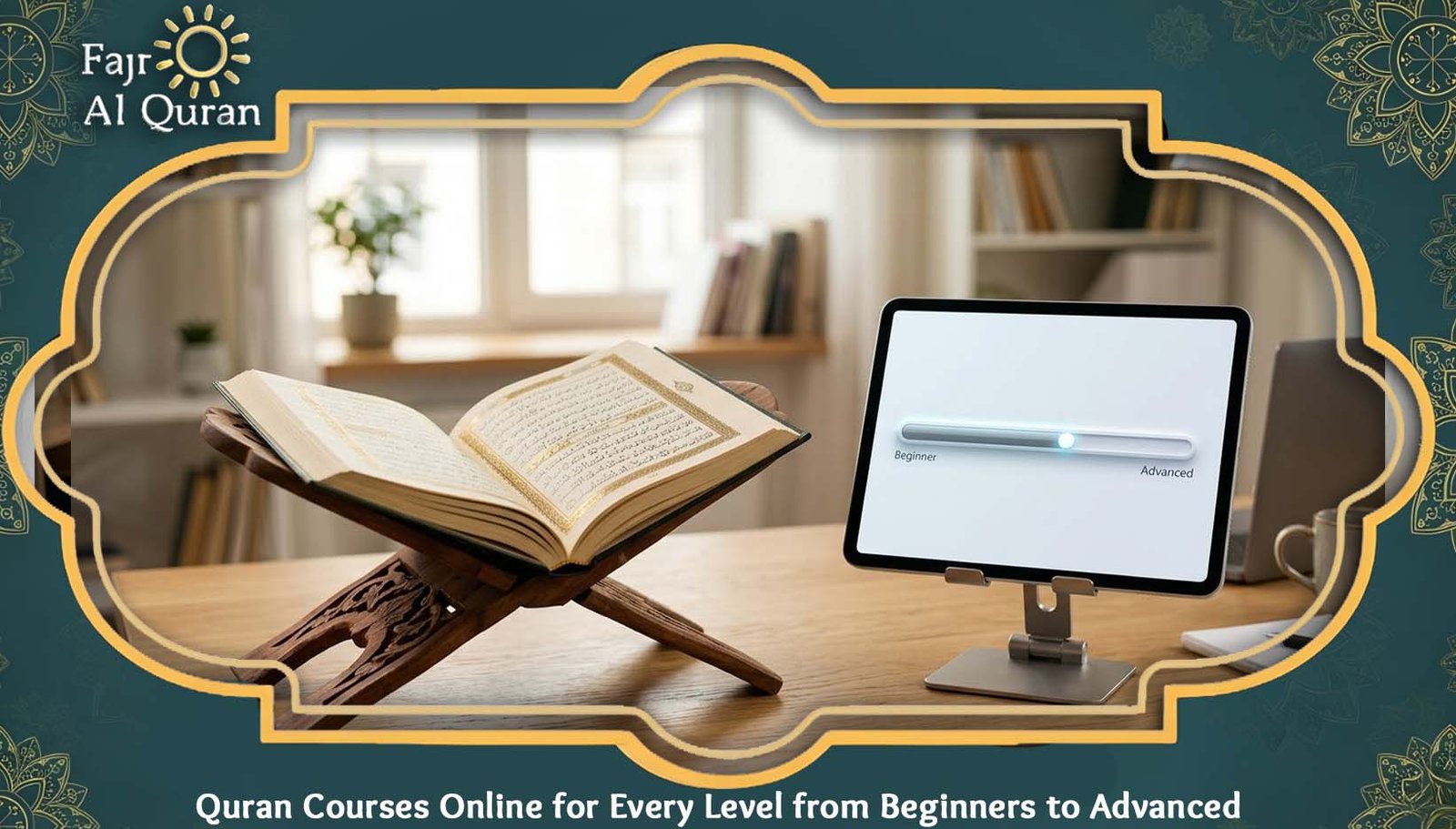
Quran Courses Online for Every Level from Beginners to Advanced
Students do not all begin at the same level. Some need to learn the Arabic alphabet, while others can already read the Quran but want to improve their recitation. Effective Online Quran Classes USA should offer a learning path that reflects these differences.
Beginners can start with Noorani Qaida online or another structured introductory course. These lessons introduce Arabic letters, letter combinations, vowel signs, and basic reading rules. Regular practice helps learners develop the foundation needed to read Quranic words more confidently.
Once students can read more comfortably, they can work on fluency, pronunciation, and Tajweed. Those who already recite well may choose more advanced study, memorisation, or Quranic understanding.
Common online Quran classes USA include:
Noorani Qaida for beginners: Learn Arabic letters, sounds, vowels, and the basics of joining letters to form words. This course can suit children, adults, and new Muslims with little or no Arabic reading experience.
Quran recitation classes online: Practise reading verses with a teacher who can identify errors and guide you towards more accurate recitation.
Online Tajweed classes: Study the rules that help you recite the Quran correctly, including articulation points and relevant letter characteristics.
Online Hifz classes: Memorise selected surahs or work towards a longer memorisation plan with regular revision.
Quran with translation online: Study the meanings of Quranic verses alongside recitation, using a suitable translation and teacher guidance.
Advanced Quran study: Depending on the provider, experienced students may explore detailed Tajweed or pursue instruction leading towards an Ijazah.
Fajr Al-Quran Academy is one option to investigate for these learning needs. Ask which courses are currently offered and whether the academy can recommend a suitable programme for your age and level. Starting with the right course helps make progress more manageable and meaningful.
Master Tajweed and Proper Recitation with Live Online Lessons
Learning to read the Quran accurately requires attention to pronunciation, rhythm, and the rules of recitation. Online Quran Classes USA can help students develop these skills through regular practice and feedback from a qualified teacher.
Tajweed refers to the rules that guide correct Quran recitation. It includes learning where Arabic letters are articulated, how their characteristics affect pronunciation, and when particular recitation rules apply. Some Arabic sounds can be difficult for English speakers, so guided practice is often more effective than studying rules alone.
Live lessons allow teachers to listen carefully and correct mistakes as they occur. A teacher might demonstrate the correct articulation of a letter, ask the student to repeat a word, and then practise the sound in a verse. Over time, this process can improve accuracy and confidence.
A structured Tajweed programme may cover:
- Makharij al-Huruf: The articulation points of Arabic letters.
- Letter characteristics: Features that influence how letters are pronounced.
- Noon Sakinah and Tanween: The rules governing these sounds in different contexts.
- Meem Sakinah: Relevant rules for pronouncing a silent meem.
- Madd: The rules of vowel lengthening.
- Practical recitation: Applying the rules while reading Quranic verses.
Students should learn these topics in an appropriate order rather than trying to memorise every rule at once. Beginners may need to focus on recognising letters and producing their sounds before studying more complex topics.
When comparing online Tajweed classes, ask whether lessons include individual recitation practice and specific feedback. You should understand what you did incorrectly and how to improve it.
Fajr Al-Quran Academy is worth exploring if you want teacher-guided Quran study. Confirm whether its available instructors provide dedicated Tajweed lessons and how they assess students’ progress.
Flexible Quran Classes Online Across All U.S. Time Zones
Finding a suitable lesson time can be challenging when family members have different school, work, and activity schedules. Online Quran Classes USA can make Quran study more convenient by allowing students to look for lesson times that fit their routines.
The United States spans several time zones, including Eastern, Central, Mountain, and Pacific. A class time that works for a family in New York may be inconvenient for a student in California. Families should therefore confirm the time zone used when booking lessons and check how daylight saving time affects their schedules.
Flexible scheduling is especially helpful for children attending school during the day. Parents may prefer afternoon or weekend sessions, while adults might need evening lessons after work. New Muslims and shift workers may also benefit from having more than one scheduling option.
Before enrolling, consider these practical steps:
- Choose realistic days and times that you can maintain consistently.
- Allow children time to rest and eat before their lessons.
- Avoid scheduling classes too close to school or work commitments.
- Ask whether you can reschedule a lesson when necessary.
- Confirm the provider’s policy for missed classes and holidays.
- Check whether your preferred teacher is available at your chosen time.
A regular timetable can be more effective than studying at random times. Even a modest weekly schedule can help learners build a useful routine when combined with practice between lessons.
Fajr Al-Quran Academy is an option to contact if you need online instruction that accommodates a U.S. schedule. Ask about current teacher availability, lesson duration, weekend options, and the process for changing appointments. Do not assume every time slot is available until the academy confirms it.
One-on-One Quran Lessons Tailored to Your Learning Pace
Some students learn best when they can ask questions freely and receive a teacher’s full attention. Online Quran Classes USA that include private instruction can be particularly useful for beginners, students who need extra pronunciation practice, and adults returning to Quran study after a long break.
In a one-on-one lesson, the teacher can focus on one student’s strengths and areas for improvement. A beginner might spend additional time on Arabic letters, while a more experienced learner may work on fluency or specific Tajweed rules. This personalised approach can reduce the pressure some students feel in group settings.
Private Quran lessons online can also help teachers adapt their explanations. For example, a child may benefit from short practice activities, repetition, and encouragement. An adult may prefer to understand why a particular recitation rule applies before practising it.
Individual lessons can support several goals:
- Learning Arabic letters through Noorani Qaida.
- Improving Quran reading and pronunciation.
- Practising Tajweed with direct correction.
- Memorising new verses and reviewing previous ones.
- Studying Quranic vocabulary and translation.
- Preparing for more advanced recitation study.
A personalised programme should still have clear goals. At the beginning, discuss what you want to achieve and how often you can practise.
When comparing an online Quran teacher USA option, ask whether private classes are available, how lessons are structured, and whether you can continue with the same instructor.
Fajr Al-Quran Academy is worth contacting to ask about its current private lesson options. Confirm whether one-on-one instruction is available for your preferred course and age group.
The most useful lesson is not necessarily the longest one. It is a lesson that matches your level, gives you practical feedback, and leaves you knowing what to practise next.
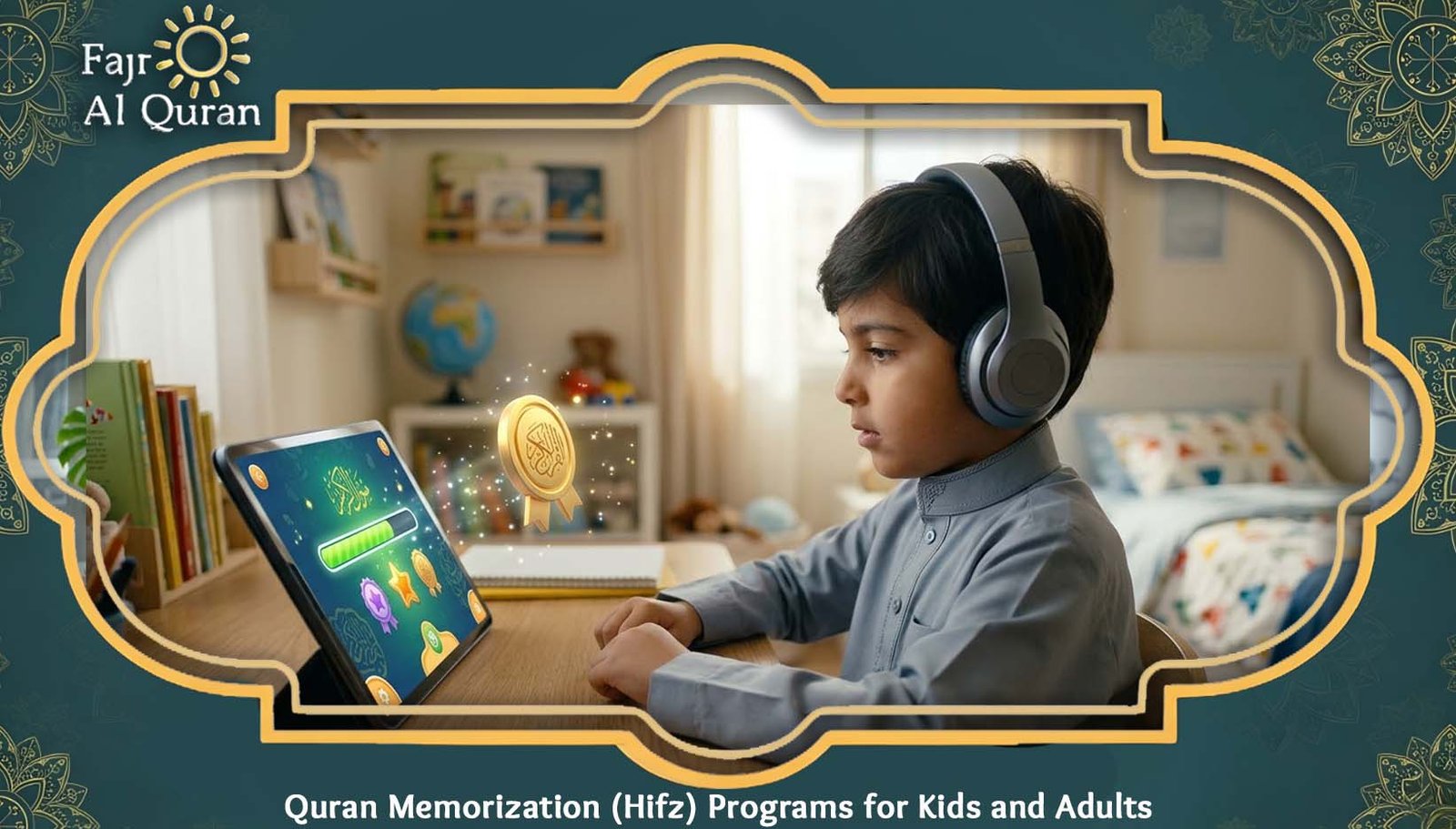
Quran Memorization (Hifz) Programs for Kids and Adults
Memorising the Quran is a meaningful goal that requires patience, repetition, and a sensible revision plan. Online Quran Classes USA can support students who want to memorise short surahs, strengthen existing memorisation, or work towards a broader Hifz goal.
Hifz is not simply about learning new verses. Students also need to revise what they have already memorised so that it remains familiar and accurate. Without regular revision, previously learned passages may become difficult to recall.
A structured online Hifz programme can help learners divide their goals into manageable sections. A teacher may listen to newly memorised verses, correct reading mistakes, and ask the student to recite earlier passages. The amount of new material should reflect the student’s age, schedule, and ability.
Children often benefit from short sessions and realistic targets. Parents can support them by setting aside a quiet practice time and encouraging steady effort rather than focusing only on the amount memorised. Adults may need a different plan that works around employment, family responsibilities, and other commitments.
A useful Hifz routine often includes:
- New memorisation: Learn a manageable portion with correct pronunciation.
- Recent revision: Repeat material learned in previous lessons.
- Older revision: Return to earlier surahs or passages.
- Teacher feedback: Correct mistakes before they become habits.
- Independent practice: Review between scheduled lessons.
Online Hifz classes can be suitable for beginners and more experienced students, but the programme should match their reading ability. Students who struggle with basic pronunciation may benefit from strengthening their recitation before increasing memorisation targets.
With consistent effort and suitable guidance, children and adults can work towards their Hifz goals while maintaining attention to accurate recitation.
Affordable Online Quran Classes USA with a Free Trial
Cost is an important consideration when choosing a Quran learning programme for yourself or your family. Online Quran Classes USA vary in price depending on lesson length, class frequency, teacher experience, and whether instruction is private or shared with other students.
Rather than choosing the cheapest option automatically, compare what each programme includes. A lower fee may cover fewer lessons, while another package may offer more frequent sessions or additional learning support. Understanding the terms can help you make a more informed decision.
Some providers offer a free trial of online Quran classes USA, so prospective students can experience a lesson before committing. A trial can help you assess the teacher’s communication style, the quality of feedback, and whether the course matches your current level.
During a trial lesson, pay attention to:
- Whether the teacher listens carefully and corrects mistakes clearly.
- Whether the lesson matches your age, reading level, and learning goals.
- Whether instructions are easy to understand.
- Whether the teacher explains what you should practise next.
- Whether the proposed schedule is realistic for your routine.
Parents should also consider whether the learning environment is suitable for their children. Adults may want to ask about course progression, privacy, payment options, and how to change a lesson time.
Fajr Al-Quran Academy is a platform you can contact when comparing Quran classes. Before booking, verify its current prices, available packages, trial-class eligibility, and cancellation or rescheduling rules. A free trial should never be assumed unless the academy confirms that it is available.
If you are ready to begin, ask about a trial lesson and explain whether you want to learn Quran reading, improve Tajweed, study translation, or memorise the Quran. This will help you evaluate whether the programme is a suitable match.
Frequently Asked Questions About Online Quran Classes USA
How can I find the best online Quran classes USA?
Compare teacher qualifications, course options, lesson formats, scheduling, and student support before enrolling. A trial lesson can help you decide whether the teacher’s approach suits your learning needs.
Can beginners learn the Quran online?
Yes, beginners can start with Arabic letters and basic reading through a structured course such as Noorani Qaida. Regular lessons and practice can help them progress towards reading Quranic verses with greater confidence.
Are online Quran classes USA available for children and adults?
Many online Quran programmes offer courses for both children and adults, although the available options vary by provider. Ask about age-appropriate teaching methods, course levels, and suitable lesson times before registering.
Can I take online Quran classes with a free trial?
Some academies offer trial lessons so students can evaluate the teaching style and course structure before enrolling. Contact Fajr Al-Quran Academy directly to confirm whether a free trial is currently available and what conditions apply.
Conclusion: Start Learning the Quran Online with Confidence
Choosing the right Quran programme can make learning more manageable for children, adults, beginners, and families across the United States. Online Quran Classes USA offer a convenient way to study from home, receive individual guidance, improve Tajweed, work towards memorisation goals, and explore Quranic meaning.
The best choice depends on your current level, preferred learning style, schedule, and budget. Take time to compare teachers, ask about course options, and understand the programme before committing.
Fajr Al-Quran Academy is a platform to consider as you explore your options for online Quran education. Contact the academy to confirm available courses, teacher qualifications, scheduling, fees, and trial-class arrangements.
Ready to take your next step? Book a trial lesson with Fajr Al-Quran Academy, if available, and explore how guided Quran learning can fit into your daily routine.