Quran recitation for beginners involves learning to read the Quran aloud with proper pronunciation, using correct letters (makharij) and characteristics (sifat). Learning to read Quran correctly is a beautiful journey for every Muslim. For new Muslims, children, and adults who are just starting, the first challenge is knowing where to begin. Quran recitation for beginners provides a simple path from learning Arabic letters to reading words, understanding basic pronunciation, and applying Tajweed rules. With the right method, beginners can build confidence without feeling overwhelmed.
The goal of Quran recitation for beginners is not to rush through the Qur’an. It is to learn each step carefully and develop accurate reading habits. A beginner may start by recognizing Arabic letters, then learn their sounds and shapes. After that, students can practice joining letters, reading short words, and reciting simple Surahs. Over time, they can improve pronunciation, rhythm, fluency, and Tajweed.
Whether you are a new Muslim, a parent looking for Quran lessons for your child, or an adult returning to Quran learning, this guide can help. Quran recitation for beginners becomes easier when lessons are structured, practice is regular, and a qualified teacher provides feedback. Platforms such as Fajr Al-Quran Academy can also support students through guided online learning.
This complete guide explains how to learn the Quran step by step, improve your reading, understand Tajweed, and develop a meaningful relationship with the Qur’an.

What Is Quran Recitation for Beginners?
Quran recitation for beginners is a structured approach to learning how to read and recite the Quran correctly. It is designed for students who have little or no previous experience with Arabic reading. The lessons usually begin with Arabic letters and basic pronunciation. Students then progress toward words, verses, Surahs, and essential Tajweed rules.
The purpose of Quran recitation for beginners is to make Quran reading simple and manageable. Instead of expecting students to memorize everything at once, a good learning guide breaks the process into small steps. This helps beginners understand what they are reading and correct mistakes early.
For many students, the journey starts with identifying the Arabic alphabet. They learn the shape and sound of each letter. Next, they practice short vowel marks and learn how letters connect. As their reading improves, they begin to read complete words and short passages.
A strong Quran recitation for beginners program also introduces basic Tajweed. Students learn how letters should be pronounced and how certain sounds should be extended or emphasized. They gradually develop better fluency and confidence.
The most important thing is consistency. You do not need to read perfectly on your first day. You need a clear path, patient practice, and a willingness to improve. Quran recitation for beginners is a learning journey, not a race.
Why Should Beginners Learn Quran Recitation?
Learning to recite the Qur’an correctly is important because the Qur’an should be read with care and respect. Quran recitation for beginners gives students the foundation they need to read Arabic words accurately. It also helps prevent common pronunciation mistakes that can develop when someone learns without guidance.
For new Muslims, Quran recitation for beginners can provide a comfortable introduction to Quran reading. A new student may feel nervous when looking at Arabic text for the first time. A structured course removes much of that confusion. Students can begin with simple letters and gradually move toward verses.
Children also benefit from early Quran learning. When kids receive age-appropriate lessons, they can develop good reading habits from the beginning. Adults can benefit too, especially those who have always wanted to read the Qur’an but never had the opportunity.
Another reason to study Quran recitation for beginners is confidence. Many students stop practicing because they believe their reading is too slow. A patient learning process shows them that slow reading is normal at first. Accuracy should come before speed.
The Qur’an is also a source of spiritual connection. Regular recitation gives learners time to reflect, remember Allah, and build a meaningful daily habit. Even a few minutes of focused practice can become valuable.
With Quran recitation for beginners, students can:
- Build a strong reading foundation.
- Improve Arabic pronunciation.
- Learn essential Tajweed rules.
- Develop confidence in reading.
- Create a consistent Quran routine.
Benefits of Learning Quran Recitation Step by Step
A step-by-step method makes Quran recitation for beginners easier because students are not forced to learn advanced concepts too early. Each lesson builds on the previous one. This creates a natural learning path and gives students time to understand each skill.
One major benefit of Quran recitation for beginners is improved pronunciation. Arabic has sounds that may not exist in other languages. Learning the correct articulation of each letter helps students read Quranic words more accurately.
Another benefit is stronger reading confidence. When students can recognize letters, combine them, and read words successfully, they become more motivated. Small achievements make the learning journey enjoyable.
Quran recitation for beginners can also improve fluency. Regular reading helps students become familiar with common Quranic words and patterns. With practice, the eyes recognize words more quickly, reducing the need to stop after every letter.
Tajweed is another important benefit. Beginners can gradually learn rules related to elongation, noon sakinah, tanween, meem sakinah, and other areas. These rules help make recitation clearer and more accurate.
There is also a spiritual benefit. Reading the Qur’an regularly can create a peaceful daily routine. Students learn not only how to read but also how to approach the Qur’an with attention and respect.
The key is patience. Quran recitation for beginners does not require immediate perfection. Progress comes through regular learning, correction, repetition, and sincere effort.
How to Learn Quran Recitation for Beginners
The best way to approach Quran recitation for beginners is to follow a clear learning sequence. Trying to learn everything at once can create confusion. Instead, divide the process into manageable stages.
Start with the Arabic alphabet. Learn the name and sound of each letter. Pay attention to letters that have similar shapes or sounds. Once you recognize the letters, practice their pronunciation repeatedly.
The next stage of Quran recitation for beginners is learning vowel marks. Students should understand how fatha, kasra, and damma affect the sound of a letter. They can then practice simple combinations and short words.
After that, students can begin reading Quran words. At this point, a teacher can identify pronunciation problems and explain how to correct them. This is especially useful for sounds that are difficult for non-Arabic speakers.
The next step is basic Tajweed. Beginners should not try to memorize every Tajweed rule immediately. They should learn the most useful rules first and apply them during reading.
A simple learning path can look like this:
- Learn Arabic letters.
- Practice letter sounds.
- Learn vowel marks.
- Read connected letters.
- Practice Quranic words.
- Learn basic Tajweed.
- Read short Surahs.
- Improve fluency through daily practice.
Quran recitation for beginners becomes much more effective when students follow this order. The goal is steady improvement rather than fast completion.

Learn Arabic Letters and Quran Pronunciation
Arabic letters are the foundation of Quran recitation for beginners. A student cannot read Quranic words confidently without first understanding the Arabic alphabet. Each letter has a specific shape, sound, and place of articulation.
For beginners, it is useful to study a few letters at a time. Students should look at each letter, pronounce it, and repeat it several times. They should also practice letters in different positions within a word.
Pronunciation deserves special attention. Some Arabic sounds can be difficult for English speakers and learners from other language backgrounds. Letters such as ع, ح, خ, ص, ض, ط, ظ, and ق may require extra practice.
This is where Quran recitation for beginners with a qualified teacher can make a major difference. A teacher can listen to the student’s reading and explain exactly where a sound is coming from. Students can then repeat the sound until their pronunciation improves.
Reading slowly is also helpful. Beginners should not worry about sounding fast. Slow and accurate reading creates a stronger foundation than fast reading with repeated errors.
Use audio tools as additional support. Listening to a reliable reciter can help students become familiar with correct pronunciation and rhythm. However, listening should complement teacher guidance rather than replace it.
As students practice Arabic letters and sounds, Quran recitation for beginners becomes less intimidating. The letters begin to feel familiar, words become easier to recognize, and reading gradually becomes more natural.
Understand Basic Tajweed Rules for Quran Recitation
Tajweed is an essential part of Quran recitation for beginners. The word refers to improving and making Quranic recitation accurate. Tajweed teaches students how to pronounce letters properly and observe important recitation rules.
Beginners do not need to learn every advanced rule immediately. A good Quran recitation for beginners course introduces Tajweed gradually. Students first learn concepts that directly affect their everyday reading.
Makharij, or the articulation points of Arabic letters, is one important area. Students learn where different sounds originate in the mouth and throat. This helps them distinguish between letters with similar sounds.
Students may also learn basic rules related to noon sakinah and tanween. Meem sakinah, qalqalah, madd, and common stopping rules can be introduced as the learner progresses.
The purpose of Quran recitation for beginners is to apply these rules in actual reading. Tajweed should not remain only theoretical knowledge. Students should practice each rule while reciting verses.
A teacher can demonstrate a rule, let the student repeat it, and then correct mistakes. This cycle of listening, reading, correction, and repetition is highly effective.
Do not become discouraged by mistakes. Tajweed takes time. Even experienced learners continue improving their recitation. The important thing is to follow a clear path and practice consistently.
With regular study, Quran recitation for beginners can develop into accurate and confident Quran reading. Tajweed becomes less complicated when learners understand one rule at a time.
Learn Quran Recitation with a Qualified Quran Teacher
A qualified teacher can make Quran recitation for beginners much easier. Reading the Qur’an involves sounds that are difficult to judge independently. A teacher can hear mistakes that students may not notice themselves.
For this reason, Quran recitation for beginners should ideally include live instruction. A teacher can demonstrate the correct sound and ask the student to repeat it. Immediate feedback helps prevent incorrect pronunciation from becoming a habit.
A good teacher should also understand the student’s level. Children may need shorter lessons and engaging activities. Adults may prefer a structured pace that fits their schedule. New Muslims may need additional explanations about Arabic reading and Quranic terms.
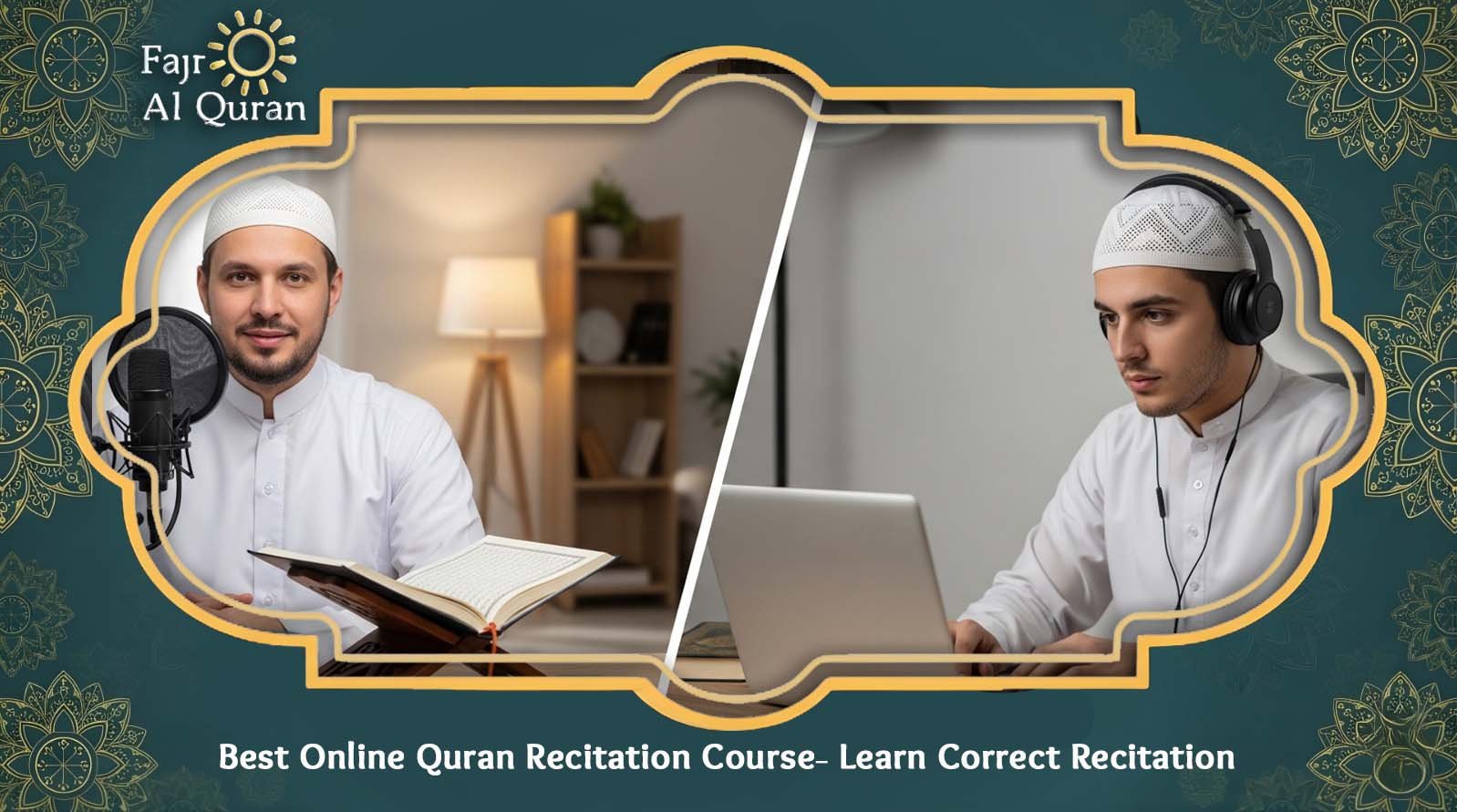
Fajr Al-Quran Academy is a useful option for students seeking guided online Quran learning. Its approach can help beginners study Quran reading and recitation with qualified instructors from home. Students can receive lessons suited to their individual level and learning needs.
When choosing a teacher, look for someone patient, experienced, and able to explain clearly. The teacher should encourage questions and provide constructive corrections.
The relationship between teacher and student can strongly influence progress. A supportive instructor makes Quran recitation for beginners more comfortable and motivating.
With expert guidance, students can work on pronunciation, Tajweed, fluency, and confidence. They can also receive a personalized learning path instead of relying only on self-study.

Quran Recitation Practice for Beginners at Home
Daily practice is one of the most important parts of Quran recitation for beginners. Even a short practice session can produce meaningful progress when it is consistent. Beginners should focus on quality rather than trying to complete large portions of the Qur’an.
Start with the material covered in your lesson. Read the same letters, words, or verses several times. If your teacher corrected a particular sound, give that sound extra attention.
A useful Quran recitation routine for beginners can take only 15 to 20 minutes. Spend a few minutes reviewing previous lessons. Then practice new material slowly. Finish by reading a short passage without rushing.
Listening can also support your practice. Choose a trusted Quran reciter and follow along with the written text. Listen to one verse, then try to recite it yourself.
Parents can help children by creating a quiet and positive study environment. Adults can choose a regular time that fits their daily schedule.
Keep your practice simple. Useful tools include:
- A clear Quran with readable Arabic text.
- Audio recordings from reliable reciters.
- A notebook for difficult words.
- Online lessons with a teacher.
- A consistent daily schedule.
The purpose of Quran recitation for beginners is steady improvement. You may read slowly today and more smoothly next month. Do not compare your progress with another student.
With patience and regular reading, Quran recitation for beginners can become a lasting habit and an important part of your spiritual routine.
Online Quran Recitation Classes for Beginners
Online learning has made Quran recitation for beginners more accessible. Students can now learn from home without traveling to a local center. This can be especially useful for busy adults, families, children, and new Muslims.
A strong online Quran recitation for beginners program should provide live lessons, qualified teachers, flexible schedules, and personalized feedback. Students should be able to ask questions and receive corrections during the lesson.
Online classes can also make learning more flexible. Parents can choose lesson times that fit their children’s routines. Adults can schedule classes around work and family responsibilities.
Fajr Al-Quran Academy can support learners who want structured online Quran education. Students can work with instructors while practicing reading, pronunciation, and Tajweed from home.
The biggest advantage of online Quran recitation for beginners is convenience without sacrificing personal instruction. A student can open a lesson on a computer, tablet, or other suitable device and continue the learning process from home.
However, students should still create a dedicated learning space. A quiet environment helps them concentrate and hear the teacher clearly.
Online learning works best when students remain consistent. Missing lessons frequently can slow progress. Regular attendance and daily practice help students build momentum.
For beginners who need flexibility, Quran recitation for beginners online classes can offer a practical and comfortable way to start reading the Qur’an.
How to Choose a Quran Recitation Course for Beginners
Choosing the right course is an important final step in your Quran recitation journey. Not every course follows the same teaching method. Before joining, consider whether the program is suitable for your current reading level and goals.
A good Quran recitation course should start with the basics. It should not assume that every student already knows Arabic letters or Tajweed. Lessons should progress gradually from simple reading to more advanced recitation.
Teacher quality is another important factor. Look for instructors who have strong Quran knowledge and experience teaching beginners. They should be patient and willing to correct pronunciation carefully.
Course flexibility matters too. Online students often have different schedules. A suitable program should offer lesson times that work for children, adults, and busy learners.
Fajr Al-Quran Academy can be considered by students looking for a structured online learning environment. Its focus on guided Quran education makes it a practical option for learners who want teacher support during their reading journey.
Before choosing a course, consider:
- Does it offer qualified Quran teachers?
- Does it teach pronunciation and Tajweed?
- Is the course suitable for complete beginners?
- Are lessons interactive and personalized?
- Can students choose convenient lesson times?
- Does the program support children and adults?
- Is there regular feedback on recitation?
The best Quran recitation for beginners program is one that matches your level, schedule, and learning goals. Do not choose a course simply because it promises fast results. Choose one that builds accurate skills.
Conclusion
Learning the Qur’an is a rewarding journey, and Quran recitation for beginners becomes much easier when you follow a clear step-by-step approach. Start with Arabic letters and pronunciation, then move to Quranic words, basic Tajweed, and regular recitation practice. Do not worry about reading quickly. Focus on accuracy, consistency, and gradual improvement.
Whether you are a new Muslim, child, or adult, the right teacher can help you correct mistakes and build confidence. With regular practice and expert guidance from a trusted platform such as Fajr Al-Quran Academy, you can develop stronger Quran reading skills from the comfort of your home.
Start your Quran recitation journey for beginners today. Take one step at a time, practice consistently, and make Quran reading a meaningful part of your daily life.