Quranic Arabic classes online are structured courses designed to teach the classical Arabic used in the Quran. These classes focus on vocabulary, grammar, pronunciation, and comprehension to help learners read and understand the Quran accurately. Offered by reputable institutions like Fajr Al-Quran Academy, they cater to all levels, with professional instructors providing personalized guidance. Fajr Al-Quran Academy
uses immersive methods to accelerate learning, enabling students to grasp the language without relying solely on translations. Ideal for both beginners and advanced learners, these courses combine flexibility with academic rigor.
The Quran is the central source of guidance for Muslims. It was revealed in Arabic, a language with rich vocabulary, precise grammar, and powerful expressions. Learning Quranic Arabic can help Muslims move beyond relying only on translations. It can help them understand the words, meanings, and messages of the Quran more directly. This is why many students choose Quranic Arabic classes to build their language skills in a structured way.
For beginners, learning Arabic may seem difficult at first. The Arabic alphabet, vocabulary, grammar, and sentence structures can feel unfamiliar. However, the right approach can make the process much easier. Well-designed Quranic Arabic classes introduce each concept gradually. Students can learn basic words first and then progress toward grammar, morphology, reading, and deeper understanding.
Among online learning options, Fajr Al-Quran Academy provides structured learning opportunities for students who want to develop their Quranic Arabic skills. With suitable courses, expert teachers, and online lessons, students can start building a stronger connection with the Quran.
Whether you are a complete beginner or already know some Arabic, the right Quranic Arabic classes can help you unlock a deeper understanding of the Quran and appreciate the beauty of its language.
What Are Online Quranic Arabic Classes?
Online Quranic Arabic classes are structured lessons that teach students the Arabic language used in the Quran. They are designed to help learners understand Quranic words, expressions, sentence structures, grammar, and meanings. Unlike general arabic classes, these courses focus specifically on the language needed to read and understand Quranic texts.
Many students begin with the Arabic alphabet and basic pronunciation. They then move toward vocabulary, sentence formation, arabic grammar, and classical arabic structures. This gradual approach is especially helpful for beginners who have little or no previous experience with the arabic language.
Good Quranic Arabic classes do not simply ask students to memorize hundreds of words. They teach students how words function within Quranic verses. This allows learners to recognize familiar patterns when they read the Quran.
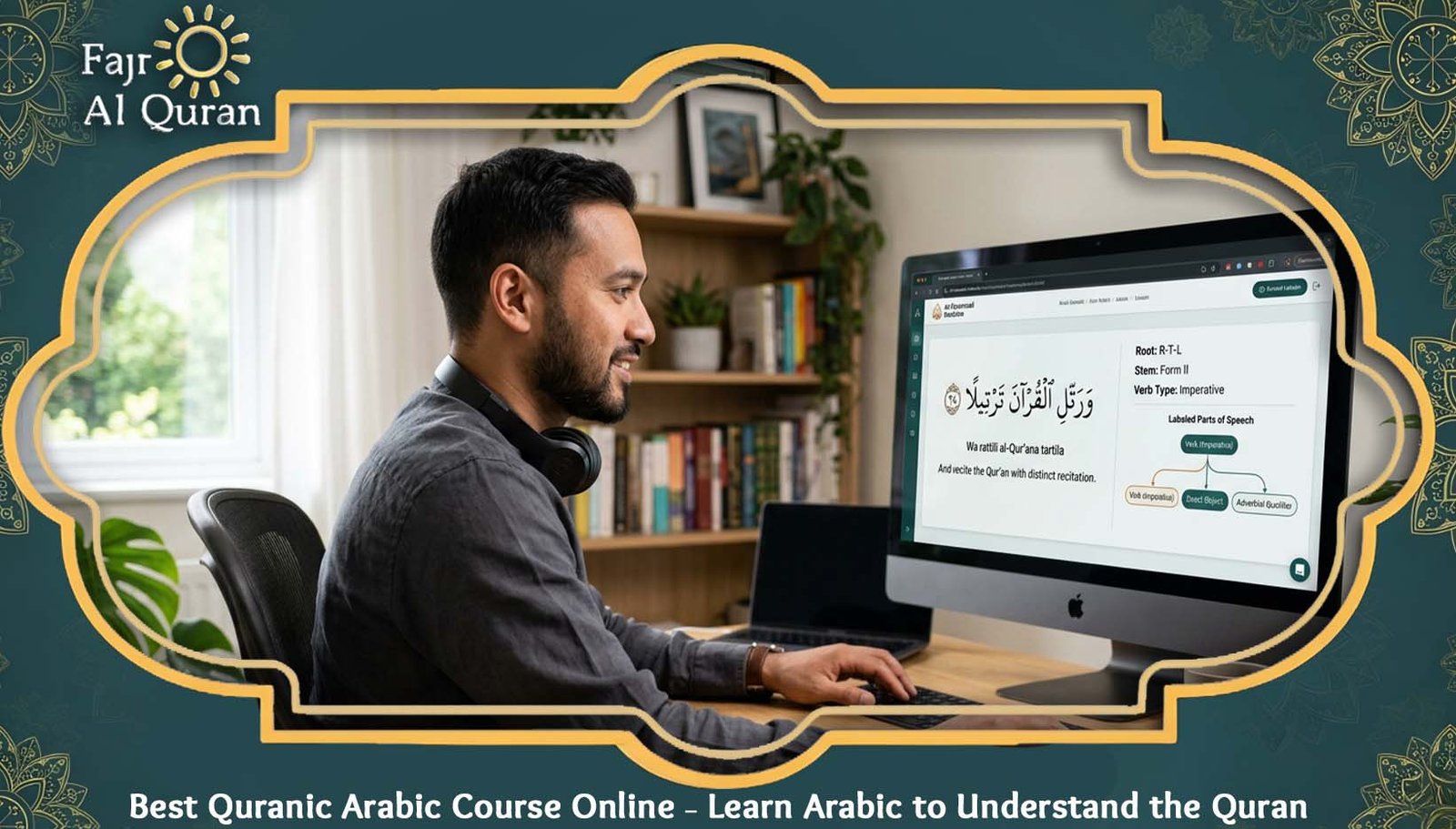
Online Quranic Arabic classes are usually delivered through live video lessons. Students can communicate directly with their teachers, ask questions, and receive feedback. Some courses also provide recorded materials, worksheets, exercises, and revision activities.
For children, Quranic Arabic lessons may use simple examples and age-appropriate teaching methods. Adults may prefer a more detailed approach that focuses on grammar and comprehension. New Muslims can also benefit from beginner-friendly courses that explain the language without assuming prior knowledge.
The goal of Quranic Arabic classes is not necessarily to make every student a fluent conversational speaker. The primary goal is to help students understand the Quran more accurately and confidently. With consistent learning, students can gradually recognize common Quranic words and structures.

What You Learn in Quranic Arabic Classes
A comprehensive Quranic Arabic course covers several connected areas. Students usually begin with the foundations of the arabic language. These foundations may include letters, pronunciation, basic vocabulary, and simple sentence structures.
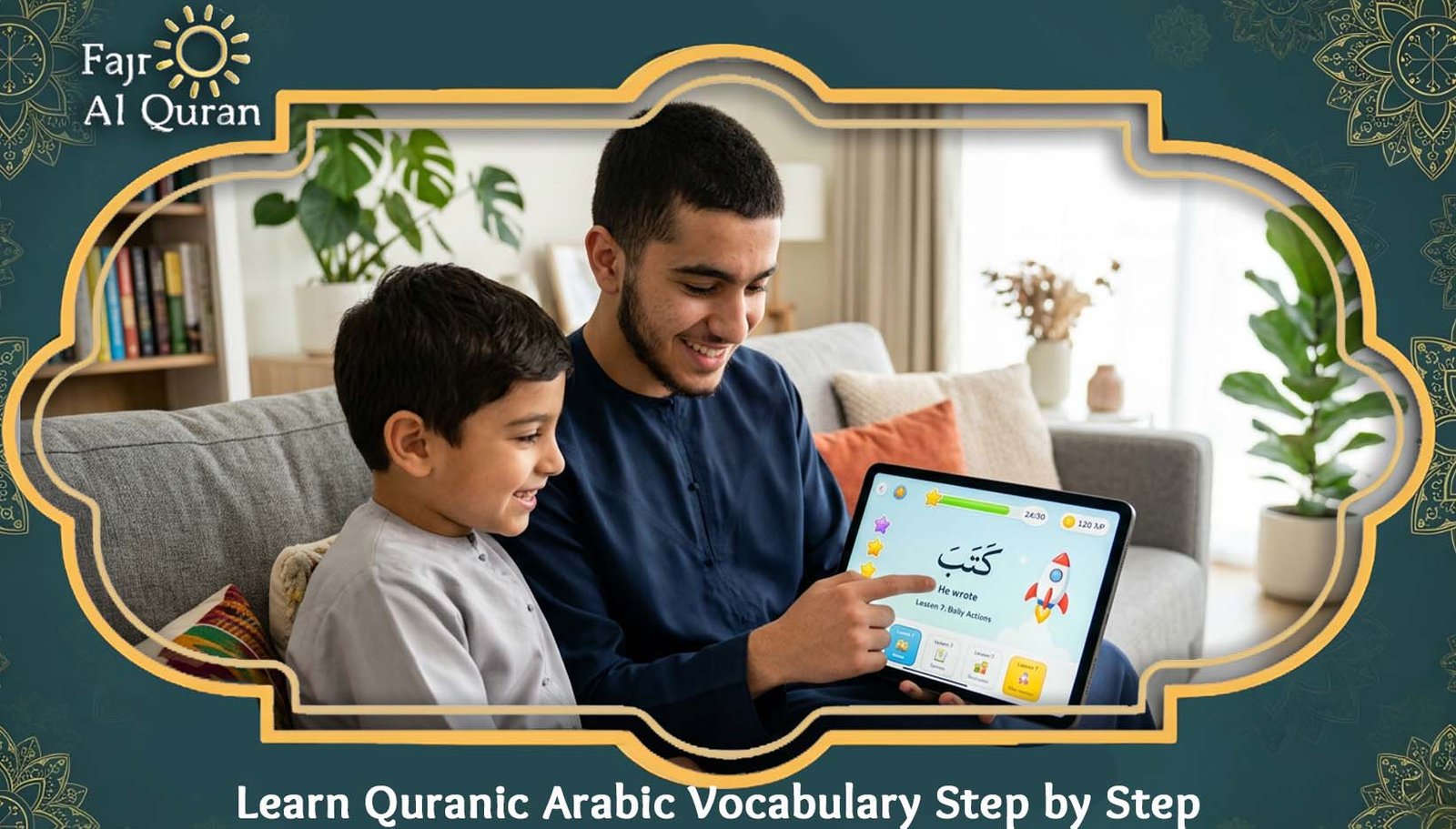
Vocabulary is an important part of Quranic Arabic classes. Students learn common words that appear frequently in the Quran. Words related to faith, worship, people, actions, time, nature, and the Hereafter may be introduced through Quranic examples. Learning high-frequency vocabulary can make Quran reading more meaningful.
Another major area is arabic grammar. Grammar helps students understand how words relate to one another in a sentence. It can explain why a word has a particular ending and how that ending affects its role and meaning.
Students may also study morphology, known in Arabic as word formation patterns. Morphology helps learners understand how Arabic words are connected. A student may recognize a root and then identify related nouns, verbs, and other forms.
Quranic arabic classes can also introduce students to classical arabic. The Quran uses a highly refined form of Arabic. Understanding its structures can help learners appreciate the precision of Quranic expressions.
Reading practice is another important part of Quranic Arabic classes. Students apply what they learn by examining actual Quranic verses. Teachers can explain vocabulary, grammar, sentence structure, and meaning within context.
The best Quranic Arabic classes combine these areas instead of teaching them separately. This creates a comprehensive learning experience and allows students to connect grammar, vocabulary, and meaning as they progress.
Learn Arabic to Understand the Quran
Learning Arabic can transform the way a Muslim approaches the Quran. A translation can communicate the general meaning of a verse, but the original Arabic contains linguistic details that may be difficult to reproduce in another language. This is one reason Quranic Arabic classes are valuable for serious Quran learners.
When students study Quranic Arabic, they can begin recognizing words without immediately checking a translation. A familiar word may appear in several verses. Over time, repeated exposure strengthens memory and recognition.
Quranic arabic classes also help students understand the relationship between words. Arabic grammar can show whether a word is acting as a subject, object, description, or another part of a sentence. These details can contribute to a more accurate understanding of the text.
For new Muslims, learning Quranic Arabic can also be an important part of their Islamic learning journey. It gives them a direct way to explore the language of the Quran while they continue learning about Islam.
Children can benefit as well. When children start learning Arabic early, they can gradually develop familiarity with Quranic vocabulary. Short, engaging Quranic Arabic classes can make this process enjoyable rather than overwhelming.
Adults may approach the subject differently. They may want to understand the Quran during personal reading, prayer, or reflection. Structured Quranic Arabic classes can give them a clear path to develop those skills.
At Fajr Al-Quran Academy, students can learn Quranic Arabic through organized online lessons. The aim is to make learning accessible and practical while helping students develop a deeper connection with Quranic texts.
With patience and regular practice, Quranic Arabic classes can help learners move from simply reading translated meanings toward engaging with the Quran’s original language.
How Online Quranic Arabic Classes Work
Modern online Quranic Arabic classes make it possible to study from almost anywhere. Students usually attend lessons through an online learning platform or video communication system. They can interact with their teacher in real time and receive immediate guidance.
A typical lesson begins with a short review. The teacher may revise vocabulary or grammar from previous Quranic Arabic classes. This helps students retain what they have already learned before moving to a new topic.
The teacher then introduces the day’s lesson. This may involve vocabulary, grammar, morphology, sentence structure, or a selection of Quranic verses. The material is explained step by step.
Students may then practice the lesson. In Quranic Arabic classes, practice is important because understanding a grammar rule is different from being able to recognize it independently. Students may translate simple phrases, identify words, or analyze sentence structures.
Teachers can also correct mistakes during the lesson. This direct feedback is one of the major advantages of live Quranic Arabic classes. Students do not have to continue practicing an incorrect pronunciation or grammatical pattern without guidance.
Online learning can also offer scheduling flexibility. A student may choose lesson times that fit around school, work, family, or other responsibilities.
Parents can select appropriate Quranic Arabic classes for their children based on their age and learning level. Adults can choose programs designed for complete beginners or students with previous Arabic knowledge.
The effectiveness of Quranic Arabic classes depends on regular attendance and practice. Students should review vocabulary after lessons and apply new concepts when reading the Quran.

How to Choose the Best Quranic Arabic Classes Online
Choosing the right Quranic Arabic classes can make a significant difference in your learning experience. Not every course uses the same teaching methods or follows the same curriculum. Students should consider several factors before they enroll.
First, look at the teacher’s qualifications and experience. Effective Quranic Arabic classes should be taught by instructors who understand both the Arabic language and the Quran. Teachers should also know how to explain difficult concepts in simple terms.
The course structure is equally important. A strong program should follow a clear progression. Beginners should not be expected to understand advanced grammar before learning basic vocabulary and sentence patterns.
Students should also check whether the course covers Arabic grammar, vocabulary, morphology, reading, and comprehension. A comprehensive curriculum can provide a stronger foundation than a course that focuses on only one area.
Teaching methodology matters too. Some learners respond well to repetition and practical examples. Others benefit from detailed grammar explanations. The best Quranic Arabic classes use approaches that encourage students to understand and apply what they learn.
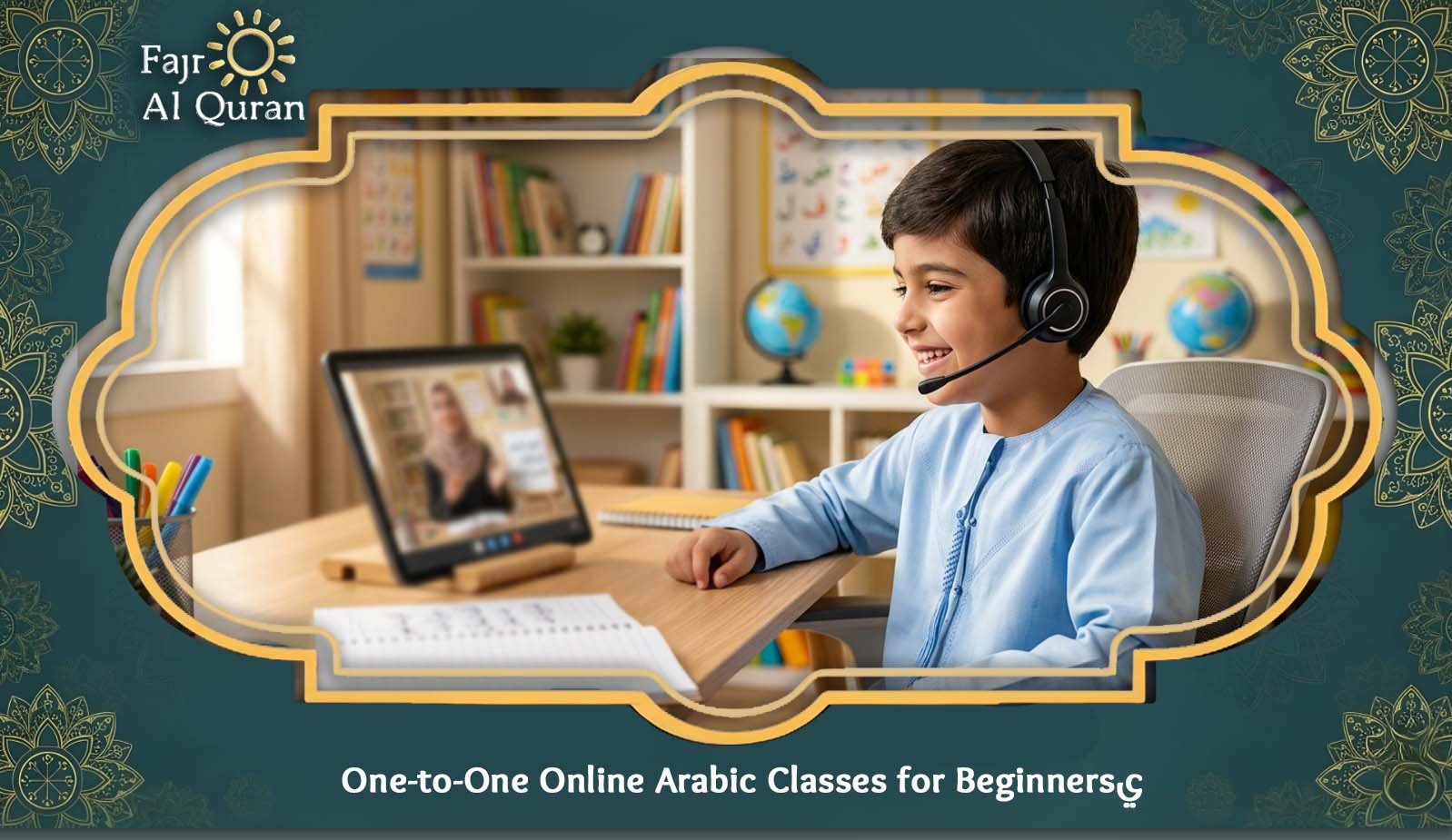
Class size can also affect the learning experience. Smaller classes or individual lessons may allow teachers to provide more personalized feedback.
Flexible scheduling is especially useful for adults and families. Online Quranic Arabic classes should make it easier to maintain consistent learning rather than creating additional pressure.
A trial lesson can also help. It allows students to experience the teacher’s approach before committing to a full course.
Finally, consider whether the academy has a clear learning path. At Fajr Al-Quran Academy, students looking to learn Quranic Arabic can explore structured online learning designed to support gradual progress.
The best Quranic Arabic classes are those that combine qualified teachers, structured lessons, practical learning, and consistent support.
Learn Quranic Arabic Online with Expert Teachers
A skilled teacher can make Quranic Arabic classes much easier to understand. Arabic has many rules and patterns. Without proper guidance, beginners can become confused by unfamiliar words or grammar structures.
Expert teachers can break complex topics into smaller lessons. Instead of presenting a large amount of arabic grammar at once, they can explain one concept and then show how it appears in Quranic verses.
Teachers can also explain why a particular translation may use certain words. This helps students appreciate the difference between the original Arabic and translated versions.
In Quranic Arabic classes, teachers can provide examples from the Quran. This makes learning more relevant. Students are not studying Arabic only as an academic subject. They are learning it to understand the Quran.
Personal feedback is another major advantage. A teacher can identify areas where a student needs more practice. This is especially helpful for beginners who may struggle with vocabulary or grammar.
At Fajr Al-Quran Academy, qualified teachers can support students through online Quranic Arabic classes. The learning experience can be adapted to different levels, including beginners who are starting their Arabic journey.
Parents looking for Quranic Arabic classes for children should also consider whether teachers can work effectively with young learners. Children often need shorter explanations, repetition, encouragement, and engaging examples.
Adults may prefer deeper explanations of grammar and morphology. A good teacher can adjust the lesson according to the learner’s level and goals.
Expert instruction does not eliminate the need for personal effort. Students still need to review and practice. However, qualified teachers can make that effort more focused and productive.
With the right support, Quranic Arabic classes can turn a challenging subject into a clear and rewarding learning experience.
Quranic Arabic Classes for Beginners
Beginners often worry that they need to know Arabic before joining quranic arabic classes. In a beginner-friendly course, this is usually not necessary. A well-designed program starts from the learner’s current level.
The first stage may focus on basic Arabic letters, sounds, words, and simple structures. Students gradually become familiar with the written form of the arabic language.
Vocabulary is introduced step by step. Instead of trying to memorize an enormous word list, beginners can focus on common Quranic terms. Repeated exposure helps these words become easier to recognize.
Grammar is also introduced gradually. Beginner Quranic Arabic classes should avoid overwhelming students with complicated terminology. Teachers can first explain simple sentence structures before introducing more advanced concepts.
Practice is essential. Students should read short Quranic phrases and identify words they already know. This creates a connection between classroom learning and actual Quran reading.
Children need a different learning approach. Their Quranic Arabic classes should include repetition, simple activities, and age-appropriate explanations. Keeping lessons engaging can help children maintain interest.
Adults may prefer a more structured academic approach. They may want to understand grammar rules and see how those rules operate within Quranic verses.
Regardless of age, beginners should focus on steady progress. Learning a small amount consistently is usually more useful than studying a large amount once and then stopping.

Learn Quranic Arabic Vocabulary and Common Words
Vocabulary is one of the most practical parts of Quranic Arabic classes. When students know common words, they can begin recognizing familiar meanings while reading the Quran.
The Quran contains many recurring words and expressions. Learning these words can make reading more familiar. Students may notice words they have studied in one verse appearing in another context.
Effective Quran and Arabic classes teach vocabulary in context. Rather than memorizing isolated words, students can study how a word is used within a Quranic sentence.
For example, a teacher may introduce a common verb and then explain its related forms. This approach introduces students to morphology and helps them recognize connections between words.
Word roots are another useful part of Quranic Arabic learning. Arabic often builds related words around root patterns. Understanding these patterns can help students recognize unfamiliar words.
In Quranic Arabic classes, teachers can also distinguish between similar words. This helps students avoid assuming that two words have the same meaning.
Beginners should not feel pressured to memorize every word immediately. The goal is gradual growth. As vocabulary increases, students can understand more of what they read.
At Fajr Al-Quran Academy, students can use structured Quranic Arabic classes to develop vocabulary alongside other language skills.
Learning common Quranic words is an important step toward deeper understanding. As students recognize more vocabulary, Quran reading can become more engaging and meaningful.
The long-term goal of Quranic Arabic classes is to help students develop enough vocabulary and language awareness to approach Quranic texts with greater confidence.
Understand Quranic Arabic Grammar Step by Step
Grammar can seem like the hardest part of Quranic Arabic classes, especially for beginners. However, it becomes much easier when taught in a logical sequence.
Arabic grammar explains how words work together. It helps students understand each word’s role in a sentence. This is important because changes in structure and word endings can affect meaning.
Beginner Quranic Arabic classes may start with simple nominal and verbal sentences. Students can learn how to form basic sentences before moving to more complex structures.
Verb forms are another important topic. Students can learn how Arabic verbs change according to tense, person, and pattern. This connects grammar with morphology and vocabulary.
Pronouns and particles also play an important role. Students may encounter short Arabic words repeatedly in the Quran. Understanding their function can make verses easier to analyze.
Teachers should introduce grammar through Quranic examples whenever possible. This allows students to see how a rule works in a real text rather than studying it only as theory.
In advanced Quranic Arabic classes, students may study more detailed grammatical structures. They can examine sentence relationships and linguistic features that contribute to meaning.
At Fajr Al-Quran Academy, structured Quranic Arabic classes can help students progress from basic concepts toward more detailed Quranic language study.
Grammar is not simply about memorizing rules. It is a tool for understanding. Once students understand how Arabic sentences work, they can approach Quranic verses with greater confidence.
This is why Quranic Arabic classes should balance grammar explanations with reading and practical exercises. Students need to see, apply, and review each concept.
Flexible Online Quranic Arabic Lessons from Home
One of the biggest advantages of online Quranic Arabic classes is flexibility. Students can learn from home without traveling to a physical academy. This makes Arabic learning more convenient for families and busy individuals.
Adults often have demanding schedules. Work, family, and other responsibilities can make traditional classes difficult to attend. Flexible Quranic Arabic classes allow students to select lesson times that fit their routines.
Parents can also benefit from online learning. Children can attend Quranic Arabic classes from home under parental supervision. This can save travel time and make regular attendance easier.
New Muslims may also prefer online lessons because they can begin learning in a comfortable environment. They can ask questions and progress without feeling pressured by a classroom setting.
Online Quranic Arabic classes can provide access to teachers from different locations. Students are not limited to instructors available in their local area.
Another advantage is consistency. Students can establish a regular learning schedule and build a routine around their lessons. Consistency is especially important when learning vocabulary, arabic grammar, and morphology.
At Fajr Al-Quran Academy, students can explore online Quranic Arabic classes designed to support flexible Quranic language learning. The combination of online access and structured instruction can make the learning process easier to maintain.
Students should still create time for independent practice. Reviewing vocabulary, reading Quranic verses, and revisiting grammar after each lesson can strengthen progress.
The most effective Quranic Arabic classes are not simply convenient. They provide a clear learning path, qualified teachers, practical exercises, and support throughout the course.
Learning Quranic Arabic from home can therefore be both practical and rewarding. With regular lessons and sincere effort, students can gradually build the skills needed to understand more of the Quran directly.