
How to Choose the Right Online Tajweed Teacher: Questions to Ask First

Best Online Tajweed Classes: Learn Quran Recitation with Expert Tutors

With so many people offering online Tajweed lessons, picking the right teacher matters more than picking the right platform or price point. A few honest questions before you commit can save you months of slow or misdirected progress.

Ask About Their Ijazah and Chain of Narration

A proper Tajweed teacher should be able to explain their own ijazah, meaning who certified them and in which qira’ah or recitation style. This isn’t about credentials for their own sake, it tells you the teacher learned through a verified chain rather than picking up Tajweed informally. It’s a completely reasonable question to ask directly before your first lesson.

Ask How They Handle Correction

Some teachers wait until the end of a passage to give feedback, others correct in the moment. Neither is universally better, but it matters that you know which style you’re getting, since it affects how a session actually feels. If you tend to lose confidence with frequent interruptions, a teacher who corrects at natural pauses might suit you better than one who stops you mid-word.

Ask What a Typical Learning Path Looks Like

A teacher who can describe a rough structure, starting with makharij, then specific rule categories, then applied recitation, is generally more reliable than one who just says lessons will “go with the flow.” Structure doesn’t mean rigidity, but it does suggest the teacher has a clear sense of where a beginner needs to go.

Ask About a Trial Lesson

Most legitimate programs offer some form of trial or first assessment lesson, and it’s worth using it deliberately rather than just as a formality. Notice whether the teacher listens carefully, gives specific feedback rather than generic praise, and explains why a correction matters rather than just saying “say it again.”

Watch for These Signs of a Good Fit

A good teacher will usually ask about your current level honestly rather than assuming everyone starts from zero, adjust pace based on how you’re actually doing rather than a fixed schedule, and be comfortable repeating an explanation a different way if the first one didn’t land. These small things tend to matter more over months of lessons than any single feature of the platform.

Where to Start Looking

Online Quran classes with certified, Al-Azhar-trained tutors are a reasonable starting point if you want some assurance around the ijazah question above. From there, the trial lesson is really where you’ll know if the fit is right.

In Short

The right questions before you start save you from switching teachers a few months in. Ask about certification, correction style, and structure, then judge the trial lesson on how specific and attentive the feedback actually is.

Solo Tutor vs Full Academy: Which Fits Your Quran Learning Goals

Core Features of a Quality Online Quran Academy

Learning Quran online usually comes down to two paths: hiring an independent tutor, or enrolling with a structured academy. Both work, but they suit different needs.

What an Independent Tutor Offers

A single tutor offers a very personal, consistent relationship, one person tracking your progress over time, with lessons shaped closely around your pace and preferences.

What a Full Academy Offers

An academy typically provides a structured curriculum, backup coverage if a teacher is unavailable, and access to specialists for different needs, kids, Tajweed, memorization, without you having to search separately for each.

Consistency and Continuity

Academies generally handle continuity better if a teacher becomes unavailable, since another qualified tutor can step in with documented progress notes, whereas an independent tutor’s absence can pause everything.

Structure and Accountability

A full academy typically offers clearer curriculum structure and progress tracking, useful for learners who want defined milestones rather than an informal arrangement.

Which Fits You

A full academy structure tends to suit learners wanting curriculum clarity and continuity, while a solo tutor can suit those prioritizing one specific personal relationship above all else.

In Short

Solo tutors offer personal consistency; academies offer structure and continuity. Choose based on which matters more for your specific goals.

Does Virtual Quran Learning Actually Work? What to Know Before You Judge It

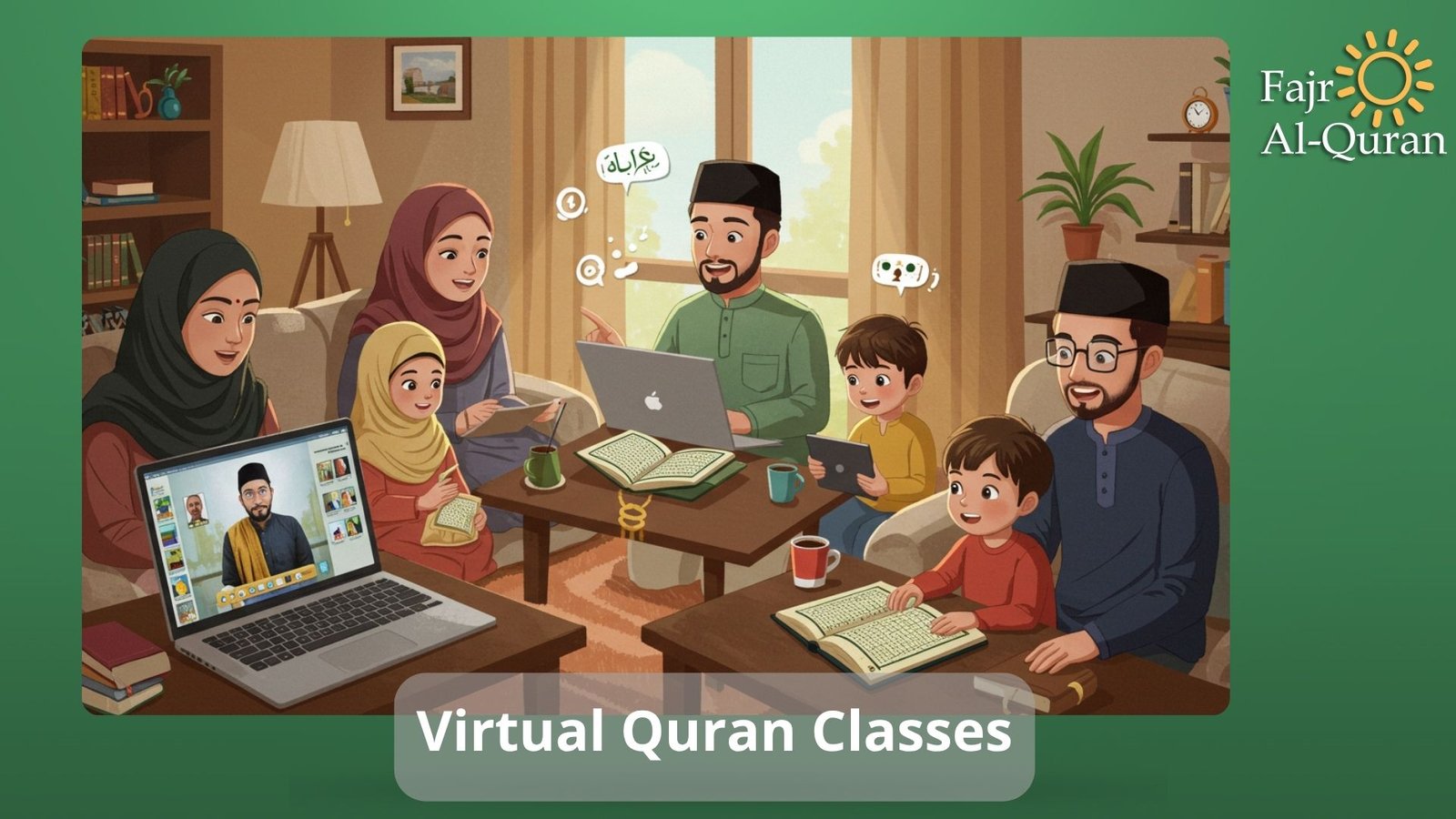
Virtual Quran Classes

Skepticism about learning something as precise as Quran recitation through a screen is understandable, but the evidence from actual practice is more reassuring than the doubt suggests.

What Actually Transfers Well Online

Pronunciation correction, the part people worry about most, works well through clear video and audio, since a teacher can hear pronunciation issues just as clearly as in person, and screen sharing allows pointing to specific text.

Where Online Learning Genuinely Struggles

Very young children needing constant physical engagement, or households with unreliable internet, are the situations where virtual learning is a genuinely harder fit, not a failure of the format itself.

What the Format Actually Improves

Access to a wider pool of qualified, certified teachers regardless of location, and flexible scheduling that supports consistency, are real advantages that often outweigh the format concerns people start with.

The Real Determining Factor

Success depends far more on teacher quality and student consistency than on whether the format is virtual or in-person. A good virtual teacher with consistent students outperforms a mediocre in-person setup.

Judging It Properly

A trial session with virtual Quran classes tends to resolve the doubt faster than theorizing about it, since the actual correction quality becomes obvious quickly.

In Short

Virtual Quran learning works well for most learners, with real limitations mainly for very young children or unreliable internet. Teacher quality and consistency matter more than the format itself.

Need Help?