Learn Quran Online | Master Quranic Recitation and Understanding

learn quran online

The ability to learn Quran online has made Quranic education more accessible than ever. With the advancement of technology, students worldwide can now connect with experienced tutors, study at their own pace, and build a strong foundation in Quranic recitation, Tajweed, and Tafseer. At Fajr Al-Quran, we provide structured and interactive online Quran courses for students of all ages and proficiency levels.

Why Learn Quran Online?

Many individuals seek to learn Quran online due to its numerous benefits. Online learning provides flexibility, affordability, and access to expert tutors regardless of location. Here’s why it’s a great option:

  • Convenience & Flexibility: Study at your schedule from home.
  • One-on-One and Group Learning: Choose between private or interactive group classes.
  • Certified Tutors: Learn from qualified and experienced Quran teachers.
  • Structured Learning Plans: Follow a step-by-step program suited to all levels.
  • Cost-Effective Education: High-quality lessons at affordable prices.

Features of Our Online Quran Classes

At Fajr Al-Quran, we aim to provide a structured and engaging learning experience for students of all levels. Our online Quran courses are designed to ensure a deep understanding of recitation, memorization, and Islamic teachings. Below are six key features of our program:

Live Interactive Sessions: 

Students can engage with qualified tutors in real time, ask questions, and receive immediate feedback, making the learning process dynamic and effective.

Beginner to Advanced Levels: 

Whether you are starting with Noorani Qaida or aiming for advanced Tajweed, our courses cater to students of all proficiency levels.

Tajweed and Pronunciation Focus: 

We emphasize proper pronunciation and articulation, ensuring students recite the Quran correctly with Tajweed rules.

Quran Memorization (Hifz) Support: 

For those looking to memorize the Quran, we offer structured memorization techniques and regular revision plans to enhance retention.

Islamic Studies Integration: 

Alongside Quran recitation, students learn about Islamic teachings, Hadith, daily supplications, and the significance of various Quranic verses.

Personalized Feedback & Progress Tracking: 

Tutors provide regular assessments, feedback, and personalized guidance to help students continuously improve their Quranic recitation and understanding.

What You Will Learn in Our Online Quran Course

Our structured curriculum ensures that students build a strong foundation as they learn Quran online. Topics covered include:

  1. Introduction to Quranic Recitation: Learning to read Arabic fluently.
  2. Tajweed Rules: Understanding and applying correct pronunciation.
  3. Quran Memorization (Hifz): Step-by-step guidance for retaining verses.
  4. Tafseer & Meaning: Gaining insight into the meaning of Quranic verses.
  5. Daily Recitation Practice: Developing fluency and confidence.
  6. Islamic Studies & Duas: Learning essential supplications and teachings.
  7. Application of Quranic Lessons: Implementing teachings in daily life.

How to Enroll and Learn Quran Online

Enrolling at Fajr Al-Quran is simple and accessible:

  1. Visit Our Website: Browse our available courses.
  2. Choose a Course: Select a level that matches your needs.
  3. Register for a Free Trial: Experience our teaching style.
  4. Schedule Your Lessons: Pick flexible class times.
  5. Start learning with expert tutors and engage in interactive sessions.

learn quran online
learn quran online


Advantages of Learning the Quran Online

Learning the Quran online offers a unique and effective way to gain Islamic knowledge from expert scholars. Students can connect with professional Quran teachers who provide structured guidance and personalized instruction. The secure online environment ensures a comfortable and safe learning experience, allowing individuals of all ages to engage in Quranic studies without distractions.

One of the key benefits of online Quran learning is flexibility, making it ideal for kids, adults, and working professionals. Lessons are customized according to the student’s pace, promoting better understanding and retention. Additionally, students gain access to comprehensive learning materials, including eBooks, videos, and exercises, ensuring a well-rounded education. The global learning community also allows students to interact with fellow learners worldwide, fostering motivation and encouragement.

Beyond academics, online Quran courses encourage discipline by establishing a structured routine for daily recitation and memorization. Families can also benefit by studying together, strengthening their collective connection to Islam. Ultimately, learning the Quran online enhances spiritual growth and lays a strong foundation for advanced Islamic studies, making it a valuable and enriching experience for all learners.

Why Choose Fajr Al-Quran for Online Quran Learning?

At Fajr Al-Quran, we strive to offer the best Quran online classes. Our commitment to excellence ensures that students receive top-tier Quranic instruction. Here’s why students choose us to learn Quran online:

  • Qualified & Experienced Tutors: Teachers with in-depth knowledge of Quranic studies.
  • Affordable Learning Plans: Cost-effective courses without compromising quality.
  • Flexible Scheduling: Choose class times that suit your lifestyle.
  • Supportive Community: Interact with tutors and fellow students for motivation.
  • Advanced Learning Tools: digital whiteboards, screen sharing, and interactive lessons.
  • Step-by-step Guidance: gradual progression from basic to advanced levels.
  • Certification Upon Completion: Earn a certificate after completing a course.

How to Get Started with Fajr Al-Quran

Getting started is easy.

  1. Go to Our Website.
  2. Select Your Preferred Quran Course.
  3. Register for a trial class.
  4. Set Up Your Learning Plan.
  5. Begin Your Journey in Quranic Education.

The Long-Term Benefits of Learning the Quran Online

Enrolling in an online Quran course offers lasting benefits that extend beyond just recitation. Students who learn Quran online develop a deeper spiritual connection, enhance their understanding of Islamic teachings, and establish lifelong learning habits. By choosing a structured and professional platform like Fajr Al-Quran, you ensure a rewarding and transformative learning experience.

Start your journey today with Fajr Al-Quran and unlock the beauty of the Quran!

 Quran Courses Online | Learn the Quran Anytime, Anywhere

quran courses online

Enrolling in Quran courses online is the best way to gain Islamic knowledge conveniently. At Fajr Al-Quran, we provide structured and interactive Quran courses online for learners of all ages and levels. Our expert instructors ensure that students learn Quranic recitation, memorization, Tajweed, and Tafseer effectively while studying from the comfort of their homes.

Why Choose Quran Courses Online?

With advancements in digital learning, Quran courses online have become the ideal solution for individuals seeking quality Islamic education. Here’s why online learning is beneficial:

  • Flexibility & Convenience: Learn at your own pace without time restrictions.
  • Expert Instructors: Study with certified Quran teachers.
  • One-on-One & Group Learning: Choose the best mode for your learning style.
  • Comprehensive Curriculum: Cover Tajweed, Tafseer, Hifz, and Islamic studies.
  • Affordable & Accessible: High-quality education at budget-friendly rates.

Features of Our Quran Courses Online

At Fajr Al-Quran, we are dedicated to providing high-quality online Quran courses that accommodate learners of all levels. Our structured programs ensure that students, whether beginners or advanced, receive the best guidance to enhance their Quranic knowledge. With live interactive classes, learners can engage with expert instructors in real time, making the learning process more effective and enjoyable.

Our courses cover essential aspects of Quranic education, including proper recitation with Tajweed, ensuring that students master pronunciation and articulation. For those interested in memorization, our Hifz program provides step-by-step guidance to help students retain Quranic verses efficiently. Additionally, we offer Tafseer and Islamic Studies courses, allowing learners to understand the deeper meanings of the Quran and strengthen their connection with Islamic teachings.

Flexibility is a key feature of our online Quran classes, allowing students to choose schedules that fit their daily routines. Whether you are a working professional, a student, or a parent seeking Quranic education for your child, our courses are designed to be accessible and accommodating. At Fajr Al-Quran, we strive to make learning the Quran an enriching and rewarding experience for everyone.

quran courses online


What You Will Learn in Our Quran Courses Online

Our online Quran courses are designed to provide a comprehensive Islamic education, helping students develop a deep understanding of the Quran and its teachings. Whether you are a beginner or an advanced learner, our structured curriculum ensures step-by-step learning with expert guidance. Below are the key topics covered in our courses:

Introduction to the Quran:

 Learn the basics of Quranic teachings, including its structure, revelation, and significance in Islam.

Noorani Qaida & Arabic Reading: 

This foundational course is essential for beginners to recognize Arabic letters, understand their sounds, and develop fluency in reading.

Tajweed & Pronunciation Rules: 

Master the correct pronunciation of Quranic words by applying Tajweed rules, ensuring accurate and melodious recitation.

Hifz (Quran Memorization): 

Structured techniques and strategies to help students memorize Quranic verses efficiently while strengthening retention and recall.

Tafseer (Interpretation):

 Gain insights into the meanings of Quranic verses, their historical context, and how they apply to daily life.

Islamic Studies & Fiqh: 

Learn about Islamic laws, principles, and the fundamentals of daily worship, including Salah, fasting, and other religious obligations.

Daily Supplications & Duas:

 Memorize essential duas and supplications for different occasions, helping to incorporate Islamic practices into daily routines.

By enrolling in our online Quran courses, students not only develop proficiency in reading and reciting the Quran but also gain valuable Islamic knowledge that strengthens their faith and practice.

How to Enroll in Our Quran Courses Online

Enrolling in our Quran courses online at Fajr Al-Quran is simple:

  1. Visit Our Website: Browse available courses.
  2. Select Your Course Level: Beginner, intermediate, or advanced.
  3. Register & Schedule Your Classes: Choose a flexible learning plan.
  4. Attend Live Sessions: Learn from certified Quran instructors.
  5. Track Your Progress: Receive performance reports and feedback.
  6. Engage in Q&A Discussions: Interact with instructors for deeper understanding.
  7. Complete Your Course & Get Certified: Earn an accredited certificate.

Benefits of Quran Courses Online

At Fajr Al-Quran, we believe in providing a personalized learning experience tailored to each student’s needs. Our courses are designed to accommodate different learning paces, ensuring that every student receives individual attention and guidance. This approach helps learners develop a strong foundation in Quranic studies, making the learning process more effective and enjoyable.

One of the key benefits of our courses is the development of strong recitation skills through proper pronunciation and fluency in Quranic recitation. By following the Tajweed rules, students improve their ability to read the Quran with accuracy and beauty. Additionally, our lessons focus on strengthening spiritual connection, allowing students to deepen their understanding of Islamic teachings and apply them in their daily lives.

Enrolling in our online Quran courses encourages discipline and commitment, helping students maintain a regular Quran learning routine. Beyond recitation, the curriculum enhances knowledge of Islam, covering essential aspects such as Tafseer, Fiqh, and daily supplications. With a safe and secure learning environment, students can learn with confidence under the guidance of experienced instructors, ensuring a structured and enriching educational experience.

Why Fajr Al-Quran Offers the Best Quran Courses Online

At Fajr Al-Quran, we prioritize student success by offering:

  • Certified & Experienced Teachers: Highly trained Quran instructors.
  • Interactive & Engaging Lessons: Making learning enjoyable and effective.
  • Affordable Learning Packages: Budget-friendly pricing for all students.
  • Comprehensive Course Material: Exclusive resources and study materials.
  • 24/7 Access to Study Content: Learn anytime with recorded sessions.
  • Community Learning Support: Join a network of fellow students and scholars.

Start Your Quran Learning Journey Today

Studying the Quran courses online with Fajr Al-Quran provides a structured path to mastering recitation, memorization, and understanding. Whether you are a beginner or seeking advanced Quranic studies, our courses offer the perfect platform to enhance your knowledge and connection with the Quran.

Join us today and start your journey with expert tutors in a flexible and interactive learning environment!

Returning to the Quran as an Adult: Common Concerns and How Classes Address Them

Online Quran Classes for Adults

Adults returning to Quran study after years away, or starting for the first time, often carry specific worries that classes are actually built to handle. Here are the most common ones.

“I Forgot Most of What I Knew as a Child”

This is extremely common and not a setback, just a starting point. A proper assessment at the start places you accurately rather than assuming a level you no longer have.

“I’m Embarrassed to Make Mistakes at My Age”

Experienced adult-focused teachers are used to this concern and generally create a low-pressure environment specifically because it’s such a common feeling among returning adults.

“I Don’t Have Much Time”

Adult programs are typically built around short, realistic daily sessions rather than assuming large blocks of free time, recognizing that consistency matters more than session length.

“Will I Really Improve at This Age?”

Yes. Adult learners often progress steadily once a consistent routine is in place, and understanding meaning and context, something adults grasp more easily, actually supports retention.

Getting Started Without the Pressure

Online Quran classes for adults that start with an honest, judgment-free assessment make returning to the Quran far less intimidating than most people expect.

In Short

Forgetting past knowledge, limited time, and self-consciousness are common but manageable. A program built around real adult concerns turns these into a normal starting point, not a barrier.

 Noorani Qaida: The Foundation of Quranic Learning

noorani qaida

Noorani Qaida is the first step in learning how to read the Quran with proper Tajweed. It is a beginner’s guide that teaches the Arabic alphabet, pronunciation rules, and fundamental phonetics essential for correct Quranic recitation. Whether for children or adults, Basic Qaida serves as a crucial tool in mastering Quranic Arabic from scratch.

At Fajr Al Quran, we emphasize the importance of Basic Qaida in providing a strong foundation for learning the Quran. By following this structured method, students can enhance their pronunciation, fluency, and understanding of the Arabic script, making their journey of Quranic learning smoother and more effective.

Why Learning Noorani Qaida is Important

Basic Qaida is more than just an introductory book; it is a scientifically designed guide that ensures step-by-step progression in learning the Quran. Here’s why it is essential:

  • Correct Pronunciation: Basic Qaida helps students articulate Arabic letters accurately, preventing mispronunciations that could change meanings.
  • Tajweed Rules: It introduces the fundamental rules of Tajweed, ensuring that learners develop proper recitation habits from the beginning.
  • Simplified Learning: Basic Qaida follows an easy and gradual approach, making it suitable for both children and adults.
  • Foundation for Quranic Recitation: Mastering Basic Qaida builds confidence and fluency in reading the Quran correctly.

Noorani Qaida for Kids

Teaching Basic Qaida to kids at an early age is highly beneficial. Young learners grasp new languages quickly, and starting with Noorani Qaida ensures that they develop strong Quranic reading skills. At Fajr Al Quran, we offer specialized Noorani Qaida courses for kids with interactive lessons, engaging exercises, and experienced tutors who make learning fun and effective.

Key Features of Noorani Qaida for Kids:

  • Interactive Lessons: Our courses include visuals, games, and exercises to keep kids engaged.
  • Qualified Tutors: Experienced teachers guide children through the basics of Arabic phonetics and pronunciation.
  • Step-by-Step Progression: Gradual learning ensures kids develop fluency and accuracy in Quranic recitation.

Noorani Qaida for Adults

Many adults wish to improve their Quranic recitation but feel hesitant due to a lack of basic knowledge. Basic Qaida is the perfect solution for beginners who want to start their journey of reading the Quran with confidence. Our Basic Qaida for adults program at Fajr Al Quran is designed to accommodate learners of all ages, ensuring they can master Quranic Arabic comfortably.

Benefits of Noorani Qaida for Adults:

  • Flexible Learning Schedule: Online classes that fit into busy routines.
  • Personalized Guidance: One-on-one sessions for better understanding and progress.
  • Effective Learning Techniques: Practical exercises to reinforce Tajweed rules.

How Noorani Qaida Enhances Tajweed Skills

Tajweed is the set of rules governing the pronunciation of Quranic Arabic. Basic Qaida is a fundamental tool that helps learners grasp these rules effectively. By studying Noorani Qaida, students:

  • Learn the correct Makharij (articulation points) of Arabic letters.
  • Understand Harakat (vowel sounds) and their role in pronunciation.
  • Master Ikhfa, Idgham, Iqlab, and other essential Tajweed rules.
  • Develop fluency and confidence in Quranic recitation.

Online Noorani Qaida Classes at Fajr Al Quran

Learning Basic Qaida online has become increasingly popular due to its convenience and accessibility. At Fajr Al Quran, we offer comprehensive online Noorani Qaida classes tailored to different age groups and learning paces. Our courses are designed to help students master Quranic Arabic from the comfort of their homes.

Features of Our Online Noorani Qaida Classes:

  • Live Interactive Sessions: Engage with expert tutors in real-time.
  • Structured Curriculum: Step-by-step lessons covering all Basic Qaida concepts.
  • Affordable Pricing: High-quality education at budget-friendly rates.
  • Global Accessibility: Learn from anywhere in the world.

noorani qaida
noorani qaida

Steps to Learn Noorani Qaida Effectively

 To learn Basic Qaida in the best way, students should follow a structured approach that builds a strong foundation in Quranic reading. Here are the essential steps to mastering Noorani Qaida:

1. Start with Basic Arabic Letters

The first step is to become familiar with the Arabic alphabet. Learning the shape, sound, and articulation of each letter is crucial for accurate pronunciation. This forms the basis for reading words and sentences in the Quran.

2. Learn Harakat and Sounds

Understanding short vowels (Fatha, Kasra, Damma), long vowels (Madd), and sukoon helps students recognize how letters interact in words. Mastering these phonetic symbols is essential for reading fluently.

3. Practice Daily

Consistent practice is key to developing fluency. Reading Basic Qaida every day, even for a short time, helps in retaining rules and improves pronunciation skills. Repetition reinforces learning and builds confidence.

4. Listen to Expert Reciters

Listening to experienced Quran reciters helps students grasp the correct pronunciation and rhythm. By mimicking expert recitation, learners can refine their own reading skills and develop an ear for proper Tajweed.

5. Take Guided Lessons

Enrolling in Basic Qaida classes with professional instructors ensures correct learning. Guided lessons help students understand Tajweed rules properly and avoid common mistakes, making the learning process easier and more effective.

6. Apply What You Learn

As students progress, they should start applying their knowledge by reading small Quranic verses. This transition from Noorani Qaida to Quran reading helps build fluency and confidence in recitation.

Why Choose Fajr Al Quran for Noorani Qaida Learning?

At Fajr Al Quran, we are committed to providing top-quality Basic Qaida education through expert tutors and engaging methodologies. Here’s why students prefer our platform:

  • Experienced Teachers: Our tutors have years of experience in Quranic education.
  • Customized Learning Plans: Tailored courses to suit individual learning needs.
  • Convenient Online Learning: Access Basic Qaida lessons anytime, anywhere.
  • Student-Centered Approach: Interactive and engaging methods to enhance understanding.

Conclusion

Basic Qaida is the cornerstone of Quranic education, making it an essential learning tool for both kids and adults. Whether you are a beginner or someone looking to improve your recitation skills, Basic Qaida provides the necessary foundation for mastering the Quran. At Fajr Al Quran, we ensure that our students receive the best Noorani Qaida education with personalized guidance and expert support.

Start your journey with Basic Qaida today and take the first step toward mastering Quranic recitation with confidence. Enroll in Fajr Al Quran’s Noorani Qaida classes and experience structured, effective, and engaging Quran learning like never before.

Arabic Letter | Mastering the Arabic Alphabet with Fajr Al-Quran

arabic letter

The Arabic letter system is the foundation of the Arabic language and is essential for reading the Quran. Whether you’re a beginner or looking to refine your pronunciation, understanding the Arabic alphabet is the key to mastering Arabic fluency. At Fajr Al-Quran, we provide structured courses designed to help learners grasp the intricacies of every Arabic alphabet with ease.

What is an Arabic Letter?

Each Arabic letter represents a distinct sound, and unlike English, Arabic is written from right to left. The Arabic alphabet system consists of 28 letters, each with a unique pronunciation and written form. Learning the Arabic alphabet system is crucial for:

  • Reading the Quran correctly: Tajweed rules depend on proper letter articulation.
  • Developing Arabic language skills: Building a strong foundation in Arabic.
  • Understanding Islamic texts: The Quran and Hadith are in Arabic.
  • Enhancing pronunciation: Mastering phonetics for clear recitation.

Structure of Arabic Letters

The Arabic letter system is unique in many ways:

Connected Writing:

Unlike many other languages, Arabic letters are mostly connected when written in words. Their shape changes based on whether they appear at the beginning, middle, or end of a word, making Arabic a flowing script.

Diacritical Marks (Harakat): 

These small symbols, such as Fatha ( َ ), Kasra ( ِ ), and Damma ( ُ ), guide pronunciation and clarify how words should be read. Without them, words can have multiple meanings.

Heavy and Light Sounds:

Arabic has letters that require deep articulation from the throat (like خ, غ, and ق) and others that are softer and lighter (such as ت, ن, and ي). Proper pronunciation affects the meaning of words.

Letters Without Vowels: 

Arabic letters can appear without vowels, requiring an understanding of short and long vowels to read correctly. The Sukoon ( ْ ) symbol marks consonants that should be pronounced without a vowel sound.

The Sun and Moon Letters:

Some Arabic letters (Sun letters) cause assimilation when preceded by “Al” (ال), such as (الشمس – Ash-Shams), while others (Moon letters) retain the full pronunciation of “Al,” like (القمر – Al-Qamar).

The Role of Madd (Elongation):

Arabic has different types of elongation (Madd) that extend vowel sounds, such as Madd Tabee’i (natural elongation) and Madd Lazim (mandatory elongation), affecting recitation and Tajweed rules.


arabic letter
arabic letter


How to Learn Arabic Letters Effectively

To properly understand the Arabic alphabet, follow these learning techniques:

  1. Recognize each Arabic Letter: Familiarize yourself with all 28 Arabic letters.
  2. Practice Writing: Arabic script requires hand movement precision.
  3. Master Pronunciation: Arabic sounds are unique compared to Latin-based languages.
  4. Use Tajweed Rules: Proper recitation depends on correct articulation.
  5. Engage in Repetition: Repeatingly writing and saying each Arabic letter improves memory.

The Importance of Arabic Letters in Quranic Learning

Mastering the Arabic letter system is essential for reading the Quran with clarity. Since Tajweed rules depend on precise articulation, learning the correct pronunciation of each letter ensures that recitation is both accurate and spiritually rewarding. Even minor pronunciation errors can alter meanings, making proper learning crucial for every student.

Knowing how each Arabic letter sounds also helps in memorizing Surahs more effectively. When students recognize and pronounce letters correctly, they can retain Quranic verses with greater ease. This understanding strengthens their ability to recall passages accurately during prayer and daily recitation.

A deeper grasp of Arabic letters also enhances fluency in daily prayers and improves comprehension of Quranic meanings. Understanding the structure of Arabic words helps learners appreciate the linguistic beauty of the Quran, allowing for a more meaningful connection with its teachings.

Arabic Letter Pronunciation Guide

Each Arabic letter falls into one of the following categories:

  • Guttural Sounds: Letters like ‘ع’ and ‘ح’ originate from the throat.
  • Heavy & Light Sounds: Certain Arabic alphabet like ‘ط’ and ‘ظ’ require emphasis.
  • Lips-Based Sounds: Letters like ‘ب’ and ‘م’ depend on lip movement.
  • Tongue-Based Letters: ‘د’ and ‘ت’ require specific tongue placement.

Arabic Letters and Their Different Forms

Unlike English, the Arabic alphabet can have up to four different forms:

  1. Isolated Form: When written alone.
  2. Initial Form: When starting a word.
  3. Medial Form: When appearing in the middle of a word.
  4. Final Form: When appearing at the end of a word.

Best Methods for Learning the Arabic Letter System

At Fajr Al-Quran, we recommend the following approach to mastering the Arabic letter system:

  • Interactive Learning Tools: Using apps and digital platforms.
  • One-on-One Tutor Support: Personalized learning with expert instructors.
  • Practice with Flashcards: Reinforcing Arabic alphabet recognition.
  • Quran-Based Exercises: Applying learning directly to Quranic verses.
  • Daily Writing Drills: Strengthening letter formation skills.

Common Challenges When Learning Arabic Letters

Learning the Arabic alphabet comes with challenges that require patience and practice. One common difficulty is differentiating similar letters, such as ‘س’ and ‘ص,’ which may look alike but have distinct pronunciations. Beginners often struggle with these subtle differences, making it essential to focus on articulation and listening exercises.

Another challenge is understanding diacritics, as short vowels significantly impact pronunciation. Without them, words can have entirely different meanings. Mastering diacritics allows students to read accurately and develop confidence in their recitation.

Perfecting guttural sounds like ‘خ’ and ‘غ’ also requires effort since they are not common in many languages. Additionally, Arabic script writing differs from printed text, and fluency in cursive writing is necessary for proper reading and writing. Overcoming these challenges enhances both Quranic recitation and overall language proficiency.

How to Enroll in Arabic Letter Learning Courses at Fajr Al-Quran

  1. Visit Fajr Al-Quran’s website: Browse through our Arabic learning courses.
  2. Choose Your Learning Level: Beginner, Intermediate, or Advanced.
  3. Register for a Free Trial Class: Experience interactive teaching.
  4. Select Your Study Plan: Choose flexible scheduling options.
  5. Start learning with expert tutors: Engage in structured lessons.

The Benefits of Mastering Arabic Letters

Mastering each Arabic letter offers significant benefits, especially in Quranic recitation. Learners who understand proper pronunciation and Tajweed rules can recite the Quran fluently and accurately. This ensures that their recitation aligns with the intended meanings, preserving the beauty and depth of the Quranic verses.

Additionally, a strong foundation in the Arabic alphabet enhances vocabulary and grammar skills. This not only improves the understanding of the Quran but also aids in reading other Islamic texts. It allows students to explore classical Arabic sources, deepening their knowledge of Islamic teachings.

Furthermore, improving Arabic pronunciation benefits daily prayers and supplications. Clear articulation enhances fluency in Salah, making worship more meaningful. As learners gain confidence in their reading and speaking abilities, they develop a stronger connection with the Arabic language and Islamic studies.

Why Choose Fajr Al-Quran for Learning Arabic Letters?

At Fajr Al-Quran, we offer:

  • Certified Arabic Instructors: Learn from expert teachers.
  • Affordable Learning Plans: Cost-effective courses for all students.
  • Interactive Online Classes: Engaging and practical lessons.
  • Step-by-Step Learning Approach: Easy-to-follow Arabic alphabet
    recognition.
  • Quranic-Based Arabic Learning: Master Arabic through Quranic application.

Begin Your Arabic Learning Journey Today!

Mastering the Arabic alphabet is the first step toward understanding the Quran and improving Arabic fluency. Whether for religious or linguistic purposes, knowing each Arabic letter opens doors to deeper knowledge.

Join Fajr Al-Quran today and start learning the Arabic letters with expert guidance!

Learn the Arabic Alphabet – A Complete Beginner’s Guide

Learn the Arabic Alphabet – A Complete Beginner’s Guide

The Arabic alphabet consists of 28 letters, all consonants, with vowels indicated by diacritical marks (harakat). It is written right-to-left and features cursive forms that change based on letter position (initial, medial, final, or isolated). Letters can have different shapes depending on context.

The script is used for Arabic and several other languages, including Urdu and Persian. The Arabic alphabet plays a vital role in Islamic culture, as the Quran is written in Classical Arabic. The alphabet’s visual elegance and calligraphic traditions are highly valued across the Arab world.

Learning a new script can feel difficult when you do not know where to begin. For Muslims in the West, learning Arabic can also mean finding a qualified teacher who can explain unfamiliar letters, sounds, and writing rules in clear English.

With the right sequence, regular practice, and helpful guidance, beginners can learn to recognize, pronounce, read, and write Arabic letters with confidence.

The Arabic Alphabet is the foundation of the Arabic language. It is also an important first step for Muslims who want to read the Quran correctly. Children, adult learners, new Muslims, and parents supporting their children’s Islamic education can all benefit from structured Arabic lessons.

In this complete beginner’s guide, you will learn how the Arabic script works, how many letters it contains, how each letter changes shape, how letters connect, and how short vowels affect pronunciation. You will also discover practical ways to practice at home.

Whether your goal is learning conversational Arabic, reading the Quran, studying Islamic texts, or simply understanding Arabic writing, mastering the basics will make the next stages much easier.

What Is the Arabic Alphabet?

The Arabic Alphabet is the writing system used to write Arabic. It is known as al-abjadiyyah al-Arabiyyah and is written from right to left. This is one of the first differences English-speaking beginners notice because the English alphabet is written from left to right.

Arabic uses individual characters that can change their appearance depending on their position in a word. The basic letter remains the same, but its connected form may look different at the beginning, middle, or end of a word.

The Arabic script is a consonant-based writing system. Short vowels are usually represented by small marks rather than separate alphabet letters. This structure is especially important for students learning Quranic Arabic.

For example, ا (Alif) is one of the first letters students learn. Other common letters include ب (Baa), ت (Taa), ج (Jeem), ح (Haa), and خ (Khaa).

Beginners sometimes search for the Arabic alphabet with English equivalents. English transliterations can be useful as temporary support, but they should not replace learning the original Arabic form.

A strong beginner should gradually develop direct recognition of Arabic characters rather than depending on Latin letters. This makes reading, writing, pronunciation, and Quran study much easier later.

At Fajr Al-Quran Academy, beginners can build these skills through structured lessons with qualified Arabic tutors who explain the basics clearly and patiently.
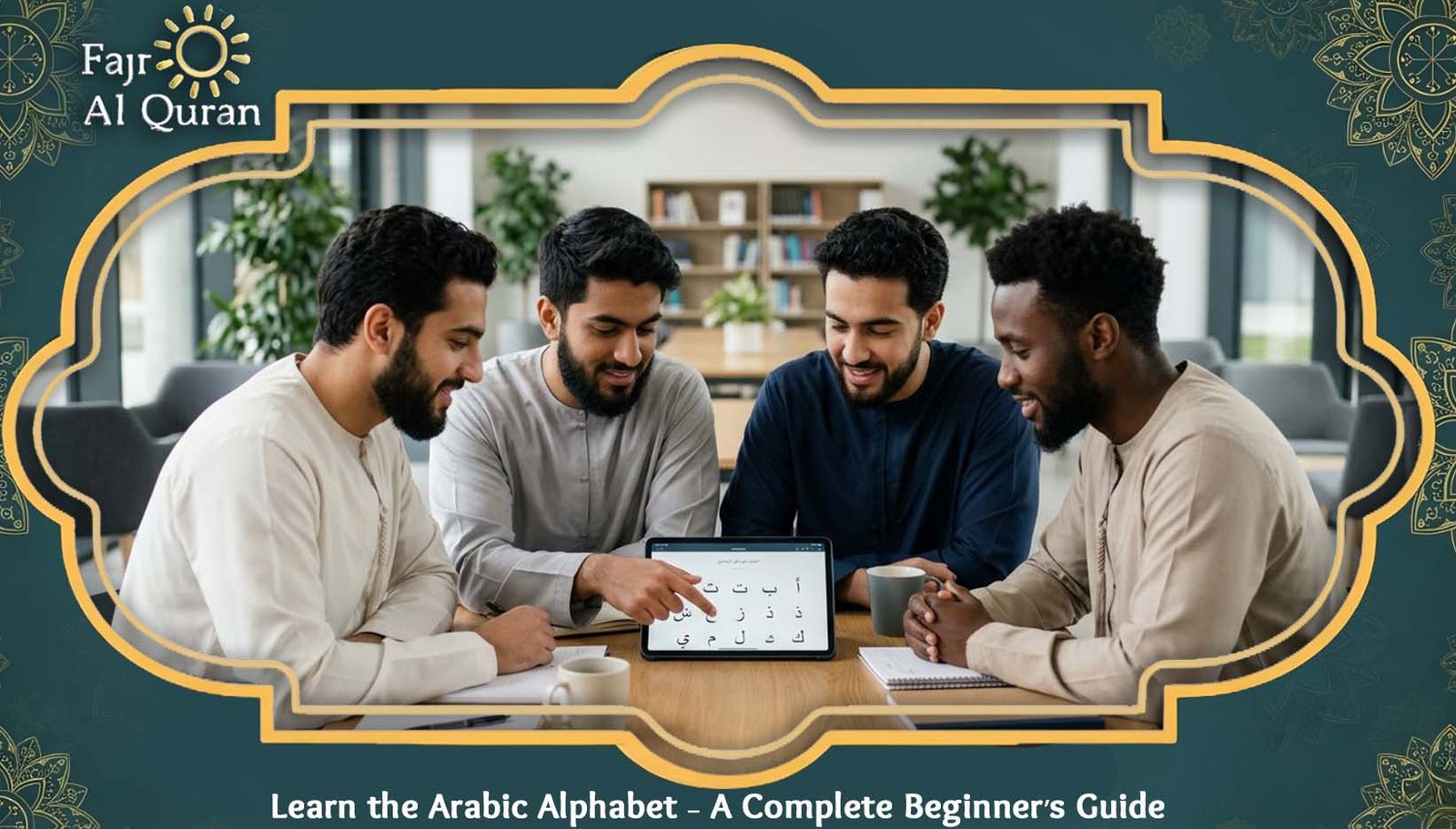
Learn the Arabic Alphabet – A Complete Beginner’s Guide

How Many Letters Are in the Arabic Alphabet?

The Arabic Alphabet consists of 28 basic letters. These letters are used to form Arabic words and are the foundation of both classical and modern Arabic writing.

Students often ask whether the Arabic alphabet has the same number of characters as the English alphabet. It does not. English has 26 letters, while standard Arabic has 28 basic alphabet letters.

Here are the 28 letters in their commonly recognized forms:

  • ا — Alif
  • ب — Baa
  • ت — Taa
  • ث — Thaa
  • ج — Jeem
  • ح — Haa
  • خ — Khaa
  • د — Daal
  • ذ — Dhaal
  • ر — Raa
  • ز — Zaay
  • س — Seen
  • ش — Sheen
  • ص — Saad
  • ض — Daad
  • ط — Taa
  • ظ — Dhaa
  • ع — Ayn
  • غ — Ghayn
  • ف — Faa
  • ق — Qaaf
  • ك — Kaaf
  • ل — Laam
  • م — Meem
  • ن — Noon
  • ه — Haa
  • و — Waaw
  • ي — Yaa

Some learners also encounter Hamza (ء) during their studies. Hamza represents a distinct glottal sound and appears in several written forms. Its treatment can vary depending on its position and surrounding letters.

It is useful to learn the letter names alongside their sounds. Recognition should come before speed. A beginner who can confidently identify each character has already built an important foundation.

The number of letters in the Arabic alphabet may seem small, but learning their shapes, sounds, connections, and vowel patterns requires regular practice.

Learn the Arabic Letters from Alif to Ya Step by Step

Learning the Arabic Alphabet from Alif to Ya is easier when you avoid trying to memorize everything at once. A step-by-step approach allows your eyes, ears, and writing hand to become familiar with each character.

Start with small groups of letters. Learn the name, basic sound, shape, and writing direction of each letter. Then review the group before moving forward.

For example, beginners can begin with:

ا — Alif
ب — Baa
ت — Taa
ث — Thaa

Notice that Baa, Taa, and Thaa have related shapes but different numbers and positions of dots. Learning them together can help students understand how Arabic letters are structured.

Next, students can study groups such as Jeem, Haa, and Khaa. These letters share a similar basic shape but have different markings and sounds.

This approach is more effective than memorizing random characters because the brain begins to recognize visual patterns.

For the Arabic Alphabet for beginners, try this simple routine:

  1. Look at the letter.
  2. Say its name.
  3. Listen to its correct sound.
  4. Write it several times.
  5. Recognize it in a simple word.
  6. Review it the following day.

Do not rush through the entire alphabet. Strong recognition is more valuable than quick memorization.

Muslim learners may also connect alphabet practice with the Noorani Qaida, a traditional beginner resource widely used to develop Quran reading skills. It introduces letters, vowel marks, combinations, and pronunciation in a gradual way.

With consistent lessons, learners can move from individual characters to words and eventually to complete Arabic sentences or Quranic passages.

Arabic Letter Shapes and Their Different Forms

One of the most important things to understand about the Arabic Alphabet is that many letters have different written forms depending on their position in a word.

Arabic is written in a connected, flowing style. Many letters can connect to the letter before them, the letter after them, or both. As a result, the same character may look different in isolated, initial, medial, and final positions.

For example, ب can appear as:

ب — isolated
بـ — initial
ـبـ — medial
ـب — final

The basic identity of the letter has not changed. Only its connected form has changed.

This can seem confusing at first. However, students usually become comfortable with these patterns after enough reading and writing practice.

Not every Arabic character connects on both sides. Letters such as Alif, Daal, Dhaal, Raa, Zaay, and Waaw have special connection rules. Understanding these rules helps beginners read words more accurately.

Arabic fonts can also make the process look harder than it really is. Different fonts may change the visual style of a character, just as printed and handwritten English can look different.

The goal is therefore not to memorize one font. The goal is to recognize the underlying character.

As learners progress, they should practice reading different Arabic fonts, handwriting styles, and digital text. This improves character recognition and prepares them for books, websites, Quran apps, and Arabic learning materials.
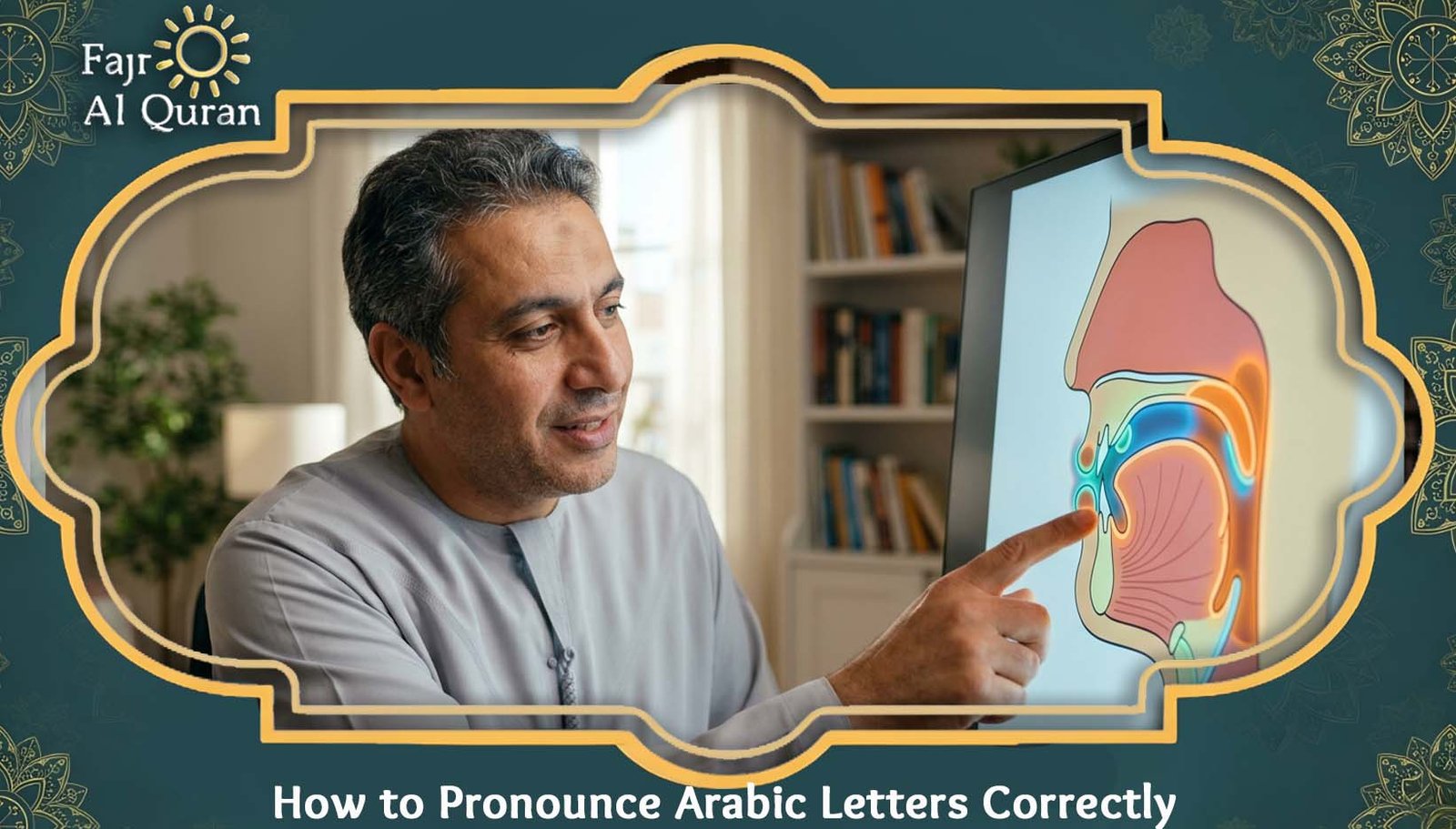
How to Pronounce Arabic Letters Correctly

How to Pronounce Arabic Letters Correctly

Correct pronunciation is one of the most important parts of learning the Arabic Alphabet. Knowing what a letter looks like is only the beginning. Learners also need to understand where and how each sound is produced.

Some Arabic sounds have close equivalents in English. Others do not. This is why using an English letter as a permanent substitute can create pronunciation problems.

For example, the Arabic letters ح, خ, ع, غ, ص, ض, ط, and ظ can be challenging for English speakers. Their sounds require movements that may not exist in ordinary English pronunciation.

Muslims studying Quran reading should pay special attention to Makharij al-Huruf, the articulation points of Arabic letters. Correct articulation helps protect the accuracy of Quranic recitation and supports proper Tajweed development.

A qualified teacher can demonstrate the position of the tongue, throat, lips, and teeth. This is much more effective than trying to learn difficult sounds only from English transliterations.

For beginners, pronunciation practice should include:

  • Listening carefully to a qualified teacher.
  • Repeating each sound slowly.
  • Comparing similar letters.
  • Practicing difficult sounds regularly.
  • Reading letters inside simple words.
  • Recording yourself and checking your pronunciation.

English translations can explain meaning, but translation does not teach pronunciation. Likewise, transliteration can provide a temporary guide, but learners should gradually read the original Arabic form directly.

At Fajr Al-Quran Academy, students can receive guided instruction from experienced tutors who can correct pronunciation as they learn. This personal feedback can save beginners from developing habits that become difficult to change later.

Learn Arabic Short Vowels: Fatha, Kasra, and Damma

After learning the basic Arabic Alphabet, beginners should understand short vowels. These marks are essential because they change how many Arabic letters are pronounced.

The three basic short vowels are Fatha, Kasra, and Damma.

Fatha (َ) generally produces a short “a” sound.
Kasra (ِ) generally produces a short “i” sound.
Damma (ُ) generally produces a short “u” sound.

For example, placing different vowel marks on the same consonant creates different readings:

بَ — ba
بِ — bi
بُ — bu

This is a simple but important concept. A learner may recognize the letter Baa perfectly but still misread a word if the vowel mark is ignored.

Students also encounter Sukoon (ْ), which indicates that a consonant does not carry a short vowel, and Shaddah (ّ), which indicates consonant doubling. These marks become increasingly important when learners move into Quran reading and Tajweed.

Arabic also has long vowel sounds. Alif, Waaw, and Yaa can function in patterns that produce longer vowel sounds depending on the surrounding letters and vowel markings.

Beginners should avoid trying to memorize every rule in one lesson. Start with the three short vowels, practice them with familiar letters, and then gradually introduce additional signs.

For Muslim students, this stage connects naturally with Noorani Qaida lessons. A structured Qaida course can help learners move from isolated letters to joined sounds and then to Quranic words.

Understanding vowels also makes Arabic reading more predictable. Once students recognize both letters and their vowel signs, they can begin sounding out unfamiliar words with greater confidence.

How Arabic Letters Connect in Words

Arabic is written from right to left, and many letters connect when they appear in words. This is one of the biggest changes for learners who are accustomed to the English alphabet.

The direction itself becomes easier with practice. The more important challenge is learning how letters change their shape when connected.

Consider a simple sequence containing Baa:

ب

When the letter is connected to other letters, its appearance can change. Students therefore need to learn both the individual character and its connected forms.

This is why simply memorizing the letters in the Arabic alphabet is not enough. Reading requires recognition of characters in different positions.

Some letters connect to the next letter, while others stop the connection. These rules affect the visual structure of words.

Beginners should practice connection gradually. Start with two-letter combinations. Then move to three-letter combinations and simple words.

Writing practice is especially useful here. When students physically write Arabic, they begin to understand how letters flow from one character to another.

Digital typing can also help. Arabic keyboards allow learners to practice recognizing characters on a screen, while Arabic fonts expose them to different styles. However, handwriting should not be ignored.

Students may also encounter Arabic chat, Franco Arabic, or Arabizi, where Arabic words are represented using Latin characters and numbers. These systems are common in informal online communication, but they are not a replacement for learning the actual Arabic script.

For serious Arabic learning or Quran study, learners should focus on the original script and develop the ability to read Arabic directly.
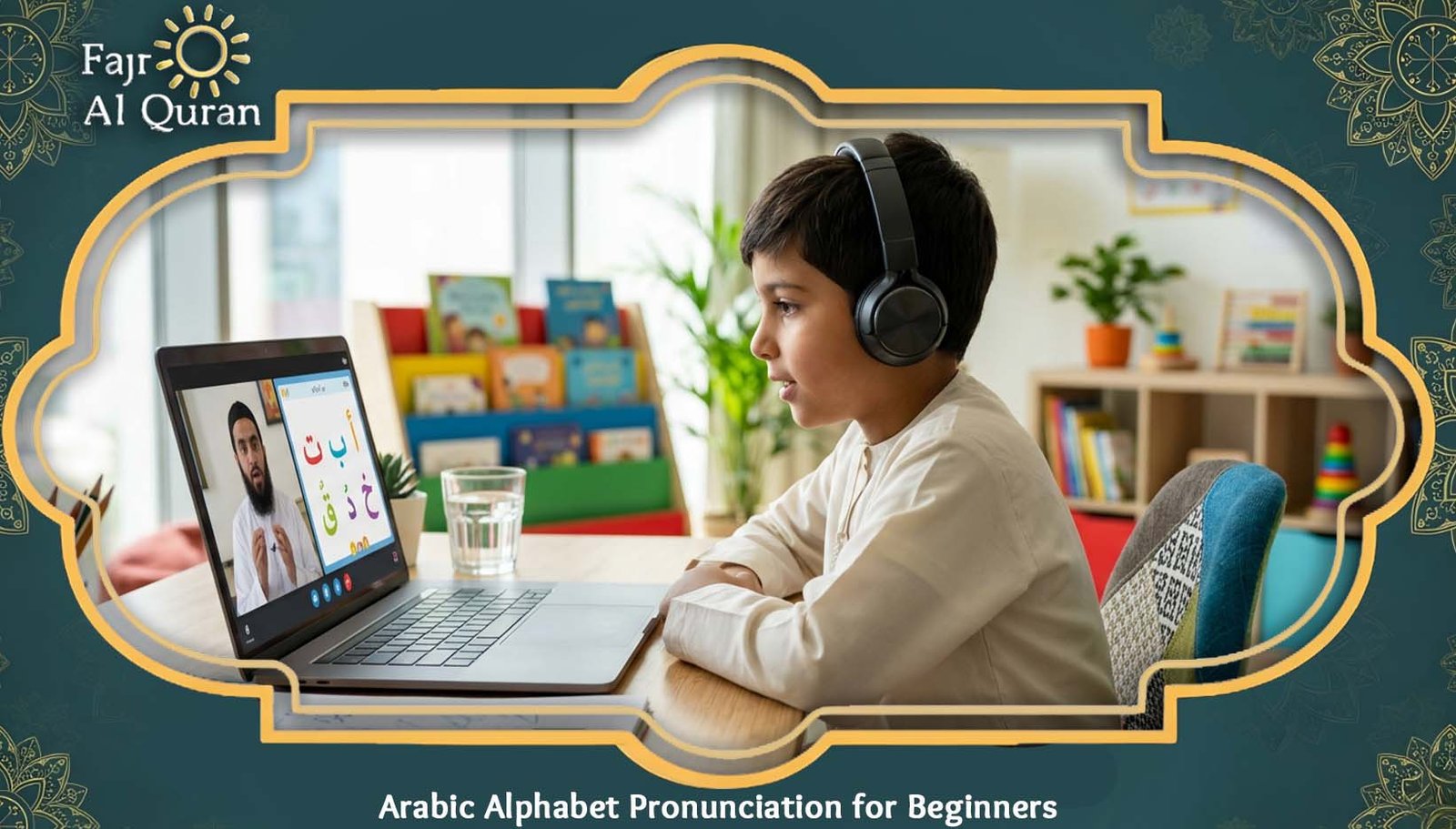
Arabic Alphabet Pronunciation for Beginners

Arabic Alphabet Pronunciation for Beginners

For many learners, pronunciation is the stage where the Arabic Alphabet becomes truly practical. Instead of simply identifying a character, students begin connecting visual recognition with sound.

English-speaking beginners often search for an “Arabic alphabet in English” or Arabic letters with English equivalents. Such resources can be useful when starting, but there is an important limitation: English does not contain an exact equivalent for every Arabic sound.

Transliteration systems attempt to represent Arabic using Latin characters. Different systems may use different symbols. This can make transliterations confusing if learners rely on them too heavily.

For example, a single Arabic letter may be represented in several ways depending on the transliteration system. Arabic chat can make this even more varied because users sometimes represent difficult sounds with numbers.

The best long-term goal is direct recognition:

Arabic character → Arabic sound → Arabic word

rather than:

Arabic character → English letter → transliteration → sound

The second process takes longer and can encourage inaccurate pronunciation.

A good beginner pronunciation lesson should include listening, repetition, correction, and reading. Students should hear a qualified speaker and imitate the sound rather than guessing from Roman letters.

Pronunciation is especially important for Muslims learning to read the Quran. Small sound differences can affect a word’s pronunciation and, in some cases, its meaning.

A native or highly qualified Arabic tutor can explain difficult sounds in a way that English-speaking learners understand. At Fajr Al-Quran Academy, structured online lessons can help children and adults develop these skills from home.

With regular practice, learners can move beyond memorizing alphabet letters and begin reading real Arabic words with confidence.

Arabic Alphabet for Kids with Fun Ways to Learn

Children can learn the Arabic Alphabet successfully when lessons are interactive, short, and consistent. Young learners usually respond better to activities than to long explanations.

Parents should not expect children to memorize all 28 letters in a few days. Recognition develops gradually. A better approach is to introduce a small number of letters, review them often, and celebrate progress.

Games can make alphabet practice more enjoyable. Parents and teachers can use matching cards, letter tracing, picture associations, simple quizzes, songs, and digital activities.

Useful activities include:

  • Matching Arabic letters with their names.
  • Tracing letters with a finger or pencil.
  • Finding a target letter in a short Arabic word.
  • Listening and identifying the correct sound.
  • Building simple words from letter cards.
  • Practicing one short lesson each day.

Visual repetition is particularly helpful for children. A letter should appear in isolation and then in connected forms so that children learn to recognize it in real reading situations.

Parents in the US, UK, Canada, and Australia may also face the challenge of balancing schoolwork with Islamic education. Online lessons can provide a practical solution because children can learn from home without adding travel time to a busy family schedule.

For Muslim children, alphabet lessons can eventually lead to Quran reading, Noorani Qaida, Tajweed, and broader Arabic studies.

Fajr Al-Quran Academy provides a supportive online learning environment for children and adults who want structured Arabic and Quran education. Individual attention can help teachers adapt lessons to a child’s age, learning speed, and existing knowledge.

The most important goal is to make learning positive. When children associate Arabic with encouragement and achievement, they are more likely to continue practicing.

FAQs About the Arabic Alphabet

How many letters are in the Arabic Alphabet?

The standard Arabic Alphabet has 28 basic letters. Learners also encounter additional signs and characters, such as Hamza and vowel marks, as they progress.

Is the Arabic Alphabet difficult for English speakers?

The Arabic Alphabet may look unfamiliar at first, but it becomes manageable with regular practice. Learning letter groups, connected forms, and pronunciation step by step can make the process much easier.

Can I learn the Arabic Alphabet online?

Yes, beginners can learn the Arabic Alphabet through structured online lessons. A qualified tutor can teach letter recognition, pronunciation, writing, vowels, and reading while correcting mistakes in real time.

Is learning the Arabic Alphabet useful for reading the Quran?

Absolutely. Learning Arabic letters is the foundation for Quran reading. Students can then progress to Noorani Qaida, Tajweed, proper pronunciation, and fluent Quranic recitation.

Conclusion: Start Learning the Arabic Alphabet with Confidence

The Arabic Alphabet is the foundation for reading and writing Arabic. It is also the first major step for Muslims who want to improve their Quran reading and understand more of the language of the Quran.

You do not need to master everything at once. Begin with the 28 letters, learn their sounds, practice their different forms, understand short vowels, and gradually read connected words.

Consistent practice is more valuable than rushing. With the right teacher and a clear learning plan, both children and adults can make steady progress.

If you are ready to learn from home, book a free trial lesson with a native Arabic teacher at Fajr Al-Quran Academy. Start with the basics, receive personal guidance, and build the confidence you need to read Arabic correctly.

Signs Your Child Is Ready to Start Online Quran Classes

Online quran Classes for Kids

There’s no single “correct” age, but a few signs suggest a child is ready to start structured Quran classes rather than informal exposure at home.

They Can Sit and Focus for Short Periods

Being able to focus on one activity for 10 to 15 minutes without constant redirection is a reasonable baseline, more important than a specific age.

They Show Curiosity, Not Just Compliance

A child asking questions or showing interest, rather than only participating because a parent insists, tends to engage better once formal lessons start.

Basic Listening Skills Are in Place

Being able to follow simple spoken instructions and repeat sounds back reasonably well is a useful readiness sign, since early lessons rely heavily on listen-and-repeat.

If They’re Not Quite Ready Yet

Starting with informal exposure, short recitations played at home, simple repetition without pressure, can build readiness before formal lessons begin.

Starting at the Right Pace

Online Quran classes for kids that assess a child’s actual readiness rather than assuming a fixed starting age tend to set a much better first impression of learning.

In Short

Focus, curiosity, and basic listening skills matter more than a specific age. Starting when a child shows genuine readiness beats starting on a fixed schedule.

Advantages of Reading Quran | Discover the Benefits of Quran Recitation

advantages of reading quran

The advantages of reading Quran go beyond spiritual enlightenment; they impact every aspect of a believer’s life. At Fajr Al-Quran, we emphasize the importance of understanding and applying the teachings of the Quran to experience its full benefits. By consistently engaging with the Quran, individuals develop a deeper connection with Allah, improve their mental well-being, and enhance their moral values.

Why Understanding the Advantages of Reading Quran is Essential?

Reading the Quran is not just an act of worship; it is a source of divine guidance, peace, and wisdom. Here’s why learning about the advantages of reading Quran is crucial:

  • Strengthens Faith—deepens the connection with Allah and reinforces Imaan.
  • Brings Inner Peace: Quranic verses provide comfort and relieve stress.
  • Enhances Personal Growth: Offers moral guidance for self-improvement.
  • Improves Focus & Discipline: Establishes a structured approach to life.
  • Boosts Spiritual Reflection—Encourages mindfulness and gratitude.
Advantages of Reading Quran

Key Advantages of Reading Quran

Reading the Quran offers countless benefits, enriching both the heart and mind. It provides spiritual guidance, inner peace, and wisdom for daily life. Understanding its meanings deepens faith, strengthens connection with Allah, and brings blessings. Embracing the Quran’s teachings leads to a more fulfilling and purposeful life.

1. Strengthens Faith and Spiritual Awareness

One of the primary advantages of reading Quran is the increase in faith and devotion. The Quran reminds believers of their purpose in life and reinforces Islamic principles.

2. Brings Inner Peace and Tranquility

Among the well-known advantages of reading Quran is its ability to calm the mind. Regular recitation of Quranic verses alleviates stress and anxiety, fostering inner peace.

3. Improves Mental Clarity and Focus

Reading and reflecting on the Quran enhances cognitive abilities, improving focus, analytical thinking, and memory retention. This is one of the major advantages of reading the Quran.

4. Provides Emotional Stability

The Quran teaches patience, gratitude, and resilience, helping individuals navigate hardships. Emotional healing is among the significant advantages of reading Quran.

5. Offers Practical Life Guidance

The Quran contains valuable lessons on justice, kindness, and social responsibilities, making its teachings a guide for daily life. Understanding these principles is among the core advantages of reading Quran.

6. Purifies the Heart and Mind

By reading the Quran, believers cleanse their hearts from negativity and build a positive outlook on life. This spiritual purification is one of the greatest advantages of reading Quran.

7. Encourages Self-Discipline

Committing to daily Quranic recitation fosters consistency and self-discipline, helping individuals develop a structured approach to their religious and personal lives.

8. Enhances Knowledge of Islamic Teachings

One of the remarkable advantages of reading Quran is gaining a comprehensive understanding of Islamic laws, morals, and ethics.

9. Strengthens Family Bonds

The Quran promotes family values, encouraging kindness, respect, and mutual support among family members. Teaching children the Quran strengthens the family’s spiritual foundation.

10. Brings Rewards in This Life and the Hereafter

Every letter recited from the Quran carries immense rewards, bringing blessings both in this world and in the Hereafter. This is among the most powerful advantages of reading Quran.

How to Incorporate Quran Reading into Your Daily Life

To truly benefit from the advantages of reading Quran, it is important to make Quranic recitation a part of daily life. Here are some practical steps:

  • Set a Daily Recitation Goal: Even a few verses a day make a difference.
  • Understand the Meaning: reading the translation and Tafseer deepens understanding.
  • Listen to Quranic Recitation—helps improve pronunciation and enhances reflection.
  • Join a Quran Study Group: Discussing the Quran increases knowledge and motivation.
  • Apply Quranic Teachings: Implementing the Quran’s guidance in life amplifies its benefits.

Enroll in Fajr Al-Quran’s Online Courses

Enroll in Fajr Al-Quran’s online courses today and experience the transformative power of learning the Quran from the comfort of your home. Our structured programs provide expert guidance, interactive lessons, and flexible schedules. One of the greatest advantages of reading the Quran is gaining spiritual clarity, inner peace, and a deeper connection with Allah. By enrolling in our courses, you’ll not only enhance your Quranic understanding but also experience the countless blessings that come with it. Start your journey with Fajr Al-Quran today!

  • Beginner Quran Reading: Learn the basics of Arabic pronunciation and recitation.
  • Tajweed Mastery: Improve recitation with proper pronunciation rules.
  • Quran Memorization (Hifz): Structured lessons for memorizing the Quran.
  • Tafseer Studies: Gain deeper insights into the meaning of Quranic verses.

How to Get Started with Fajr Al-Quran

Getting started with Fajr Al-Quran is simple and enriching. Whether you’re a beginner or looking to deepen your Quranic knowledge, our structured program offers expert guidance, interactive lessons, and flexible schedules. Join us today to strengthen your connection with the Quran and embark on a transformative learning journey.

  1. Visit Fajr Al-Quran’s website.
  2. Choose the course that fits your learning level.
  3. Register and schedule your classes.
  4. Start your Quran learning journey with expert tutors.

The Lasting Impact of Quran Recitation

The advantages of reading Quran extend beyond the spiritual realm, influencing every aspect of a believer’s life. Engaging with the Quran regularly nurtures the soul, strengthens faith, and provides clarity in life’s journey.

Join Fajr Al-Quran today and start experiencing the countless advantages of reading the Quran!

 Learn Quranic Arabic Language Online | Master Quranic Understanding

learn quranic arabic language online

Learning Quranic Arabic is essential for understanding the Quran in its original form. At Fajr Al Quran, we offer structured programs to help students learn Quranic Arabic language online, enabling them to comprehend the meaning of the Quran directly. Our courses are designed to cater to learners of all levels, ensuring a smooth and engaging learning experience.

Why Learn Quranic Arabic Language Online?

Enrolling in an program to learn Quranic Arabic language online provides numerous benefits:

  • Understand the Quran Directly: Gain the ability to comprehend verses without translation.
  • Enhance Your Tajweed: Learning the language improves pronunciation and recitation.
  • Flexible Learning Schedule: Study from anywhere at your own pace.
  • Qualified Instructors: Learn from expert teachers specializing in Quranic Arabic.
  • Interactive and Engaging Methods: Use digital tools to enhance retention and comprehension.
  • Affordable and Accessible: Get quality education at competitive prices.
  • Structured Curriculum: Follow a step-by-step method to grasp grammar and vocabulary.

Features of Our Online Quranic Arabic Course

At Fajr Al Quran, we ensure that our program provides a comprehensive approach to learn Quranic Arabic language online. Here’s what makes our course effective:

  • Beginner to Advanced Levels: Courses tailored to different proficiency levels.
  • One-on-One and Group Classes Choose personalized or interactive learning environments.
  • Tajweed and Pronunciation Focus: Enhance your recitation alongside learning Arabic.
  • Vocabulary and Grammar Mastery: Gain fluency in Quranic expressions.
  • Access to Study Materials: Recorded sessions, worksheets, and practice exercises.
  • Regular Assessments & Feedback: Track progress and improve consistently.
learn quranic arabic language online

What You Will Learn in Our Course

Our curriculum is structured to help you effectively learn Quranic Arabic language online by covering:

  1. Basic Arabic Alphabet & Phonetics: Learn pronunciation and writing.
  2. Essential Vocabulary from the Quran: Focus on frequently used words.
  3. Grammar Rules & Sentence Structure: Understand the foundation of Quranic Arabic.
  4. Morphology & Syntax (Sarf & Nahw): Delve deeper into the structure of words.
  5. Tafseer and Contextual Understanding: Gain insight into meanings and interpretations.
  6. Application through Quranic Recitation: Practice reciting and applying learned concepts.
  7. Conversational Skills in Arabic: Develop basic Arabic speaking abilities.
  8. Interactive Exercises & Live Practice: Engage in quizzes, assignments, and discussions.

How Our Online Quranic Arabic Course Works

At Fajr Al Quran, we make it easy to learn Quranic Arabic language online with a structured approach:

  1. Sign Up on Our Website Register and get a free trial lesson.
  2. Choose a Learning Plan: Select beginner, intermediate, or advanced courses.
  3. Schedule Your Classes: Pick a convenient time for online sessions.
  4. Meet Your Instructor: Learn with a certified Quranic Arabic tutor.
  5. Engage in Live Lessons: Participate in interactive classes.
  6. Practice with Assignments: Reinforce learning with exercises and assessments.
  7. Track Progress with Reports: Get feedback on strengths and areas for improvement.
  8. Apply Knowledge in Quran Recitation—Strengthen comprehension through real examples.
  9. Participate in Group Discussions: Join a community of learners for motivation.
  10. Receive Certification: Earn a completion certificate upon finishing the course.

Benefits of Learning Quranic Arabic Online

Learning Quranic Arabic online offers a flexible and effective way to understand the language of the Quran from anywhere in the world. With expert guidance, interactive lessons, and self-paced study options, you can learn Quranic Arabic language online easily, deepening your connection with the Quran and enhancing your spiritual journey.

  • Understand the Quran without Translation—directly connect with Allah’s words.
  • Develop a Stronger Spiritual Bond—deepen faith by understanding the Quran.
  • Enhance Focus in Salah & Recitation: Improve mindfulness in prayers.
  • Boost Memorization Skills: Retain verses with better comprehension.
  • Flexible and self-paced learning: study at a convenient time and speed.
  • Affordable & High-Quality Education: Learn from expert tutors at a low cost.
  • Interactive and Engaging Study Methods: Digital tools and discussions make learning effective.

Why Choose Fajr Al Quran to Learn Quranic Arabic Language Online?

At Fajr Al Quran, we are committed to providing the best platform to learn Quranic Arabic language online. Here’s why students prefer our program:

  • Experienced and Certified Tutors: Instructors trained in Quranic Arabic and Tajweed.
  • Affordable Tuition Fees: Quality education at competitive pricing.
  • Comprehensive Learning Resources: Access to digital notes, recorded sessions, and quizzes.
  • Flexible Timings: Adjust class schedules based on availability.
  • Small class sizes: personalized attention to maximize learning.
  • Practical Application: Learn through direct implementation in Quranic verses.
  • Progress Monitoring: Track improvement with structured evaluations.
  • Community Support: Engage with fellow students to enhance learning.

How to Enroll in Our Online Quranic Arabic Course

Enrolling in our online Quranic Arabic course is simple and hassle-free. Whether you’re a beginner or looking to enhance your understanding, our structured program is designed to help you learn at your own pace. With expert instructors, flexible schedules, and interactive lessons, you can start your journey toward mastering Quranic Arabic today!

  1. Visit Our Website: Explore course details and options.
  2. Select Your Learning Level: Choose beginner, intermediate, or advanced classes.
  3. Sign Up for a Free Trial Class: Experience the quality of teaching firsthand.
  4. Enroll in Your Preferred Plan: Select a course package that suits you.
  5. Start Learning with Expert Tutors—Begin your journey to mastering Quranic Arabic.
  6. Engage in Interactive Classes: Learn through live sessions and discussions.
  7. Receive continuous feedback and improve through instructor guidance.
  8. Apply Knowledge in Daily Recitations: Use skills learned in real Quranic contexts.
  9. Advance to Higher Levels: Progress step-by-step through structured courses.
  10. Earn Your Certification—Get accredited upon completing the course.

The Lifelong Impact of Learning Quranic Arabic

When you learn Quranic Arabic language online, you gain more than just language skills. You unlock the ability to engage with the Quran deeply, enhancing your spirituality and strengthening your faith. This knowledge brings a lifelong connection to the divine message, helping you lead a meaningful Islamic life.

Enroll in Fajr Al Quran today and start your journey to mastering Quranic Arabic!

Need Help?